

How Do Women Wear Their Wedding Rings Across Different Cultures?
How Do Women Wear Their Wedding Rings?
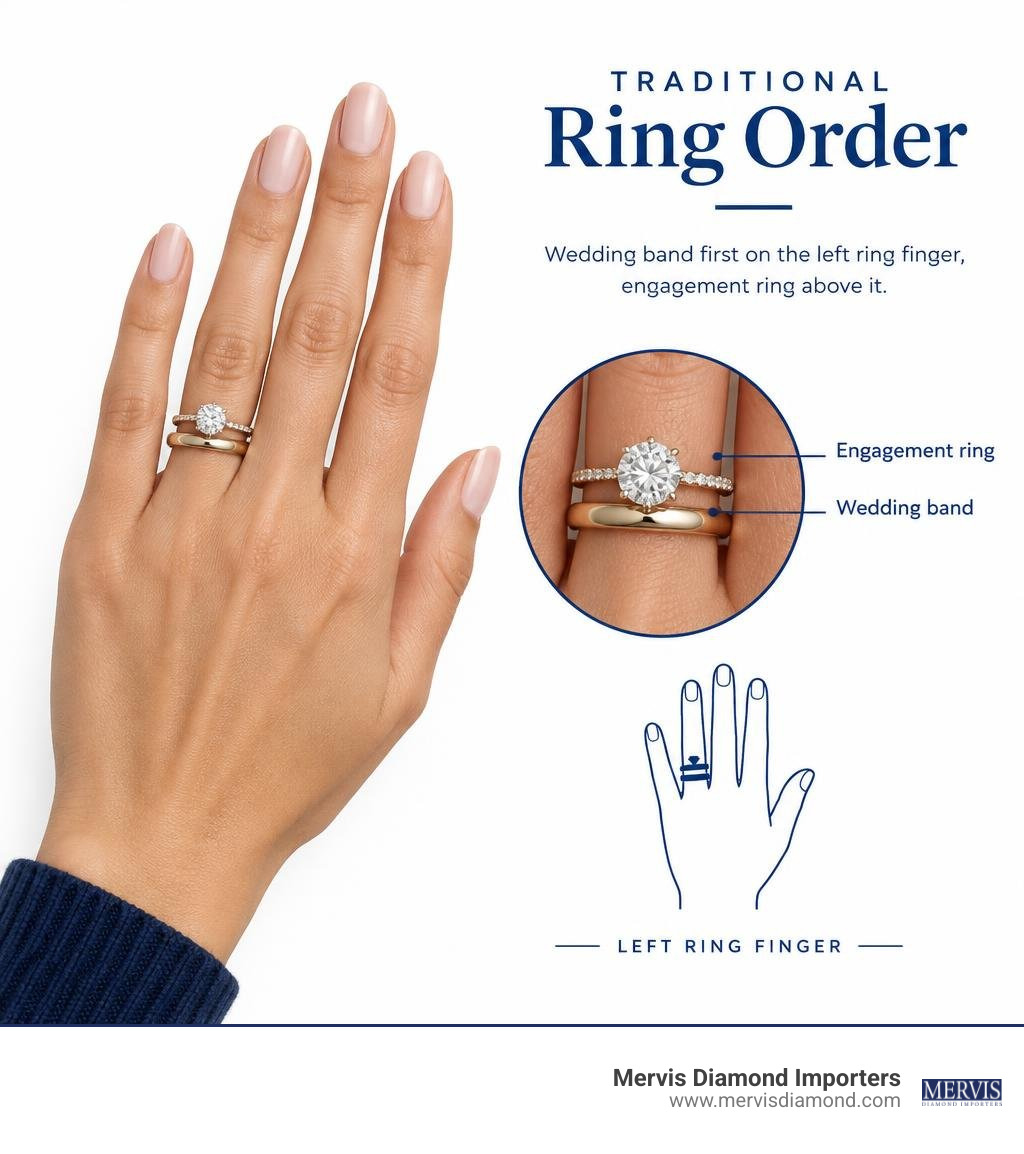
In many Western traditions, women wear both rings on the left ring finger, with the wedding band first, closest to the hand, and the engagement ring above it. If you're asking, "how do women wear their wedding rings?" that's the traditional starting point, not a rule you have to follow.
You can wear the rings on different hands, wear just one, or build a stack that feels right to you. Culture, comfort, and your daily work may all shape your choice.
I'm Morris Mervis, and I'll walk you through the customs and practical choices so you can decide what works for you.
The History and Symbolism Behind Ring Placement
The story of the wedding ring finger dates back thousands of years. In ancient Rome and Egypt, scholars and romantic thinkers believed that a special vein ran directly from the fourth finger of the left hand straight to the human heart. The Romans named this anatomical pathway the Vena Amoris, or the "vein of love." Placing a band of precious metal over this finger served as a physical, unbroken circle binding two lovers' hearts together.
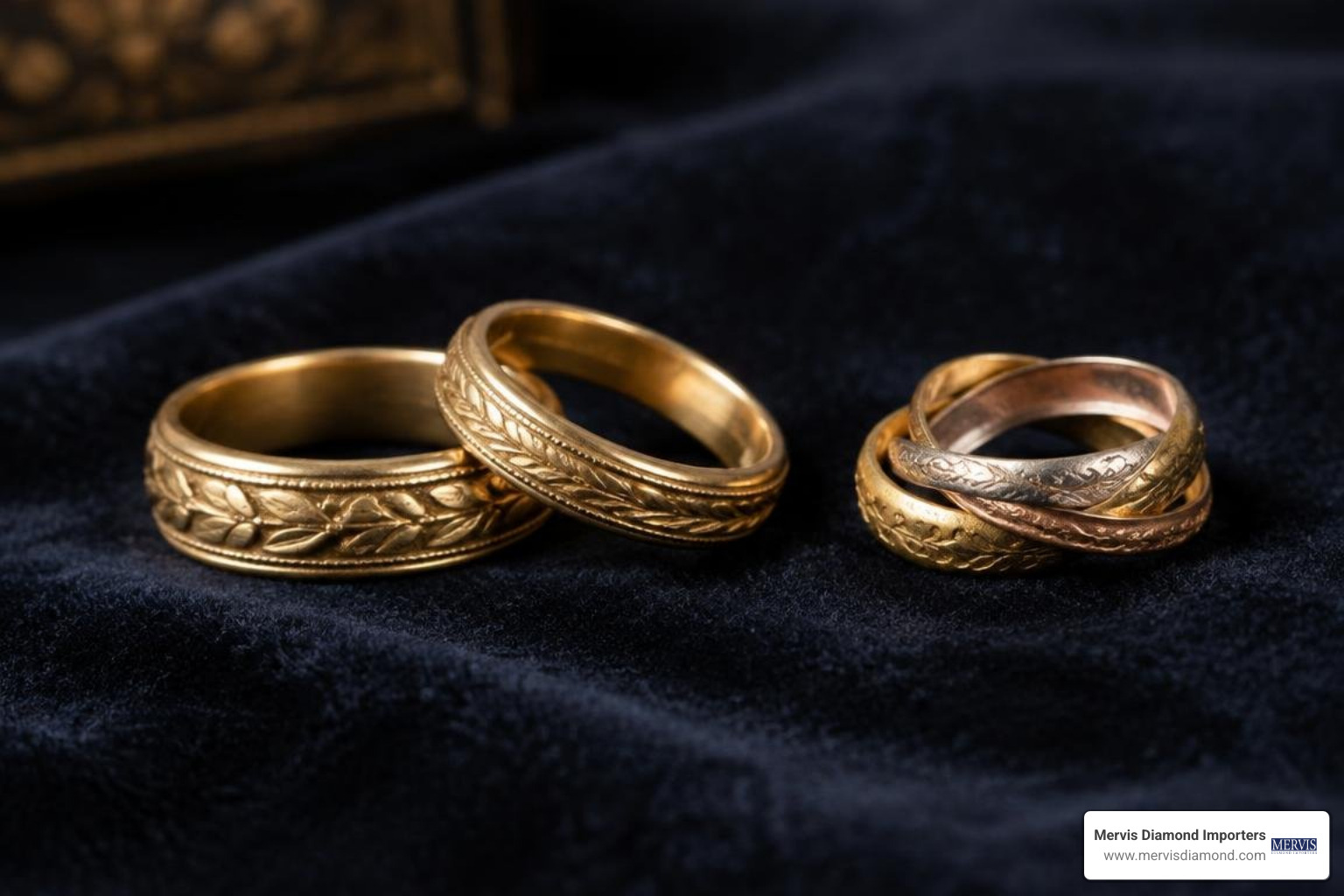
Modern science has debunked the anatomical existence of a single vein connecting one finger to the heart—every finger on your hand shares a similar circulatory pathway. Yet, the romantic symbolism survived the centuries. In 1662, the Church of England codified the practice in the Book of Common Prayer, cementing the left fourth finger as the standard marital finger for English-speaking societies.
Over the centuries, ring designs shifted through various iconic forms, including:
- Gimmel rings: Multi-hoop puzzle bands joined during the wedding ceremony.
- Poesy rings: Bands inscribed with hidden romantic poetry inside the shank.
- Utility rings: Practical, lightweight gold bands made during wartime rationing.
As highlighted in Vogue's guide on styling engagement and wedding rings, historical customs offer rich context, but modern brides are continually redefining bridal etiquette to express their individuality.
How Do Women Wear Their Wedding Rings in Western Tradition?
In the United States, the United Kingdom, Canada, and parts of Western Europe, the fourth finger of the left hand remains the standard home for bridal jewelry. During the ceremony, the exchange of vows marks the official transition into marriage, celebrated with the exchange of precious metal bands. If you are exploring settings and metals for your ceremony, our showrooms provide access to premier wedding rings in Washington DC, Tysons, VA, and Rockville, MD.
How Do Women Wear Their Wedding Rings and Engagement Rings Together?
The classic bridal question always comes down to stacking sequence: which ring sits on the finger first?
Under traditional Western etiquette, the wedding band is placed on the finger first, resting closest to the palm, followed by the engagement ring on the outside. The sentimental rationale is simple: the wedding ring, exchanged at the altar, sits physically closest to your heart.
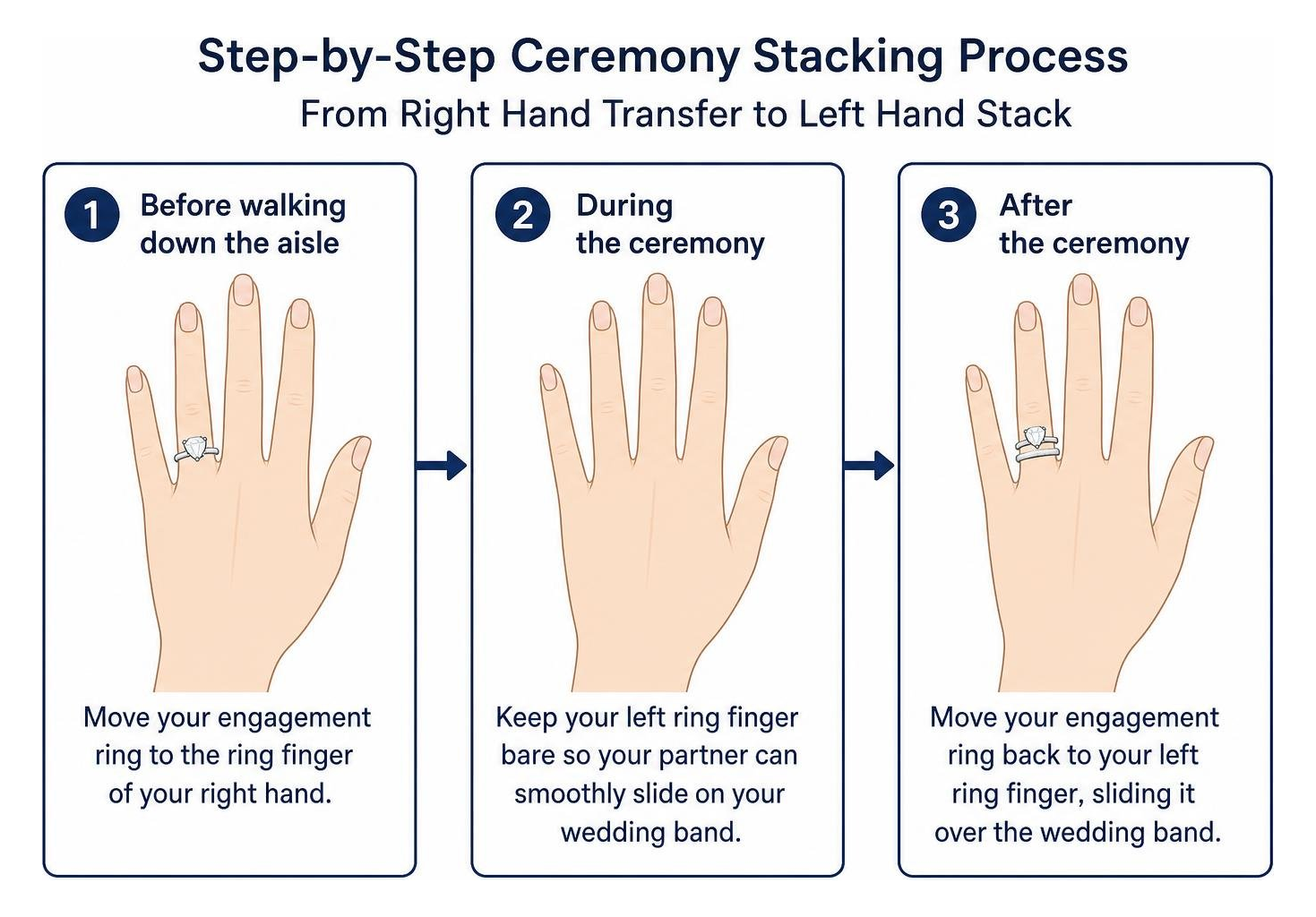
To navigate the wedding ceremony smoothly, brides typically follow a simple step-by-step sequence:
- Before walking down the aisle: Move your engagement ring to the ring finger of your right hand.
- During the ceremony: Keep your left ring finger bare so your partner can smoothly slide on your wedding band.
- After the ceremony: Move your engagement ring back to your left ring finger, sliding it over the wedding band.
For a comprehensive walkthrough on styling your bridal set, explore our guide on how to wear engagement rings and wedding bands. A popular pairing is setting a classic six-prong solitaire engagement ring alongside a flush classic solitaire wedding band for clean, enduring elegance.
When to Wear the Band Solo or on Alternative Fingers
While a full bridal stack looks breathtaking, wearing both rings every hour of the day is not always practical. Today, an estimated 83% of couples actively challenge traditional bridal expectations, prioritizing lifestyle convenience and personal comfort.
| Stack Configuration | Best Lifestyle Fit | Key Advantage |
|---|---|---|
| Full Stack (Band + Engagement) | Formal events, daily office wear, social outings | Showcases the complete bridal aesthetic |
| Solo Wedding Band | Healthcare workers, fitness enthusiasts, hands-on trades | Minimizes snagging and protects diamond prongs |
| Split Hands (Band Left, Engagement Right) | Finger swelling, larger center stones, wide knuckles | Balances visual weight and improves comfort |
| Pendant Chain Necklace | Chefs, electrical workers, heavy gym training | Eliminates occupational ring hazards entirely |
Wearing a solo band is common when traveling internationally, working in clinical environments, or playing sports. Transferring your engagement ring to your right hand can also highlight a family heirloom without crowding your wedding band.
Global and Cultural Traditions Around the World
The left hand is far from universal. Across different continents, cultures, and religious communities, the right hand, middle finger, or even the toes carry significant marital meaning.
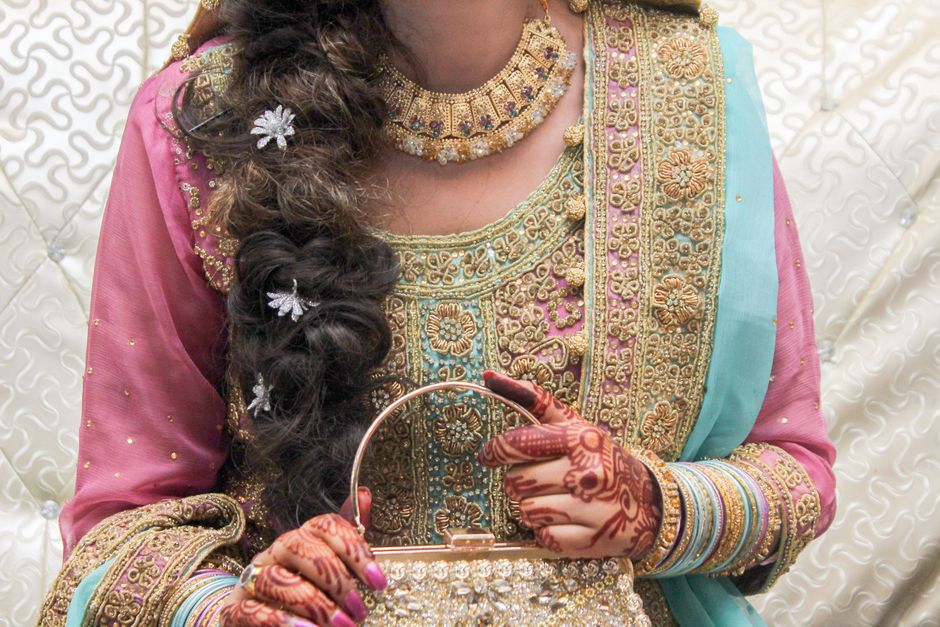
How Do Women Wear Their Wedding Rings in Religious and Cultural Ceremonies?
Religious and ethnic heritage shapes marital jewelry customs around the world:
- Jewish Traditions: In traditional Jewish wedding ceremonies, the groom places a plain, unadorned gold band on the bride's right index finger. The index finger is historically viewed as the most prominent, active finger on the hand. Following the ceremony, many brides move the band to their left ring finger according to modern preference.
- Eastern Orthodox Customs: Greek Orthodox, Russian Orthodox, and Serbian Orthodox brides traditionally wear their wedding rings on the right hand. In Orthodox theology, the right hand symbolizes authority, righteousness, and divine blessing.
- Indian Wedding Customs: In Indian Hindu traditions, marital jewelry involves multiple symbolic pieces. While finger rings may be worn on the right hand (as the left hand was historically viewed as less auspicious), brides also wear toe rings (bichiya), auspicious iron or gold bangles, and the sacred mangalsutra necklace.
- African Traditions: Many African cultures emphasize ceremonial beaded bracelets, anklets, and ornate necklaces as core symbols of marriage alongside or in place of metal finger bands.
Regional Hand and Finger Custom Variations
Depending on where you travel in Europe, Asia, and the Americas, you will encounter diverse regional standards:
| Country / Region | Primary Ring Hand | Cultural Context & Significance |
|---|---|---|
| United States & UK | Left Hand | Western tradition linked to the Vena Amoris myth and 1662 liturgy |
| Germany & Austria | Right Hand | Engagement ring worn on left; wedding band moved to right at marriage |
| Russia & Greece | Right Hand | Orthodox Christian custom honoring the hand of blessing and honor |
| Scandinavia (Sweden/Norway) | Left Hand | Brides often wear a three-ring stack: engagement, wedding, and motherhood |
| Traditional China | Historical Middle Finger / Right Hand | Ancient customs favored the middle finger; modern brides often adapt left/right styles |
| Spain & Colombia | Right Hand (varies regionally) | Right hand is customary in many Spanish regions, while Catalonia uses the left |
Modern Styling, Materials, and Practical Care
Contemporary bridal jewelry celebrates individuality through innovative precious metals, ethical gemstones, and creative stack architecture. Whether you prefer pure platinum, classic 18k yellow gold, or sustainable lab-grown diamonds, exploring curated women's wedding bands allows you to customize a stack that suits your aesthetic.
Stacking, Mixed Metals, and Alternative Styles
You do not have to limit yourself to matching metals or straight bands. Modern ring suites incorporate varied textures, silhouettes, and gemstones:
- Contour & Curved Bands: If your engagement ring has a low basket or a marquise center stone, a classic V curved wedding band wraps neatly around the stone without leaving an awkward gap.
- Color Accents: Vibrant gemstones bring personal meaning to a stack. Adding a single row ruby and diamond band introduces rich contrast against a white diamond engagement ring.
- Mixed Metal Harmony: Stacking yellow gold, rose gold, and platinum creates a dimensional look. Read our advice on matching wedding bands with engagement rings for tips on balancing proportions.
Safety, Daily Care, and When to Remove Rings
Fine jewelry is built to last for generations, but daily activities can expose delicate prongs and precious metals to unnecessary wear.
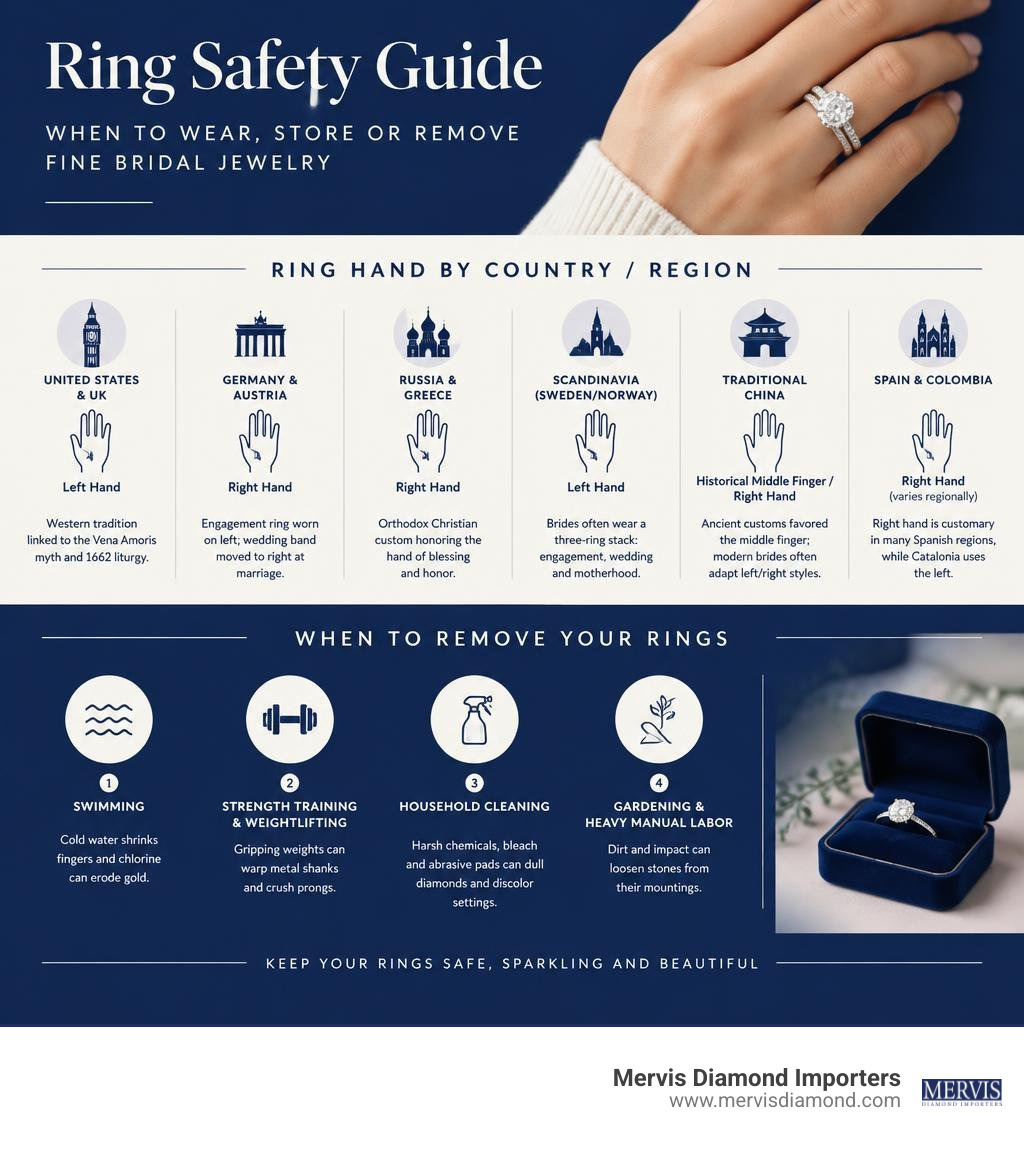
To keep your rings secure and sparkling, remove them during:
- Swimming: Cold ocean or pool water shrinks fingers quickly, leading to lost rings. Chlorine can also erode gold alloy integrity.
- Strength Training & Weightlifting: Gripping barbells or metal handles can warp precious metal shanks and crush prongs.
- Household Cleaning: Harsh chemicals, bleach, and abrasive scouring pads can dull diamond surfaces and discolor settings.
- Gardening & Heavy Manual Labor: Dirt and impact can loosen stones from their mountings.
When you take your rings off, store them in a fabric-lined jewelry box or a designated ring dish. Regular professional inspections and prong tightening ensure your bridal set remains secure.
Frequently Asked Questions About Wearing Wedding Rings
Which ring goes on the finger first: engagement ring or wedding band?
Traditionally, the wedding band goes on the finger first so that it sits closest to your heart. The engagement ring is then placed on top of the wedding band. However, some brides prefer to wear their rings in chronological order—sliding the engagement ring on first, followed by the wedding band.
Is it acceptable to wear your wedding ring on the right hand?
Yes. Wearing your wedding ring on your right hand is the standard custom across many parts of the world, including Germany, Austria, Greece, Russia, and Poland. Even in Western cultures, many women choose the right hand for physical comfort, dominant hand preference, or personal style.
Can a woman wear only her wedding band without an engagement ring?
Yes. Many women choose to wear only their wedding band on a daily basis. This is especially common among healthcare providers, athletes, and professionals in hands-on industries who want a low-profile ring that won't catch on gloves, equipment, or fabrics.
Conclusion
Whether you honor centuries of tradition on your left hand, follow cultural heritage on your right hand, or curate an eclectic multi-metal stack, how you wear your wedding ring is entirely your choice. Your bridal jewelry should reflect your shared commitment, personal comfort, and unique lifestyle.
At Mervis Diamond Importers, we take pride in offering hand-selected, high-quality natural and lab-grown diamonds alongside expert, pressure-free guidance across our Washington DC, Tysons, VA, and Rockville, MD showrooms. For more styling inspiration, read our complete guide on how to wear your engagement and wedding rings.