

The Practical Guide to Wearing Your Wedding Band and Engagement Ring
Traditions and Placement: How Does a Woman Wear Her Wedding Ring?
When considering how a woman wears her wedding ring, the standard Western custom places the band on the fourth finger of her left hand. The wedding band goes on first, resting at the base of the finger, and the engagement ring is stacked on top of it. This placement keeps the wedding band physically closest to the heart.
The tradition traces back thousands of years to ancient Rome. The Romans believed that a distinct vein ran directly from the fourth finger of the left hand straight to the heart. They christened this pathway the vena amoris, or the "vein of love." Placing a band on this specific digit was believed to physically and emotionally bind two lovers together. While modern anatomy has revealed that all veins eventually lead back to the heart, this romantic narrative remains the cornerstone of modern bridal customs.
Yet, this left-hand preference is far from universal. Across the globe, millions of women wear their wedding rings on their right hands. In countries like Russia, Germany, Poland, Greece, and India, the right hand is the standard location for bridal jewelry. In some Eastern traditions, the right hand is historically viewed as the hand of honor, trust, and vows.
To explore these fascinating regional differences in greater depth, review our breakdown on how are wedding rings worn across different cultures. For a deeper look at the historical roots of these customs, you can also explore the GIA guide on ring finger traditions.
The Traditional Stacking Order
In the classic Western style, the stacking order follows a simple rule: the wedding band goes on first, resting at the base of the finger, followed by the engagement ring placed on top.
The symbolism here is intentional. By wearing the wedding band at the base of the finger, it sits physically closest to your heart. The engagement ring, given as an initial promise of marriage, acts as a protective outer guard over the wedding vow.
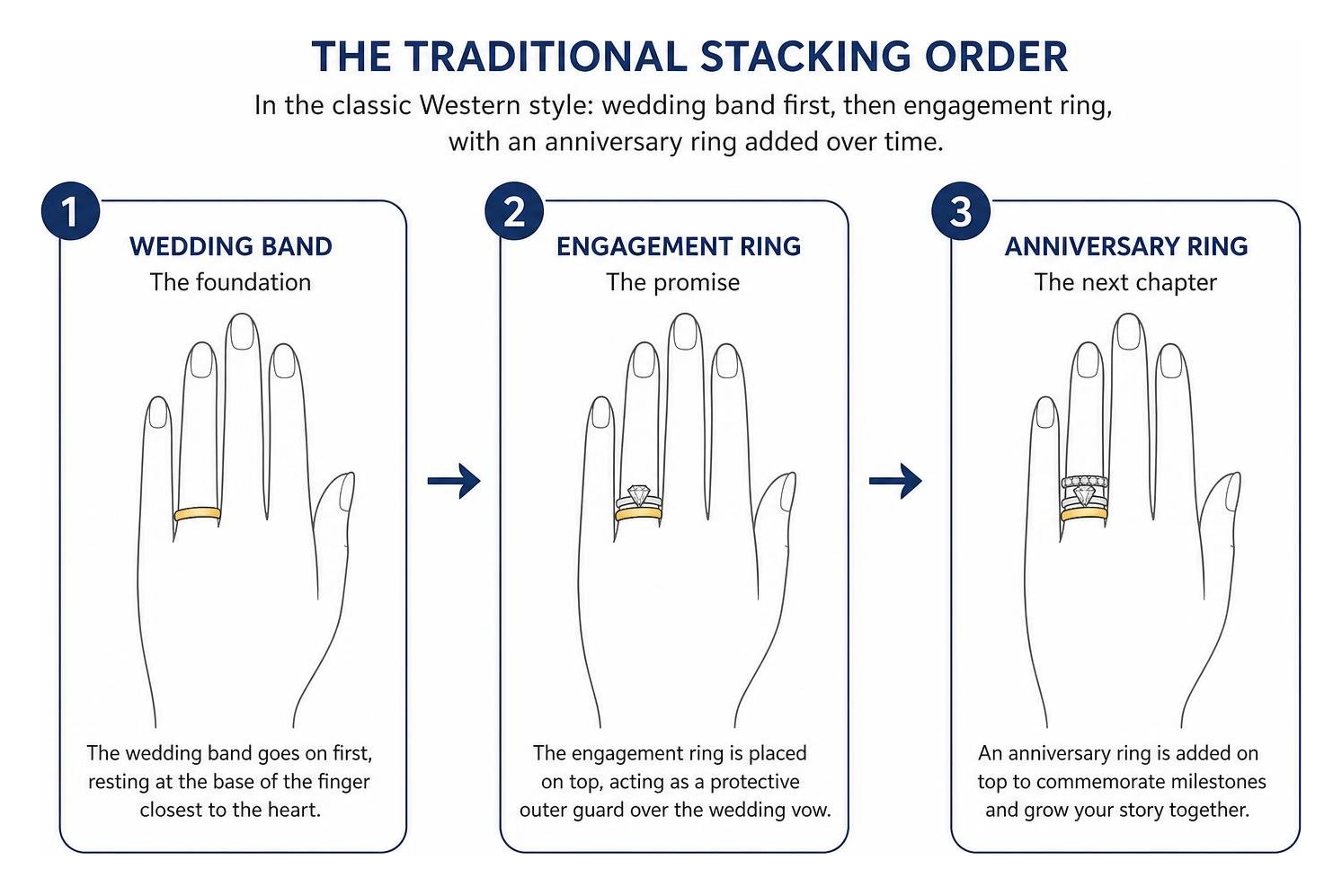
Many brides find that this stack not only holds deep sentimental weight but also creates a balanced, secure look on the hand. To learn more about curating a harmonious bridal set, consult our detailed bridal ring set wearing guide.
Global Cultural Variations
While Western bridal styling favors the left ring finger, looking across borders reveals an array of beautiful customs:
- Eastern Europe & Orthodox Traditions: In nations like Greece, Ukraine, and Russia, orthodox wedding rings are traditionally worn on the right hand. During Orthodox ceremonies, the rings are exchanged on the right hand to represent strength and fidelity.
- Central and Northern Europe: In Germany, Austria, and parts of Scandinavia, brides often wear their engagement rings on the left hand and transition to wearing their wedding band on the right hand following the ceremony.
- South Asia: In India, traditional customs historically favored the right hand because the left hand was considered less auspicious. Today, many modern Indian brides blend these practices, wearing Western-style diamond rings on the left hand while retaining classic jewelry on the right.
- East Asian Symbolism: In certain Chinese traditions, rings on different fingers represent different relationships: the thumb represents parents, the index finger siblings, the middle finger oneself, the ring finger one's life partner, and the little finger children.
Modern Ways to Style and Stack Bridal Rings
Today’s bridal landscape embraces personal expression. Modern data indicates that roughly 83% of couples are actively challenging normative expectations tied to their wedding day, and that includes ring etiquette. Rather than adhering strictly to historical rules, women are curating ring styles that align with their aesthetics, careers, and comfort.
You can mix warm yellow golds with crisp platinum, combine delicate pavé bands with bold solitaire settings, or wear your engagement ring and wedding band on entirely different hands.
| Wearing Style | Placement | Key Advantage | Best Suited For |
|---|---|---|---|
| Traditional Stack | Left hand, 4th finger (Band first, engagement on top) | Deeply symbolic; band rests closest to the heart | Classic bridal aesthetics, matching sets |
| Chronological Stack | Left hand, 4th finger (Engagement first, band on top) | Highlights larger center stones; matches relationship timeline | Unique ring profiles, high-set solitaire diamonds |
| Split Hand | Engagement on right hand, wedding band on left | Distributes ring weight; protects delicate metals | Wide bands, hands with shorter fingers, mixed aesthetics |
| Necklace Chain | Worn as a pendant close to the collarbone | Zero finger wear; prevents snagging and impact | Nurses, surgeons, athletes, manual professionals |
When selecting your ideal style, following recognized industry standards such as proper ring etiquette standards can help ensure your precious metals and stones remain secure over decades of wear.
How Does a Woman Wear Her Wedding Ring on the Wedding Day?
One of the most practical questions brides ask us is what to do with their engagement ring during the actual wedding ceremony. If the wedding band is supposed to go on the left ring finger first, where does the engagement ring go while walking down the aisle?
Here is the standard step-by-step approach:
- The Ceremony Shift: Before the ceremony begins, switch your engagement ring over to the ring finger of your right hand. This leaves your left ring finger bare and ready for the exchange of vows.
- The Ring Exchange: During the ceremony, your partner slides the wedding band smoothly onto your left ring finger without obstruction.
- The Post-Ceremony Restack: After the ceremony (or before the reception photos), move your engagement ring back to your left hand, placing it directly over the wedding band.
If your engagement ring does not fit comfortably on your right hand, you can ask a trusted family member or your maid of honor to hold it until after the vows. For more step-by-step logistics on planning your ceremony jewelry, explore our complete wedding ring guide.
How Does a Woman Wear Her Wedding Ring When Stacking Multiple Bands?
Stacking is no longer limited to just an engagement ring and a wedding band. Many women build a multi-layered ring stack to commemorate life’s major milestones, such as milestone anniversaries, career achievements, or the birth of a child.
When styling multiple bands, balance is essential:
- Symmetry: Placing identical diamond eternity bands on either side of an engagement ring creates an elegant, framed look.
- Mixed Metals: Combining white gold, rose gold, and yellow gold adds dimension and makes matching everyday jewelry effortless.
- Contrasting Textures: Pairing a clean, high-polish metal band next to a textured floral or micro-pavé band creates visual contrast.
For further styling inspiration, check out our guide on how to wear your engagement ring and wedding ring as part of an evolving collection.
Alternative and Lifestyle-Friendly Ways to Wear Wedding Rings
Your jewelry should adapt to your life, not get in the way of it. For women in hands-on careers or those who lead active lifestyles, wearing traditional diamond rings on the finger every day is not always practical or safe.
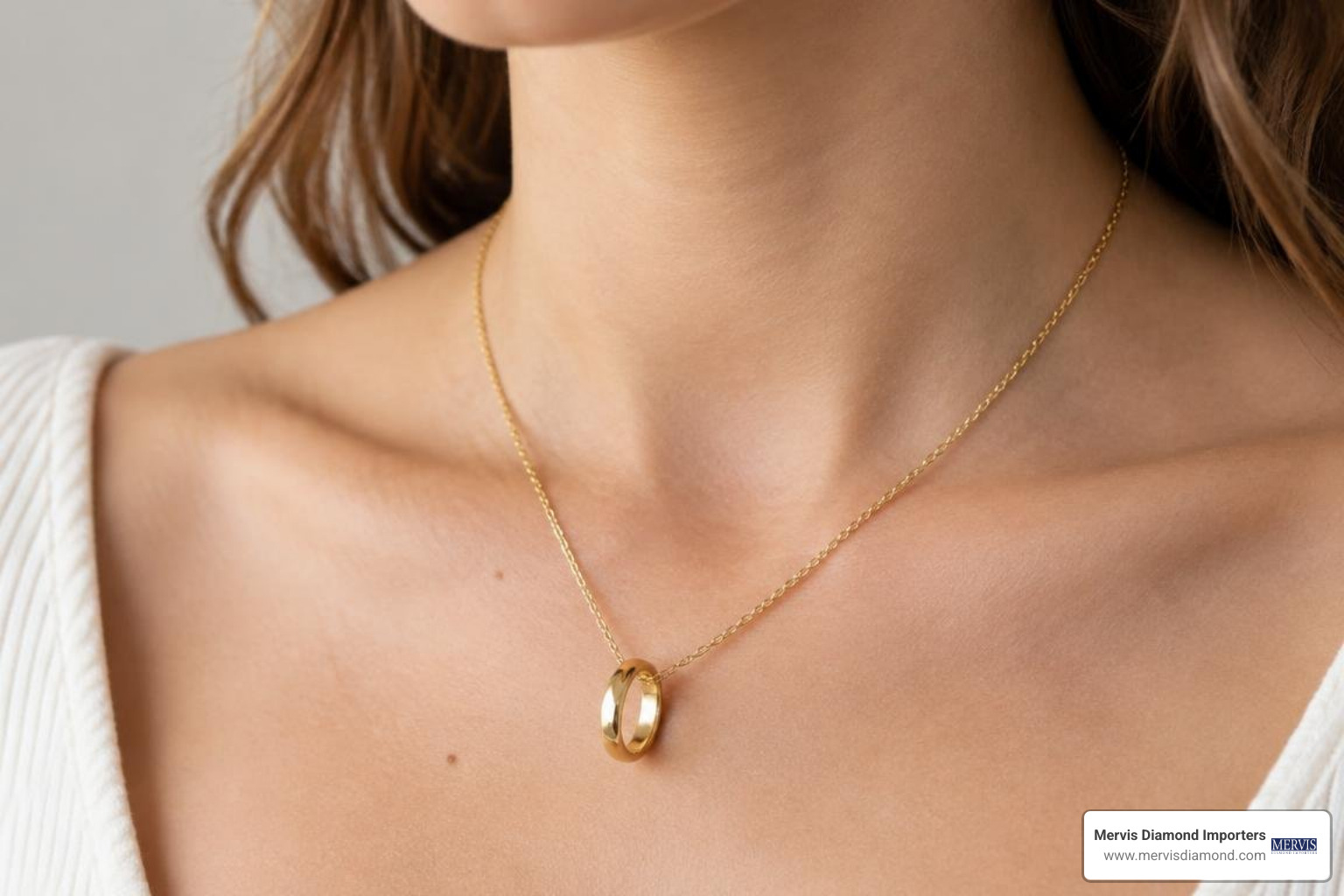
Wearing Rings on a Necklace Chain
For healthcare professionals, laboratory technicians, culinary artists, and athletes, wearing a ring on the hand can pose safety hazards or compromise hygiene protocols.
Suspending your wedding band or engagement ring from a sturdy precious-metal chain allows you to keep your sentimental pieces close without subjecting them to workplace wear. When opting for this approach:
- Choose a durable chain style, such as a wheat or cable chain, with a reliable lobster clasp.
- Match the metal of your chain to the metal of your ring to avoid uneven friction and wear.
- Ensure the chain thickness can easily support the weight of the ring setting.
When to Take Off Your Rings
Diamonds are the hardest natural substance on Earth, but the precious metals that secure them require care. To preserve the structural integrity of your settings, remove your rings during the following activities:
- Swimming & Water Sports: Cold water causes fingers to shrink rapidly, leading to lost rings. Additionally, the chlorine in swimming pools and hot tubs can weaken and discolor gold alloys over time.
- Heavy Gym Workouts: Lifting free weights, kettlebells, or gripping barbells can bend the delicate shank of your ring or crush prongs, loosening center stones.
- Household Cleaning: Harsh household chemicals, including bleach and ammonia, can dull natural gemstones and erode metal finishes.
- Gardening & Heavy Labor: Dirt, grit, and hard surfaces can scratch platinum and gold bands and introduce debris into prong crevices.
Sizing, Daily Comfort, and Long-Term Ring Care
A proper fit is crucial for daily comfort. A ring should slide smoothly over your knuckle with light resistance and sit comfortably at the base of your finger without pinching.
Keep these practical sizing factors in mind:
- Environmental Changes: Hands naturally expand in warm summer weather and shrink in winter cold.
- Band Width: Wider bands (4mm and above) fit more snugly than ultra-thin bands. If you plan to wear a wide stack of three or more rings, you may need to size up by a quarter or half size.
- Regular Maintenance: Have a professional jeweler inspect your ring prongs every six to twelve months to check for everyday wear or shifting stones.
- At-Home Cleaning: Clean your diamond rings at home by soaking them in warm water mixed with a few drops of mild dish soap. Use an extra-soft toothbrush to gently remove lotion and oils from beneath the diamond setting, then dry with a lint-free cloth. Store individual pieces in separate soft pouches to prevent them from scratching one another.
Frequently Asked Questions About Wedding Ring Placement
Should you wear your engagement ring and wedding band every day?
There is no obligation to wear both rings daily. Many women choose to wear their simple wedding band for everyday errands, workouts, and work shifts, reserving their higher-profile diamond engagement ring for weekends, social gatherings, and special occasions.
Which finger does an anniversary ring go on?
An anniversary ring can be stacked directly on top of your existing bridal set on your left ring finger, or worn as a standalone statement piece on the ring finger of your right hand. The right-hand option is popular for larger, multi-stone eternity bands that might otherwise crowd a delicate engagement ring.
Is it acceptable to wear wedding rings on the right hand?
Yes. Whether you are honoring Eastern European heritage, balancing the look across both hands, or finding that your right hand offers a more comfortable fit, wearing your wedding rings on your right hand is completely acceptable.
Conclusion
How a woman chooses to wear her wedding ring is ultimately a personal decision. Whether you follow the time-honored tradition of placing your wedding band closest to your heart, embrace right-hand customs, or style a dynamic multi-metal stack, the true value of your jewelry lies in the commitment it represents.
At Mervis Diamond Importers, we take pride in offering hand-selected, high-quality natural and lab-grown diamonds backed by four generations of pressure-free expertise. Whether you are searching for your initial bridal set, an anniversary addition, or custom sizing, our master jewelers are here to help.
To explore our collections or speak with a specialist, visit our showrooms across the Washington DC, Tysons VA, and Rockville MD areas, or discover our expert advice on how to wear your engagement and wedding rings.