

Off the Chain and Onto Your Neck: Your Guide to Replacement Chains
When Your Necklace Chain Breaks: What to Do Next
Finding the right chain replacement necklace can feel overwhelming — but it doesn't have to be. Here's a quick answer to get you started:
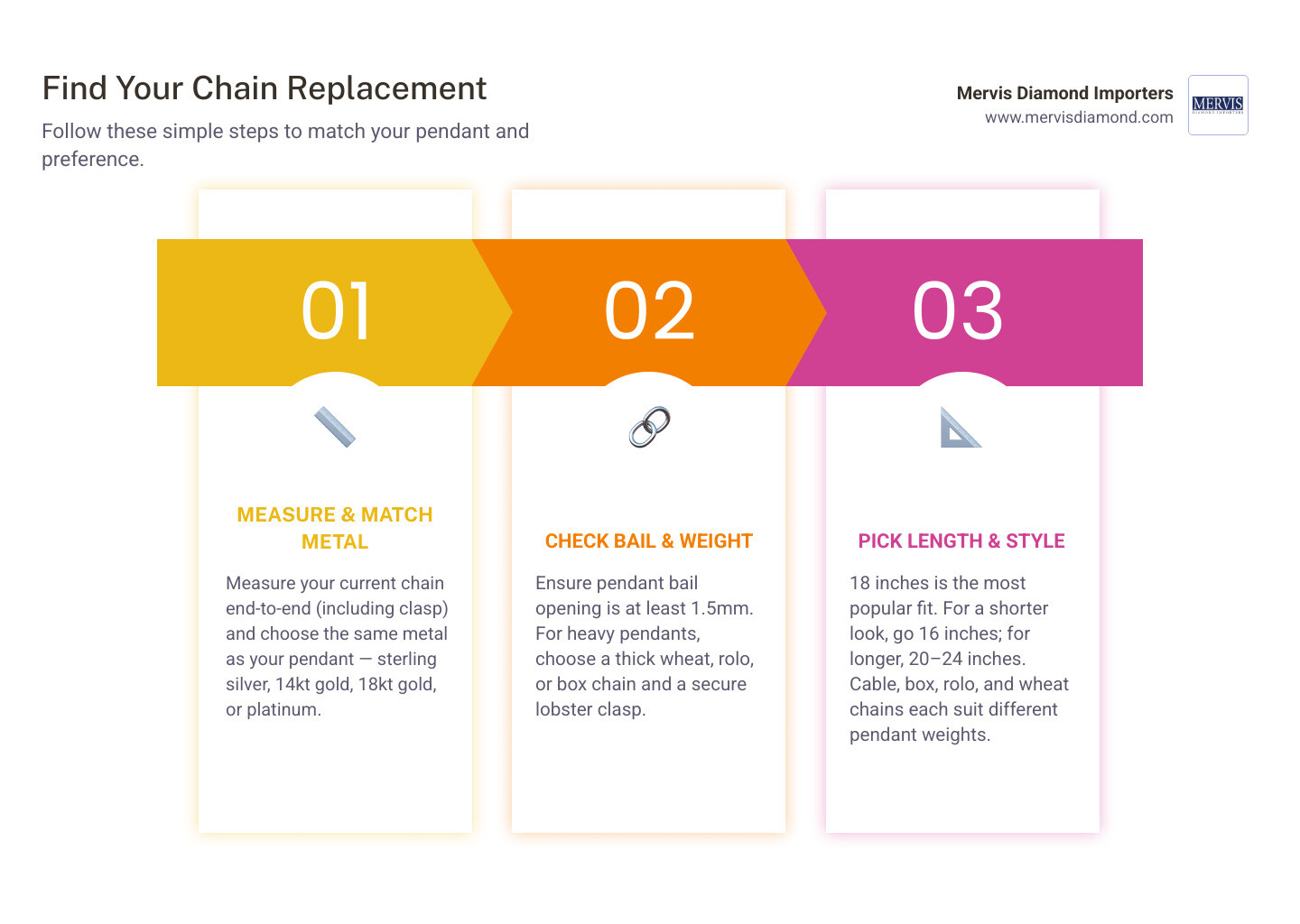
How to find a replacement necklace chain:
- Measure your current chain end-to-end (including the clasp) to find your length.
- Match the metal — choose sterling silver, 14kt gold, 18kt gold, or platinum to suit your pendant and budget.
- Check your pendant's bail — the opening must be at least 1.5mm to thread onto a standard chain.
- Choose the right chain style — cable, box, rolo, and wheat chains each suit different pendant weights.
- Pick your length — 18 inches is the most popular standard fit for women; 16 inches runs shorter, 20–24 inches longer.
A broken chain is one of the most common jewelry frustrations people face. It can happen to any chain — solid gold, gold-filled, or sterling silver — no matter how carefully you treat it. And when the pendant attached to that chain carries real sentimental weight, like a family heirloom or a memorial piece, the loss feels even more personal.
The good news? Replacing a chain is usually simpler and more affordable than most people expect. The key is knowing what to look for so you end up with a chain that fits, lasts, and looks right with your existing pendant.
I'm Morris Mervis, and in this guide I'll walk you through everything you need to make a confident, informed choice.
Common Reasons for Replacing a Necklace Chain
It is a quiet Tuesday afternoon in July 2026, and you are getting ready for a dinner in Tysons VA. You reach for your favorite diamond pendant, only to find the chain is tangled, severely tarnished, or worse—it snaps right in your hands.
Why do necklace chains fail? Over time, even the most beautifully crafted jewelry pieces experience normal wear and tear. Understanding why chains break or need to be swapped can help you choose a sturdier option for the future.
- Metal Tarnish and Oxidation: Base metals and lower-karat gold alloys naturally react with oxygen, moisture, and skin oils over time. This reaction leads to unsightly discoloration. While some metals can be cleaned, deep structural tarnish can weaken individual links, eventually causing them to snap.
- Accidental Snags and Pulls: Life happens. A chain can easily catch on a knit sweater, get tangled in your hair, or be pulled by an enthusiastic toddler or pet. These sudden forces easily stretch or snap delicate jewelry links.
- Structural Wear and Tear: Every time you wear a necklace, the metal links rub against each other and the pendant's bail. Over months and years of continuous wear, this friction micro-shaves the metal, thinning the links until they give way. This is particularly common in daily-wear items, as discussed in our guide on diamond necklaces wear.
- Style Updates and Versatility: Sometimes, your chain isn't broken at all—you are just ready for a change! Swapping a classic cable chain for a trendy paperclip or herringbone chain can instantly modernize an older pendant.
- Upgrading Base Metals for Sensitive Skin: Many off-the-shelf pendants come on cheap base-metal chains (like brass or copper) that can cause skin irritation or turn your neck green. Upgrading to a high-quality chain replacement necklace in sterling silver, solid gold, or platinum is a smart move for comfort and longevity.
Selecting the Perfect Chain Replacement Necklace
When shopping for a chain replacement necklace, you cannot simply pick the first pretty chain you see. To ensure your pendant looks beautiful and sits securely on your chest, you must evaluate several technical compatibility factors.
First, let's talk about bail clearance. The bail) is the metal loop at the top of your pendant that the chain slides through. If your replacement chain has bulky end-loops or a large clasp, it might not fit through the bail. As a general rule of thumb, most standard pendants require a chain with an end-loop diameter of no more than 1.5mm to slide on smoothly.
If you have a particularly small bail, you might want to look into a specialty replacement chain with a removable clasp, which allows you to thread the bare chain through the bail before reattaching the clasp hardware.
Additionally, you need to understand the difference between open and closed chains:
- Closed Chains (Standard): These are continuous loops of chain where the pendant slides freely along the metal. This is the style used for classic solitaire diamond pendants, lockets, and sliding charms. If this matches your style, look for a standard replacement chain designed for disc necklaces, lockets, and pendants that slide off and on.
- Open Chains (Two-Point Attachments): These chains are split into two separate pieces that attach directly to either side of a stationary pendant, such as a horizontal bar, a nameplate, or a curved diamond bar. If you are replacing a chain on a nameplate necklace, you will need a specialized replacement chain designed for two-point attachment.
Comparing Metal Options and Durability
The metal you choose for your replacement chain dictates its price, color match, hypoallergenic properties, and overall lifespan. Let's compare the most popular high-quality metal options available today:
| Metal Type | Durability | Hypoallergenic? | Relative Price Range | Best Suited For |
|---|---|---|---|---|
| Platinum | Extremely High (Scratch-resistant & won't wear away) | Yes (100% Nickel-Free) | $$$$ (Premium) | Heavy diamond pendants, heirloom jewelry, daily lifetime wear |
| 18kt Solid Gold | High (Rich color, very prestigious) | Yes | $$$ (High-End) | Fine jewelry, matching high-karat gold pendants |
| 14kt Solid Gold | Very High (Highly durable blend of gold and alloys) | Mostly Yes (Check for nickel if highly sensitive) | $$ (Moderate to High) | Everyday fine jewelry, active lifestyles, perfect balance of value and strength |
| Sterling Silver | Moderate (Requires regular polishing to prevent tarnish) | Yes (If copper-alloyed; avoid cheap silver plated with nickel) | $ (Affordable) | Fashion pendants, casual wear, silver-toned jewelry budgets |
While budget-friendly brass or plated chains can be tempting—such as bulk packs on Amazon that average just pennies per chain—they lack the structural integrity required to protect precious gems. If you are pairing your chain with a valuable diamond or a sentimental family heirloom, investing in solid gold or platinum is essential to prevent catastrophic loss.
How to Choose a Chain Replacement Necklace for Heavy Pendants
If you are replacing a chain for a substantial piece of jewelry—like a large diamond cluster, a solid gold locket, or a heavy gemstone pendant—chain thickness and link structure are your most important considerations.
A chain that is too thin will stretch under the weight of a heavy pendant, eventually leading to structural failure. For heavier pieces, we recommend choosing a chain with a thickness of at least 1.5mm to 2.0mm.
Furthermore, some chain weaves are inherently stronger than others due to the way their links interlock. Here is how the most common styles compare:
- Wheat Chain (Spiga): Widely considered the strongest chain style. It consists of four strands of interlocking oval links that mimic a stalk of wheat, offering incredible tensile strength and a beautiful, braided aesthetic.
- Rolo Chain: Made of symmetrical, round links that are individually soldered shut. Rolo chains are highly durable and excellent for longer lengths (20 to 22 inches or more) because they do not kink or twist easily.
- Box Chain: Featuring square links that lock together to form a smooth, continuous geometric profile. Box chains are very strong and offer a classic, clean look that lets your pendant take center stage.
- Cable Chain: The traditional jewelry chain style made of interlocking round or oval links. While simple and elegant, very fine cable chains should only be paired with lightweight pendants.
Finally, do not overlook clasp security. For heavy or high-value pendants, always opt for a lobster claw clasp over a spring ring. Lobster claws feature a robust, spring-loaded lever mechanism that is far less likely to accidentally pull open under weight.
Finding Your Ideal Chain Length and Style
Choosing the correct necklace length is both a functional and stylistic decision. The right length frames your face, complements your wardrobe's necklines, and ensures your pendant sits exactly where you want it.
Here is a breakdown of standard women's chain lengths and how they typically fit:
- 16 Inches (Choker/Short): Sits gracefully around the base of the neck. This length is perfect for petite frames, young adults, and high-necked tops. It is also an excellent base layer if you love layering necklaces.
- 18 Inches (The Bestseller): Falling elegantly at the collarbone, this is the universal standard for women's necklaces. If you are buying a replacement chain as a gift and are unsure of the recipient's size, 18 inches is always your safest bet.
- 20 Inches (Mid-Length): Sits a few inches below the collarbone. This length works beautifully with plunging necklines, sweaters, and medium-to-large pendants.
- 22 to 24 Inches (Long): Hangs near the center of the chest. This length is ideal for dramatic statement pendants, lockets, and creating a elongated vertical line in your outfit.
If you love versatility, consider an adjustable chain. These clever designs feature a sliding silicone-lined bead that allows you to shorten or lengthen the chain on the fly, making it easy to transition the same diamond pendant from a high crewneck to a deep V-neck.
Measuring Your Current Chain
Before ordering a chain replacement necklace, it is highly recommended to measure your existing chain to ensure a perfect match. Here is the best way to do it:
- Lay your current chain completely flat on a table or flat surface.
- Straighten the chain out so there are no kinks or bends.
- Use a standard measuring tape or ruler to measure the chain end-to-end, making sure to include both the clasp and the receiving end-loop in your final measurement.
- If you do not have your old chain, you can wrap a piece of soft string around your neck, hold it at the spot where you want the pendant to hang, and then measure the string against a ruler.
Knowing how to properly size jewelry is a useful skill, whether you are picking out a chain or learning how to choose a diamond gift for someone special.
Caring for Your Chain Replacement Necklace
Once you have invested in a beautiful new replacement chain, proper care will keep it shining and prevent future breaks. Here are our expert maintenance tips:
- Store in Airtight Containers: When you aren't wearing your sterling silver or gold-filled chains, store them in small, airtight zip-top bags. This minimizes exposure to oxygen and moisture, dramatically slowing down the tarnishing process.
- Wear Sterling Silver Frequently: Believe it or not, wearing your sterling silver jewelry regularly actually helps prevent tarnish! The natural friction against your skin and clothing gently polishes the metal, while your skin's natural oils help create a protective barrier.
- Keep It Dry: Always remove your necklace before showering, swimming in chlorinated pools, or soaking in hot tubs. Chemicals in tap water, soap, and pool sanitizer can cause rapid tarnishing and weaken solder joints over time.
- Use a Dedicated Polishing Cloth: Never use paper towels, tissues, or coarse cloths to clean your chain, as these can leave micro-scratches on precious metals. Instead, use a soft microfiber jewelry polishing cloth to gently restore its original luster.
Frequently Asked Questions about Necklace Chains
Can I replace the clasp on my existing chain instead of buying a whole new chain?
Yes! If your favorite chain is still in great structural shape but the spring ring or lobster claw clasp has broken, you do not need to buy an entirely new chain. A professional jeweler can easily open the jump rings connecting the clasp to the chain, remove the damaged hardware, and attach a sturdy new clasp.
If you live in the Washington DC metro area, you can bring your broken jewelry into one of our showrooms in Tysons VA or Rockville MD, where our master jewelers can quickly handle clasp replacements and chain repairs.
Are there specific replacement chains designed for sentimental or heirloom pendants?
Sentimental, grief, and memorial jewelry (like lockets carrying a loved one's ashes or engraved family heirlooms) deserve extra care. For these irreplaceable pieces, we always recommend pairing them with high-quality precious metals like 14kt gold, 18kt gold, or platinum.
When gifting a replacement chain for a sentimental piece, presentation matters. Look for high-quality options like a premium sterling silver replacement chain that comes beautifully packaged, showing the recipient how much you care about helping them restore their treasured memories.
How do I know if a replacement chain is hypoallergenic?
If you have sensitive skin, cheap jewelry can cause contact dermatitis, leaving your skin itchy, red, or discolored. This is almost always caused by nickel, a cheap metal alloy frequently used to strengthen base metals or lower-grade silver platings.
To ensure your replacement chain is completely hypoallergenic, look for:
- Platinum: Naturally 90-95% pure and entirely nickel-free, making it the absolute safest metal for highly sensitive skin.
- High-Karat Solid Gold (14kt or 18kt): High gold content means minimal alloy metals, significantly reducing the risk of skin reactions.
- Nickel-Free Sterling Silver: Ensure the manufacturer explicitly states the silver is alloyed with copper rather than nickel.
Conclusion
A broken chain shouldn't mean your favorite pendant has to sit forgotten in a dark jewelry box. Whether you are reviving a beloved family heirloom, upgrading a tarnished fashion chain, or simply switching up your style for a fresh layered look, finding the right chain replacement necklace is a rewarding way to breathe new life into your jewelry collection.
At Mervis Diamond Importers, we believe that every piece of jewelry you wear should be as durable as it is beautiful. From hand-selected natural and lab-grown diamonds to expertly crafted precious metal chains, our pressure-free, expert service is designed to help you protect and showcase your most cherished treasures.
If you need help finding the perfect high-quality platinum or solid gold replacement chain for your diamond pendant, we invite you to visit one of our convenient showrooms in Tysons VA, Rockville MD, or Washington DC. Our friendly team is always here to guide you to the perfect fit.
To learn more about keeping your precious jewelry in pristine condition for generations to come, check out our comprehensive guide on how to care for a diamond ring.