

Black Lab Diamond Guide: Everything You Need to Know Before Buying
How to Choose a Black Lab Diamond
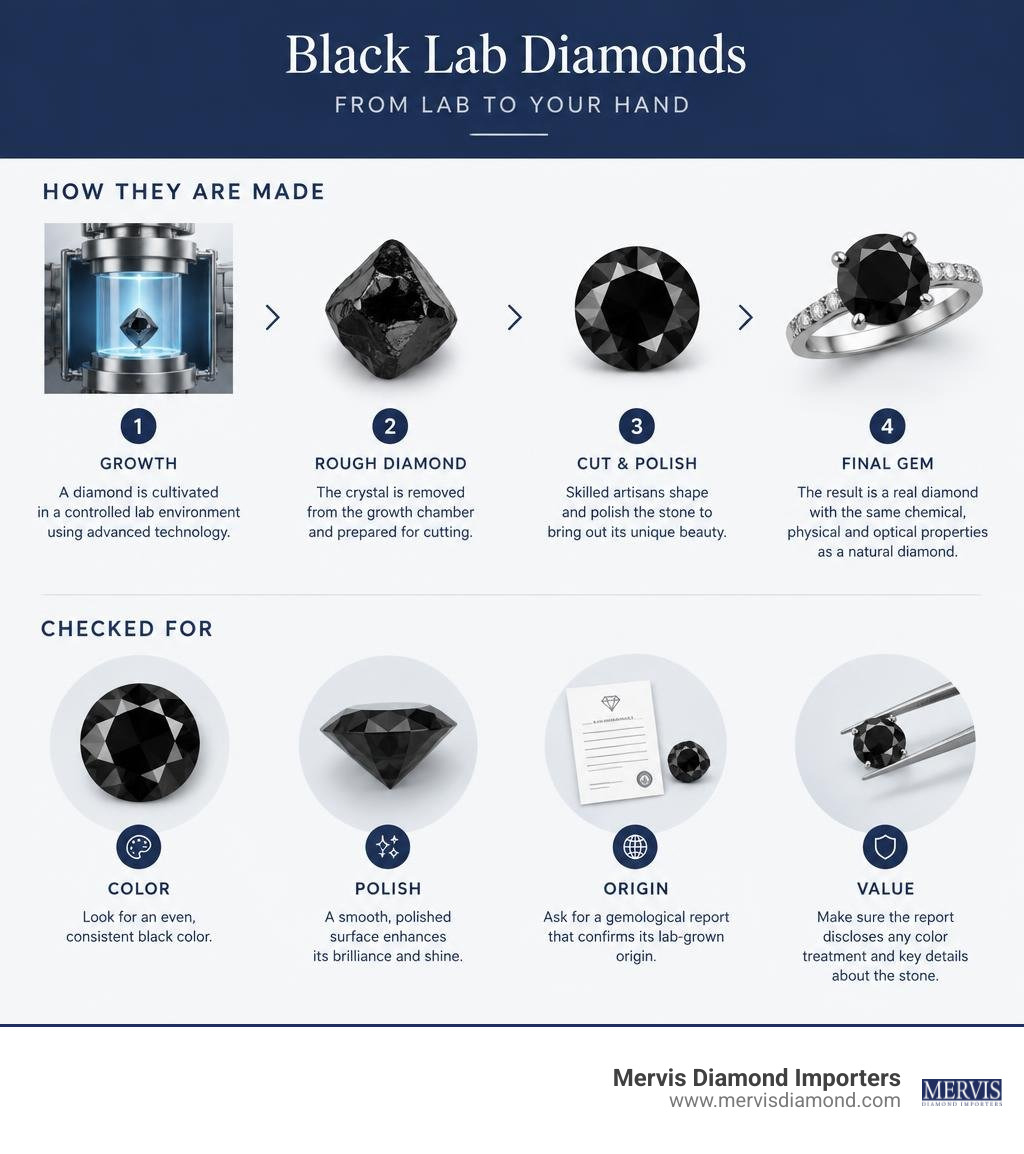
A black lab diamond is a real diamond made in a lab. To judge its quality, look for even black color, a smooth, well-polished surface, and a secure setting. Ask for a gemological report that confirms its lab-grown origin and discloses any color treatment. Its bold look matters, but so does knowing exactly what you are buying.
Black lab diamonds offer a striking choice for an engagement ring. This guide explains how they are made, how they compare with natural black diamonds, and what to check before you choose one. I'm Morris Mervis, and I'll help you make that choice with confidence.
What Is a Black Lab Diamond and How Is It Made?
A lab-created black diamond is a genuine diamond cultivated in a strictly controlled technological environment. It is not an imitation stone like cubic zirconia or onyx. Chemically, physically, and optically, it is identical to a diamond pulled from the earth. The only difference is its point of origin: instead of forming over billions of years deep in the mantle, it forms over weeks using advanced engineering.
Unlike colorless stones that are prized for their complete transparency and light dispersion, black diamonds are entirely opaque. Their dramatic appearance comes from dense internal concentrations of dark inclusions, primarily graphite, magnetite, or hematite, or from specialized color treatments that alter the crystal's color center. When you explore our complete guide to factory-grown diamonds, you will see that these stones share the exact single-crystal lattice of classic white diamonds.
It is helpful to distinguish gem-quality black diamonds from carbonado. Carbonado is a polycrystalline, porous aggregate of diamond, graphite, and amorphous carbon typically discovered in alluvial deposits and historically reserved for heavy industrial cutting. Lab-grown black diamonds used in fine jewelry, by contrast, are faceted, single-crystal gems crafted to deliver intense surface luster and sharp facet reflections.
Creation Methods: HPHT, CVD, and High-Temperature Annealing
Scientists produce lab-created black diamonds through two primary methods, often followed by specialized thermal or radiation treatments to achieve their pitch-black appearance.
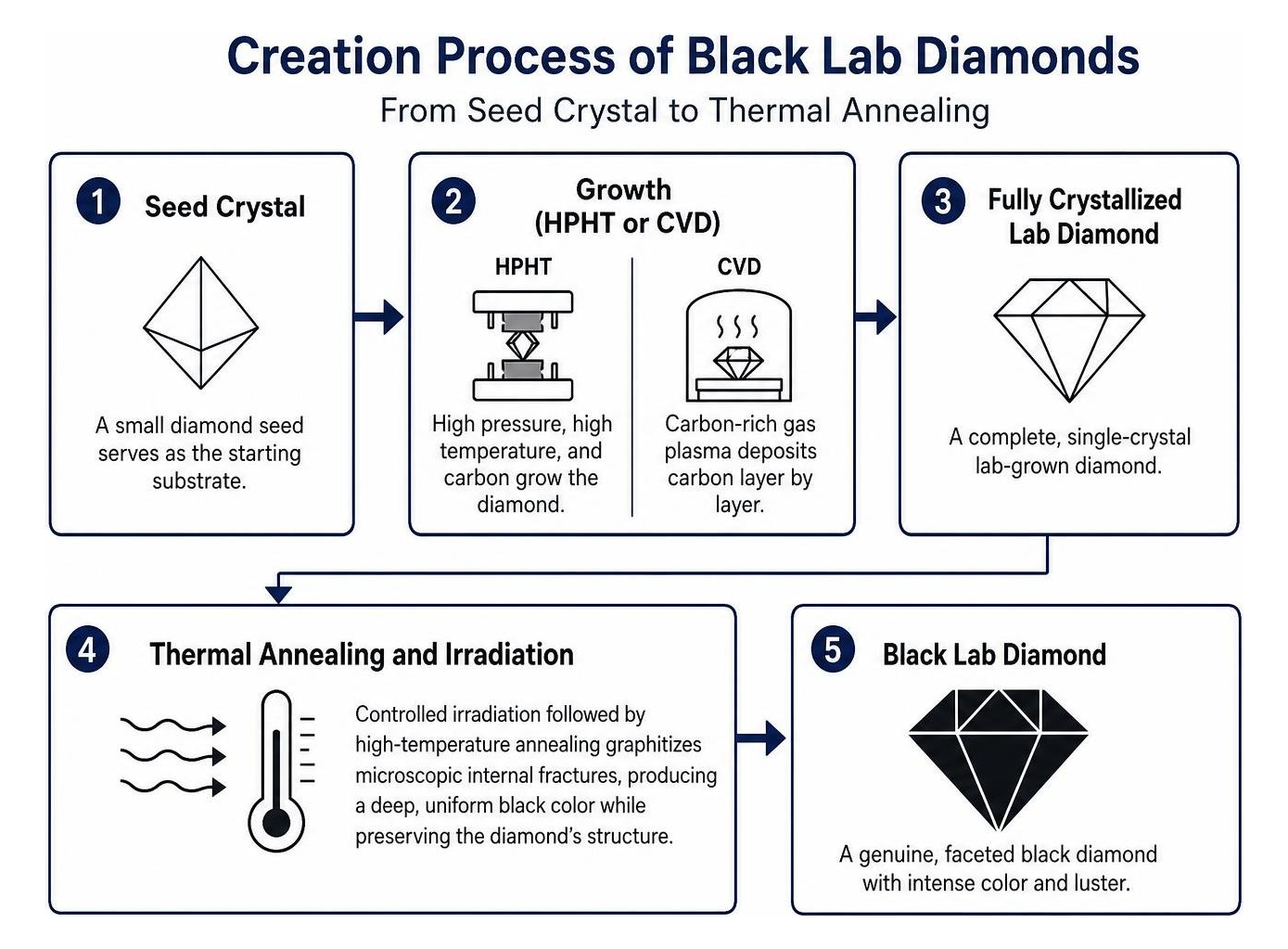
- High Pressure High Temperature (HPHT): This technique mimics the natural geological conditions of the earth's mantle. A small diamond seed is placed inside a heavy mechanical press alongside pure carbon. Under temperatures exceeding 2,000 degrees Celsius and pressures topping 60,000 atmospheres, the carbon dissolves in a molten flux and crystallizes onto the seed. Introducing specific metallic elements or graphite micro-inclusions during growth produces a naturally dark stone.
- Chemical Vapor Deposition (CVD): In this method, a diamond seed is placed in a vacuum chamber filled with carbon-rich gases (such as methane and hydrogen). Microwaves heat the gas into a glowing plasma, causing carbon atoms to break free and rain down onto the substrate layer by layer.
- High-Temperature Annealing and Irradiation: Many black lab stones begin as fully crystallized lab diamonds that are subjected to controlled irradiation followed by high-temperature annealing. This post-growth heating graphitizes microscopic internal fractures throughout the crystal, turning the stone deeply, uniformly black without compromising its fundamental structural integrity.
Chemical and Physical Properties of Lab-Created Black Diamonds
Every black lab stone shares the core properties of pure crystallized carbon:
- Crystal Structure: Isotropic, cubic carbon lattice.
- Opacity: Fully opaque; incoming light is absorbed rather than transmitted.
- Luster: Adamantine (the brilliant, metallic-like surface shine unique to diamonds).
- Thermal Conductivity: Exceptionally high, identical to mined diamonds.
- Specific Gravity: Approximately 3.51 to 3.53.
Because light cannot travel through an opaque black diamond to bounce off the pavilion facets, the stone does not exhibit traditional "fire" or internal sparkle. Instead, its visual appeal comes from its exterior adamantine luster—the way light flashes off the highly polished, mirror-like facet surfaces.
Evaluating Quality: Grading, Color, and Durability
Evaluating a dark stone requires a completely different approach than judging a traditional white diamond. The traditional 4Cs (Cut, Color, Clarity, and Carat) take on a modified meaning when applied to opaque fancy-color stones.
How Gemological Laboratories Grade Black Diamonds
When prominent gemological laboratories like the GIA (Gemological Institute of America) or IGI (International Gemological Institute) evaluate black diamonds, they issue specialized colored diamond reports.
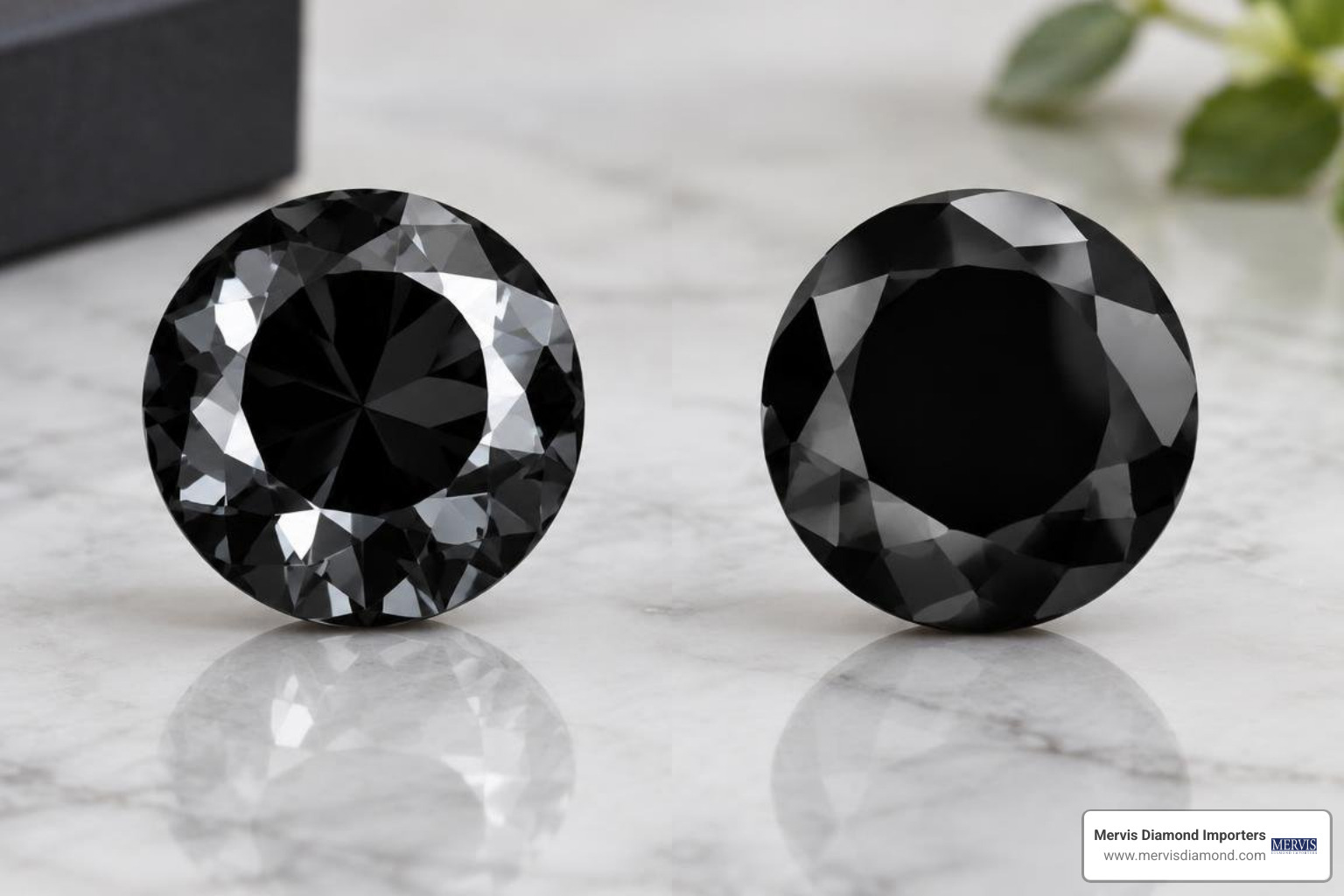
- Color: Rather than receiving a letter grade from D to Z, these stones receive a single descriptive grade: Fancy Black. The laboratory notes whether the color is natural to the growth process or the result of post-growth radiation or thermal treatments. An exceptional stone displays rich, uniform saturation without milky patches, gray zones, or brown undertones.
- Clarity: Standard clarity grades (such as VVS1, VS2, or SI1) are not applied because the stone is completely opaque by design. Instead, gemologists assess the integrity of the surface. They inspect the table and crown for surface-reaching pits, large cracks, or unpolished grain lines that could detract from the gem's sleek look.
- Cut: Because light return through the pavilion is not a factor, cut grading focuses on symmetry, table proportion, and polish grade. A mirror-like, high-polish finish is essential for maximizing surface brilliance.
Durability and Hardness of Black Lab Diamonds
Diamonds represent the hardest known natural material on Earth, scoring a perfect 10 on the Mohs scale of mineral hardness. This exceptional hardness means a black lab diamond resists scratching from everyday wear better than any alternative dark gemstone.
| Gemstone | Mohs Hardness | Durability for Daily Wear | Appearance & Luster |
|---|---|---|---|
| Black Lab Diamond | 10 | Exceptional; resists all daily scratching | Metallic, high adamantine surface shine |
While diamond hardness prevents surface scratches, overall toughness depends on structural inclusions. Mined black diamonds often contain heavy, erratic natural fracture networks that make them brittle during cutting or setting. Lab-grown black diamonds, by contrast, feature much more controlled microscopic inclusions, giving them greater structural reliability under everyday wear.
Black Lab Diamonds vs. Natural Black Diamonds: Key Differences
Mined black diamonds have a storied place in jewelry history. Historically, natural black diamonds were viewed as rare curiosities, with famous examples capturing global attention. Celebrated historical stones include:
- The Enigma: A 555.55-carat Fancy Black diamond recognized as the largest natural fancy black diamond and the largest faceted diamond ever sold at auction, fetching $4.29 million in 2022.
- The Spirit of de GRISOGONO: Weighing 312.24 carats, this is one of the largest gem-quality black diamonds in the world, carved from a 587-carat rough crystal.
- The Gruosi Diamond: A 115.34-carat heart-shaped black diamond cut from a 300.12-carat rough gem.
- The Korloff Noir: An 88-carat round black diamond believed to have originated in Siberia.
- The Amsterdam Diamond: A 33.74-carat pear-shaped black diamond auctioned by Christie’s in 2001 for more than $350,000.
Despite their rarity, natural black diamonds often possess uneven coloration, visible surface pitting, and dense fissures that require careful handling. Lab-grown black diamonds eliminate these structural headaches by offering smooth, continuous crystal surfaces and rich, uniform depth of color.
Why Choose a Black Lab Diamond Over Mined Stones?
Choosing a laboratory-created black stone provides clear advantages:
- Ethical and Environmental Peace of Mind: Lab diamonds avoid the intensive earth displacement and ecosystem disruption associated with commercial open-pit mining.
- Structural Integrity: Because their growth environment is carefully regulated, lab-grown black diamonds avoid the massive internal fissures that can make heavily included mined black diamonds susceptible to chipping.
- Flawless Surface Polish: Smooth crystal growth allows our master polishers to achieve flat, razor-sharp facet junctions and liquid-smooth tables without unsightly pits.
- Modern Individuality: A dark diamond offers a non-traditional, avant-garde aesthetic for buyers seeking something distinct from classic white stones.
Price Comparison and Overall Value
While natural black diamonds carry modest price tags relative to top-tier D-color natural white diamonds, lab-grown black diamonds are significantly more accessible. When you examine our pricing benchmarks for 3-carat lab-grown diamonds, you will find that lab technology allows you to maximize carat weight while keeping your budget firmly intact.
A fine 2-carat to 3-carat natural black diamond can command thousands of dollars, largely driven by auction interest and rarity. In contrast, a lab-grown black diamond of the exact same size delivers superior surface polish, deeper color uniformity, and greater structural security at a fraction of that cost.
Designing Jewelry: Top Cuts, Settings, and Care Tips
The striking opacity of black diamonds makes them a versatile centerpiece for custom jewelry. Whether set in an engagement ring, pendant, or cuff links, their moody depth pairs handsomely with contrasting metals and accent stones.
Popular Styles and Settings for a Black Lab Diamond Ring
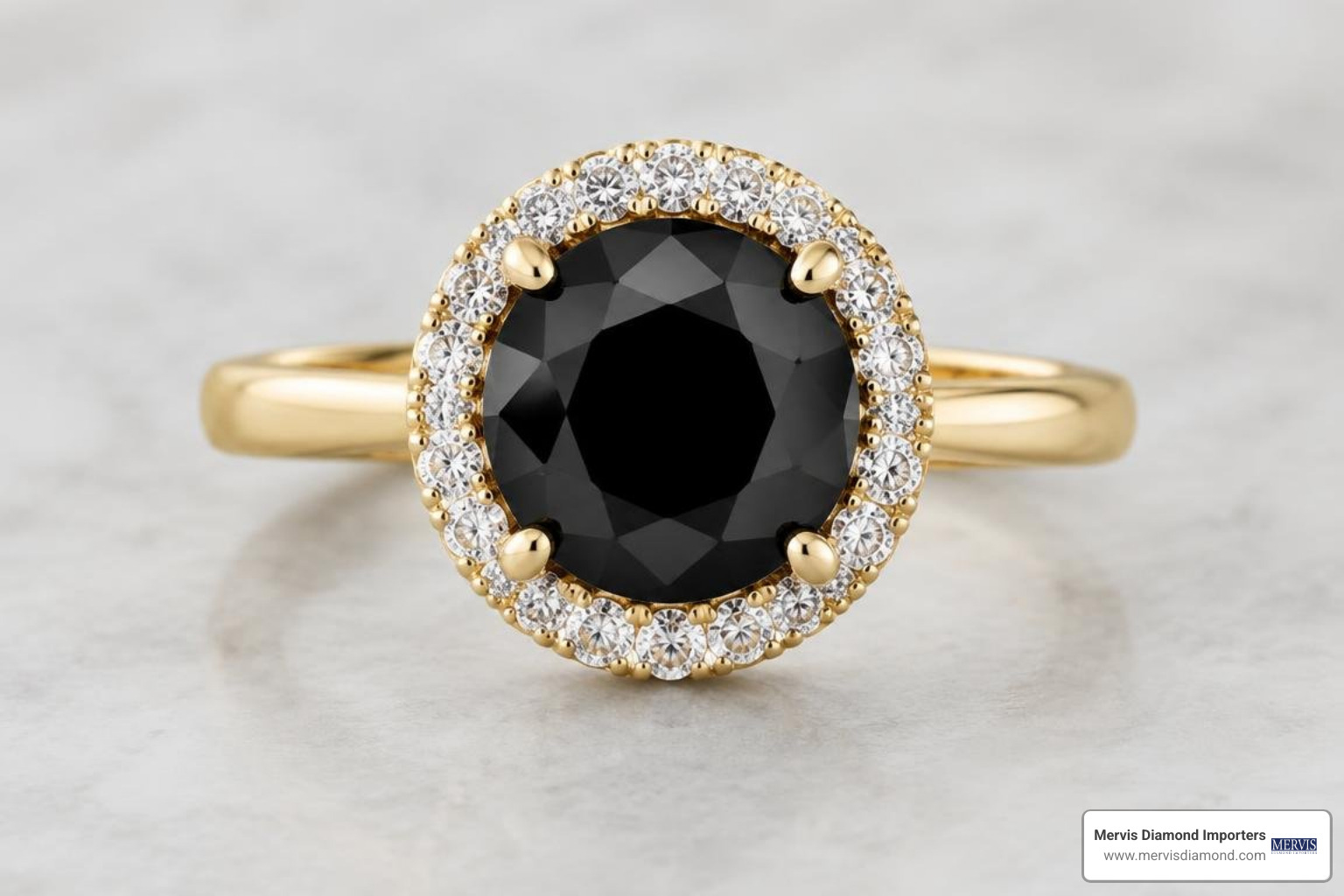
- High-Contrast Solitaires: Setting a bold black diamond in rich 18k yellow gold or romantic rose gold produces a dramatic visual contrast.
- Halo Combinations: Surrounding a dark center stone with a halo of bright, colorless lab diamonds makes the center gem stand out while delivering dazzling light return. You can explore our collection of custom lab-grown engagement ring designs to see how contrasting stone colors interact.
- Protective Bezel Mounts: While black diamonds score 10 on the Mohs hardness scale, bezel settings wrap the girdle in a smooth rim of precious metal, protecting facet edges from accidental knocks.
-
Statement Shapes:
- Emerald Cut: Wide, open step-cut tables highlight the stone’s smooth, obsidian-like surface.
- Round Brilliant Cut: Concentric triangular facets catch ambient overhead light, turning the crown into a series of flashing mirrors.
- Pear and Oval Shapes: Elongated silhouettes flatter the finger while offering generous surface area.
Best Practices for Cleaning and Maintenance
Caring for a black lab diamond requires a few minor adjustments compared to white stones:
- Skip the Ultrasonic Cleaner: Avoid ultrasonic or high-heat commercial steam cleaners. If the diamond underwent high-temperature annealing or contains dense micro-graphite inclusions, extreme ultrasonic vibrations can agitate internal stress points.
- Use Gentle Cleansers: Clean your jewelry at home using a bowl of warm water mixed with mild, fragrance-free dish soap.
- Soft-Bristle Brushing: Gently clean behind the setting and around the prongs using a baby toothbrush to lift away skin oils, lotions, and dust.
- Routine Prong Checks: Have your setting inspected by our master jewelers at least once a year at our Tysons, Rockville, or Washington, D.C. showrooms to verify that your prongs remain tight and aligned.
- Individual Storage: Always store diamond jewelry in dedicated, fabric-lined compartments so harder stones do not scratch softer metals or gems.
Frequently Asked Questions About Black Lab Diamonds
Are black lab diamonds real diamonds?
Yes, black lab diamonds are 100% real diamonds. They are formed from pure elemental carbon, arrange in an isotropic diamond crystal lattice, register a 10 on the Mohs hardness scale, and test positive as genuine diamonds on standard thermal and electrical diamond testers. They are simply grown in a laboratory rather than mined from the ground.
Can black lab diamonds be certified and appraised?
Yes. Independent gemological laboratories inspect and certify black lab diamonds, detailing their carat weight, dimensions, symmetry, polish, and growth origin. When securing insurance coverage or confirming market value, appraising lab-grown diamond jewelry through an independent, certified appraiser ensures your piece is properly documented and fully protected.
Conclusion
A black lab diamond delivers an undeniable statement: bold, sophisticated, durable, and distinctly modern. By combining the legendary hardness of crystalline carbon with flawless surface polishing and ethical laboratory growth, these captivating gems offer exceptional beauty at an accessible value.
At Mervis Diamond Importers, our family has hand-selected diamonds for generations across the Washington, D.C., Maryland, and Virginia areas. Whether you are designing a one-of-a-kind engagement ring or a signature fine jewelry piece, we are here to provide pressure-free guidance every step of the way. If you want to explore all your options between lab-created and earth-mined stones, explore our comprehensive comparison of mined vs. lab-grown diamonds or schedule a personal consultation at one of our local showrooms today.