

Top Jewelers Ranked to Find Your Best Place to Buy Tennis Bracelet Sparklers
How to Find the Best Place to Buy a Tennis Bracelet
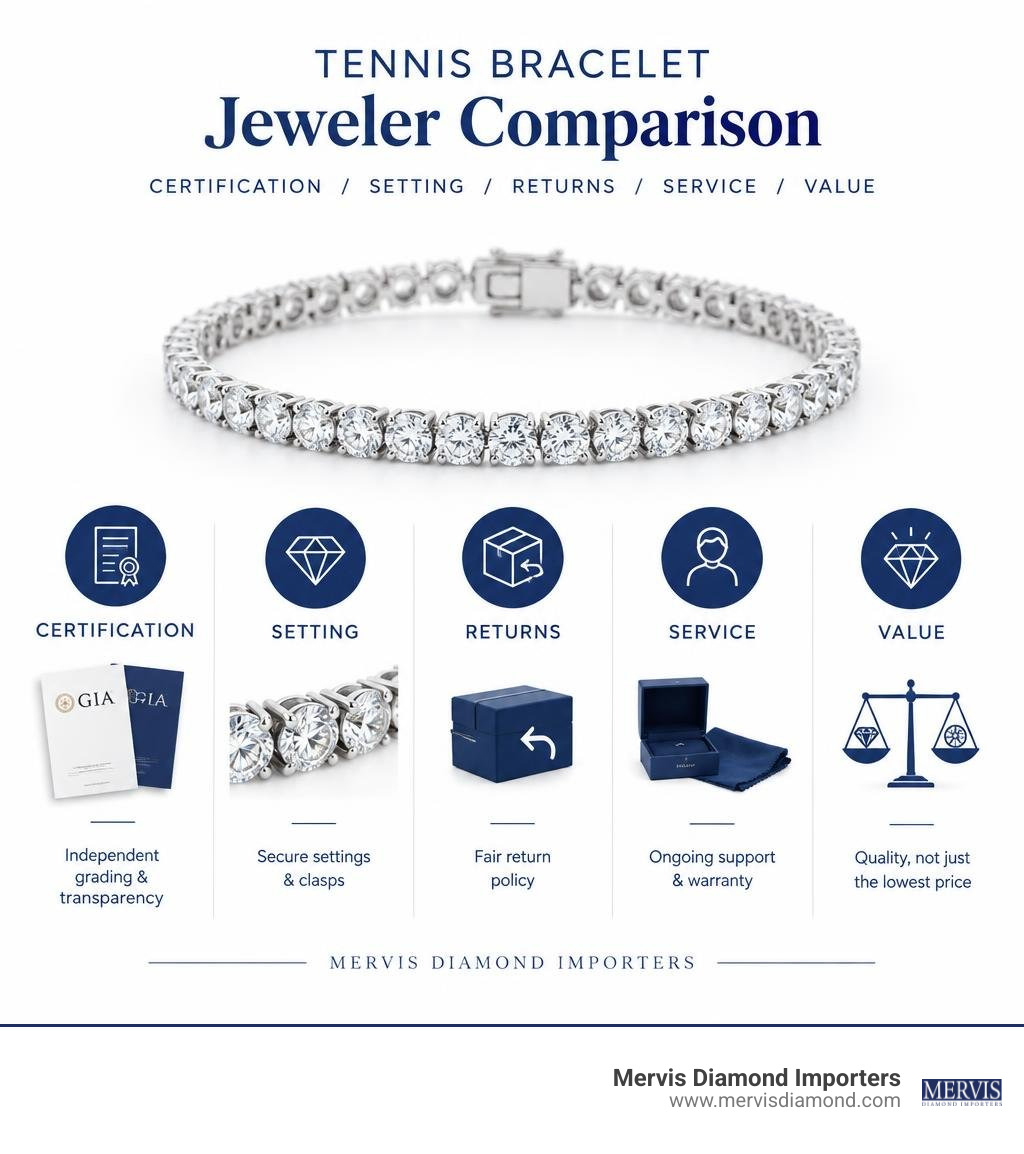
The best place to buy a tennis bracelet is a reputable jeweler that clearly shows diamond quality, offers independent grading where applicable, uses secure settings and clasps, and stands behind the purchase with a fair return policy and warranty.
Before you buy, compare at least three sellers on these essentials:
- Diamond details: Look for consistent cut, color, clarity, and total carat weight across the bracelet.
- Certification and transparency: Ask for GIA or IGI documentation when available, plus clear photos or 360-degree video.
- Craftsmanship: Check the metal, prong or bezel security, and a clasp with a safety catch.
- Buyer protection: Favor insured shipping, a reasonable return window, and repair support after purchase.
- Value: Online sellers may price comparable bracelets below traditional stores because of lower overhead, but the lowest price is not always the best value.
Lab-grown diamonds can make a larger, brighter-looking bracelet more attainable, while natural diamonds may appeal to buyers who prefer their rarity. Either way, a well-matched bracelet with durable construction matters more than a brand name alone. For broader context on how diamond quality is assessed, the Gemological Institute of America explains the standards behind independent grading reports.
I am Morris Mervis, and in this guide, I will help you compare the jewelry sellers and buying standards that make a tennis bracelet purchase feel secure, clear, and worth it.
Key Factors That Define the Best Place to Buy Tennis Bracelet Designs
When shopping for an iconic piece of fine jewelry, finding a jeweler that emphasizes quality craftsmanship, structural durability, and diamond consistency is critical. Because a tennis bracelet features dozens of individual stones linked together, even one subpar diamond or weak link can compromise the entire piece.
Evaluating the 4Cs (cut, color, clarity, and carat weight) across an entire bracelet requires specialized attention. Unlike an engagement ring where you evaluate a single hero stone, a tennis bracelet requires harmony. Every gem must match its neighbors precisely in color grade and cut proportions to ensure an unbroken ribbon of light across your wrist.
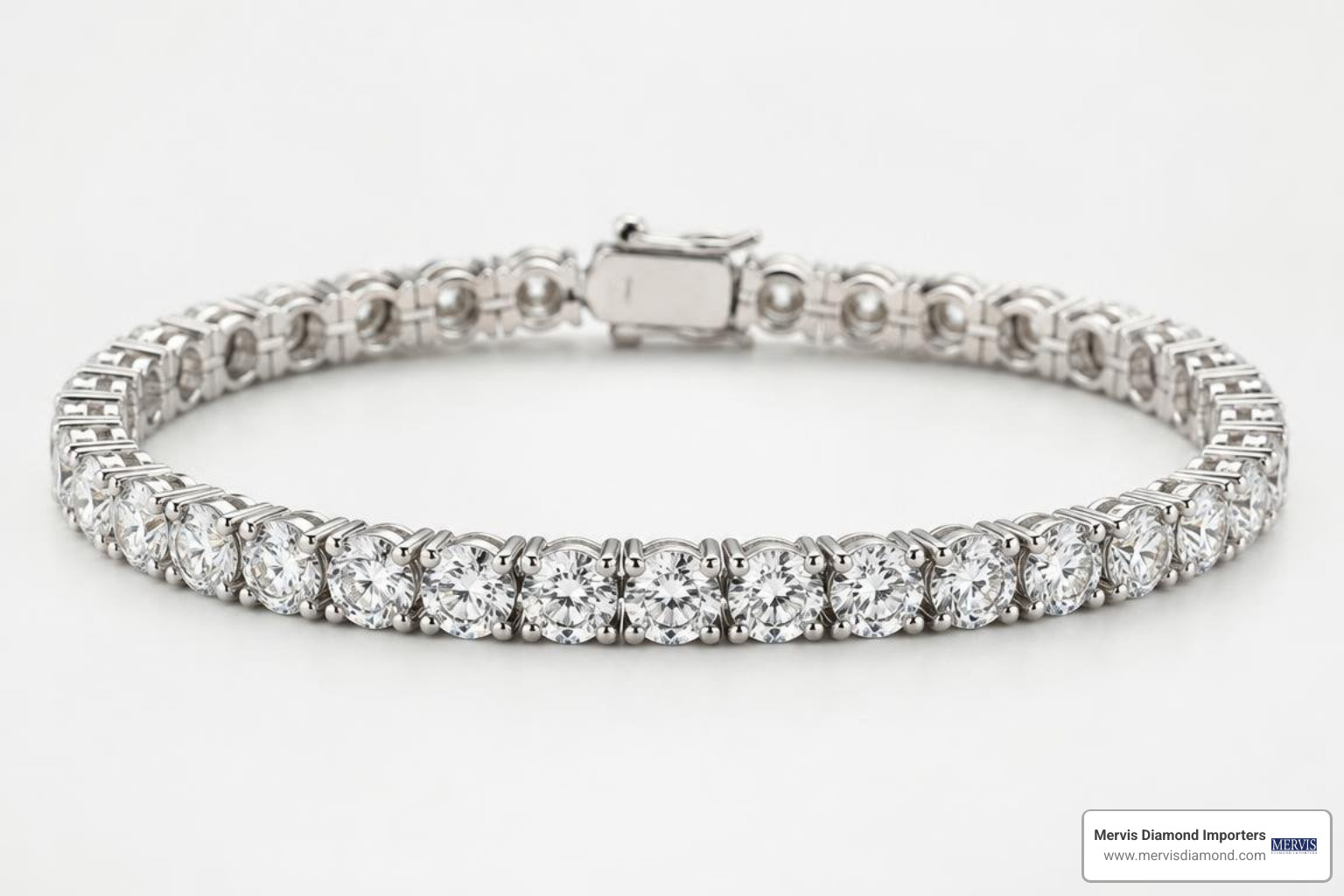
Beyond the gems themselves, the structural metal work determines how long your bracelet will last. Whether crafted in durable platinum or classic 14k or 18k gold, the mounting must withstand the friction of daily wear. Premium jewelers provide comprehensive guarantees, transparent return policies (such as a 30-day money-back guarantee), and secure clasp mechanisms that keep your investment safe.
Diamond Quality, Cut, and Certification Standards
The brilliance of a diamond line bracelet depends heavily on cut precision. If stones are cut too shallow or too deep, they leak light, leaving the bracelet looking dull or uneven. Reputable jewelers utilize diamonds graded by independent gemological laboratories such as the Gemological Institute of America (GIA) or the American Gem Society (AGS).
When reviewing options like a classic 14k white gold diamond tennis bracelet, inspect the following thresholds:
- Color Uniformity: Ensuring stones fall within a tight range (such as Near Colorless G–H) avoids noticeable yellow tinting between adjacent links.
- Clarity Standards: Eye-clean stones (typically VS2 to SI1) ensure inclusions remain invisible to the naked eye while maximizing value.
- Cut Matching: Calibrated table sizes and pavilion angles across all 40 to 60+ stones produce continuous sparkle.
Setting Security, Clasp Types, and Customization
A diamond bracelet should offer total peace of mind on the wrist. If you drop a tennis bracelet, you will hear a clink that is louder than most wedding bells—which is why setting choice and clasp integrity are so important!
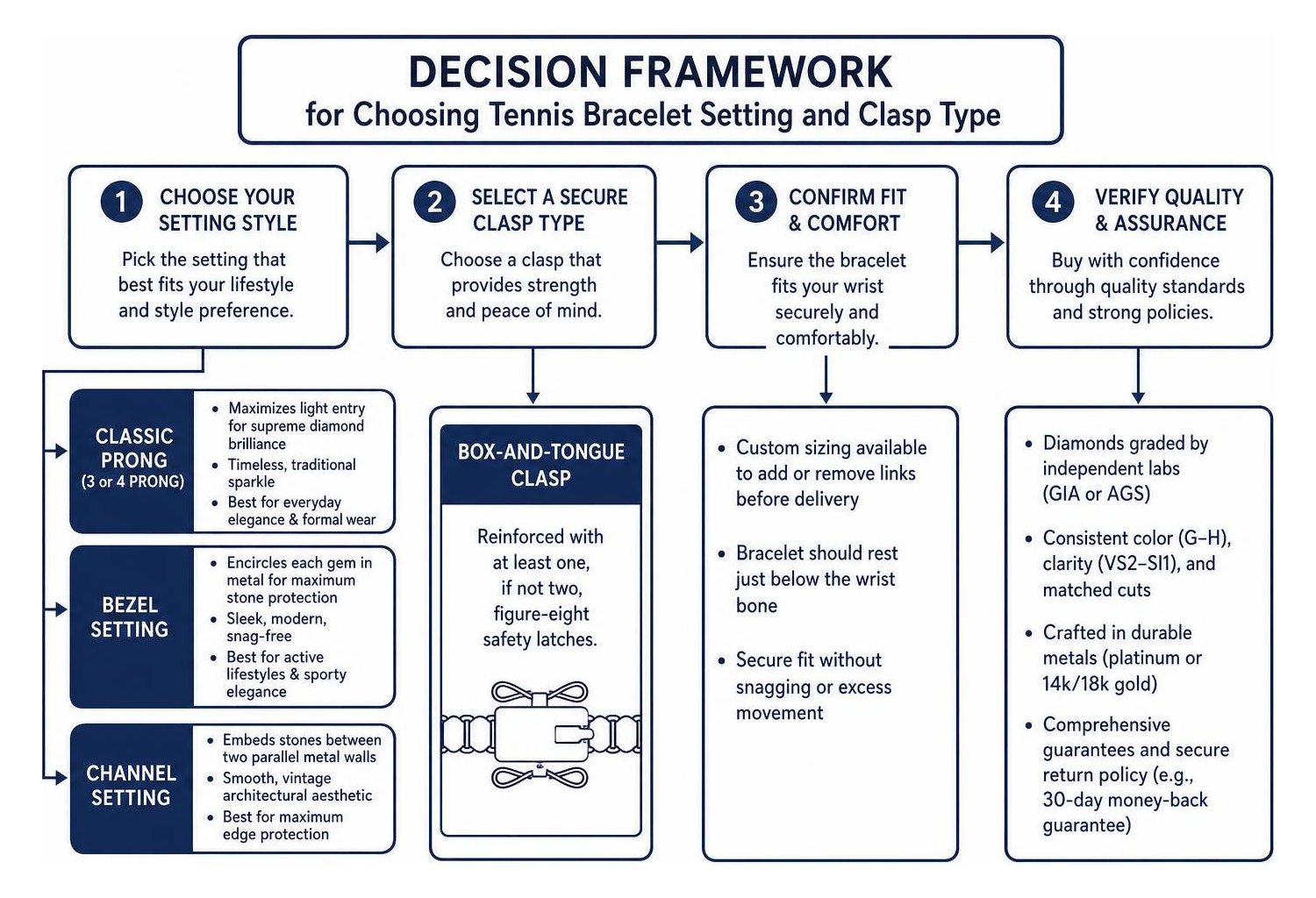
The three primary setting styles offer distinct advantages:
| Setting Type | Primary Advantage | Style Profile | Best For |
|---|---|---|---|
| Classic Prong (3 or 4 Prong) | Maximizes light entry for supreme diamond brilliance | Timeless, traditional sparkle | Everyday elegance & formal wear |
| Bezel Setting | Encircles each gem in metal for maximum stone protection | Sleek, modern, snag-free | Active lifestyles & sporty elegance |
| Channel Setting | Embeds stones between two parallel metal walls | Smooth, vintage architectural aesthetic | Maximum edge protection |
No setting is complete without an ultra-secure clasp. Look for a box-and-tongue clasp reinforced with at least one, if not two, figure-eight safety latches. Top jewelers also offer custom sizing to remove or add links prior to delivery, ensuring your bracelet rests comfortably just below the wrist bone without snagging.
Top Types of Retailers for Diamond Tennis Bracelets in 2026
Over 60% of luxury jewelry purchases now happen online, supported by interactive technologies and competitive pricing models. However, the retail landscape remains varied, spanning direct diamond importers, online diamond platforms, and brick-and-mortar luxury showrooms. Understanding how these business models operate helps you identify where your money delivers the most value.
Why Direct Diamond Importers Are the Best Place to Buy Tennis Bracelet Styles
Direct diamond importers offer an unmatched balance between pricing efficiency and personalized curation. By eliminating intermediary brokers and sourcing stones straight from cutting centers, direct importers deliver significant savings without compromising stone quality.
At Mervis Diamond Importers, our master gemologists hand-select both natural and lab-grown diamonds for individual brilliance and perfect pairing. We invite clients seeking fine diamond tennis bracelets in Washington D.C., Rockville, MD, and Tysons, VA to experience private, pressure-free consultations with non-commissioned experts. This high-touch, boutique approach guarantees that your bracelet is built with precision-matched diamonds that deliver lifetime brilliance.
High-End Online Diamond Specialists vs. Traditional Boutiques
Online diamond specialists have transformed how people shop for fine jewelry. Industry data highlights that online retailers often offer 20% to 40% lower prices than traditional brick-and-mortar stores with high overhead costs.

Leading online platforms bridge the digital divide by offering 360-degree high-definition video inspection tools, insured overnight shipping, and generous 30-day return windows. For buyers who prefer physical exploration, our luxury showrooms in Washington DC, Virginia, and Maryland combine online pricing efficiency with the reassurance of viewing exquisite designs in person from our comprehensive diamond bracelets collection.
Lab-Grown vs. Natural Diamond Value Across Retailers
The choice between lab-grown and natural diamonds represents one of the most exciting decisions for modern buyers:
- Natural Diamonds: Prized for their geological rarity and timeless value retention. A premier piece, such as a 6.28 ct natural diamond tennis bracelet, represents a classic heirloom investment.
- Lab-Grown Diamonds: Chemically, physically, and optically identical to earth-mined diamonds, lab-created gems allow buyers to maximize carat size and diamond clarity within a set budget, often saving up to 60–80% compared to natural alternatives of the exact same specifications.
Both options offer exceptional durability (ranking 10 on the Mohs hardness scale) and continuous sparkle. Choosing between them comes down to personal sentiment and budget priorities.
Comparing Price Ranges, Diamond Styles, and Settings
Tennis bracelet pricing varies based on total carat weight, diamond origin, metal choice, and design complexity:
- Under $2,500: Typically includes 1.00 to 3.00 ctw lab-grown diamond bracelets or delicate 1.00 ctw natural diamond styles set in 14k white or yellow gold.
- $2,500 to $7,500: Mid-tier natural diamond bracelets (3.00 to 5.00 ctw) or substantial statement lab-grown bracelets (6.00 to 10.00+ ctw) featuring premium color and clarity grades.
- $7,500 to $18,000+: High-carat natural diamond line bracelets (7.00 to 10.00+ ctw) or intricate multi-stone luxury pieces crafted in platinum or two-tone 18k gold.
Classic Round Brilliant vs. Multi-Shape Statement Bracelets
While the classic single-row round brilliant bracelet remains the quintessential standard, fancy-shaped and multi-row configurations have surged in popularity.
Popular modern silhouettes include:
- Emerald and Radiant Cuts: Sleek, step-cut or brilliant-cut rectangles that offer mirrored flashes of light and art-deco sophistication.
- Oval and Pear Shapes: Elongated stones that create dynamic texture and an eye-catching statement across the wrist.
- Multi-Row Arrangements: Architectural masterworks such as a platinum marquise and oval diamond three row bracelet, delivering maximum presence and brilliance.
Frequently Asked Questions About Diamond Tennis Bracelets
What is the best place to buy tennis bracelet jewelry online vs. in-store?
The best buying experience combines digital research tools with physical showroom support. Shopping with an established jeweler that operates both advanced digital showcases and physical showrooms—such as Mervis Diamond Importers in Tysons, VA, Rockville, MD, and Washington, DC—gives you access to competitive pricing, independent diamond certification, virtual consultations, and in-person appraisal and cleaning services.
How much should you spend on a diamond tennis bracelet in 2026?
A diamond tennis bracelet can range from approximately $1,500 for a delicate lab-grown design to upwards of $15,000 to $25,000+ for large, high-grade natural diamond layouts. Establish a comfortable budget first, then decide whether to optimize for natural diamond rarity or larger lab-grown carat size.
Are lab-grown diamonds a good choice for a tennis bracelet?
Yes. Lab-grown diamonds possess the exact same crystalline carbon structure, brilliance, and lifetime hardness as mined diamonds. Because a tennis bracelet's beauty comes from consistent sparkle across dozens of matched stones, lab-grown diamonds offer an exceptional opportunity to acquire higher color and clarity grades at a very accessible price.
Conclusion
Finding the perfect diamond tennis bracelet is an exciting journey that combines timeless style with personal celebration. The premier retailers stand out by offering transparent diamond grading, precision-matched cut standards, durable settings, and customer-first service policies. Whether you select a classic round-cut style or a bold multi-row statement, prioritizing craftsmanship ensures your piece remains a treasured staple for generations.
To discover how this iconic design became a fashion legend, explore the history and origin of the tennis bracelet, or visit our experts in Washington D.C., Maryland, and Virginia to find your perfect match.