

Timeless Sparkle and the Enduring Allure of Antique Diamond Tennis Bracelets
The Appeal of an Antique Diamond Tennis Bracelet
An antique diamond tennis bracelet is typically a diamond line bracelet that is at least 100 years old. The name tennis bracelet came later, but the look is familiar: diamonds set in a flexible row around the wrist. Unlike many modern versions, antique pieces may have hand-cut diamonds, detailed metalwork, and clasps that need careful inspection.
If you're shopping for one, check its age, condition, and any past repairs before judging the price. A beautiful bracelet is only a good choice if its stones and links are secure.
I'm Morris Mervis, and I'll walk you through what to look for, from its history to the details that affect its value.
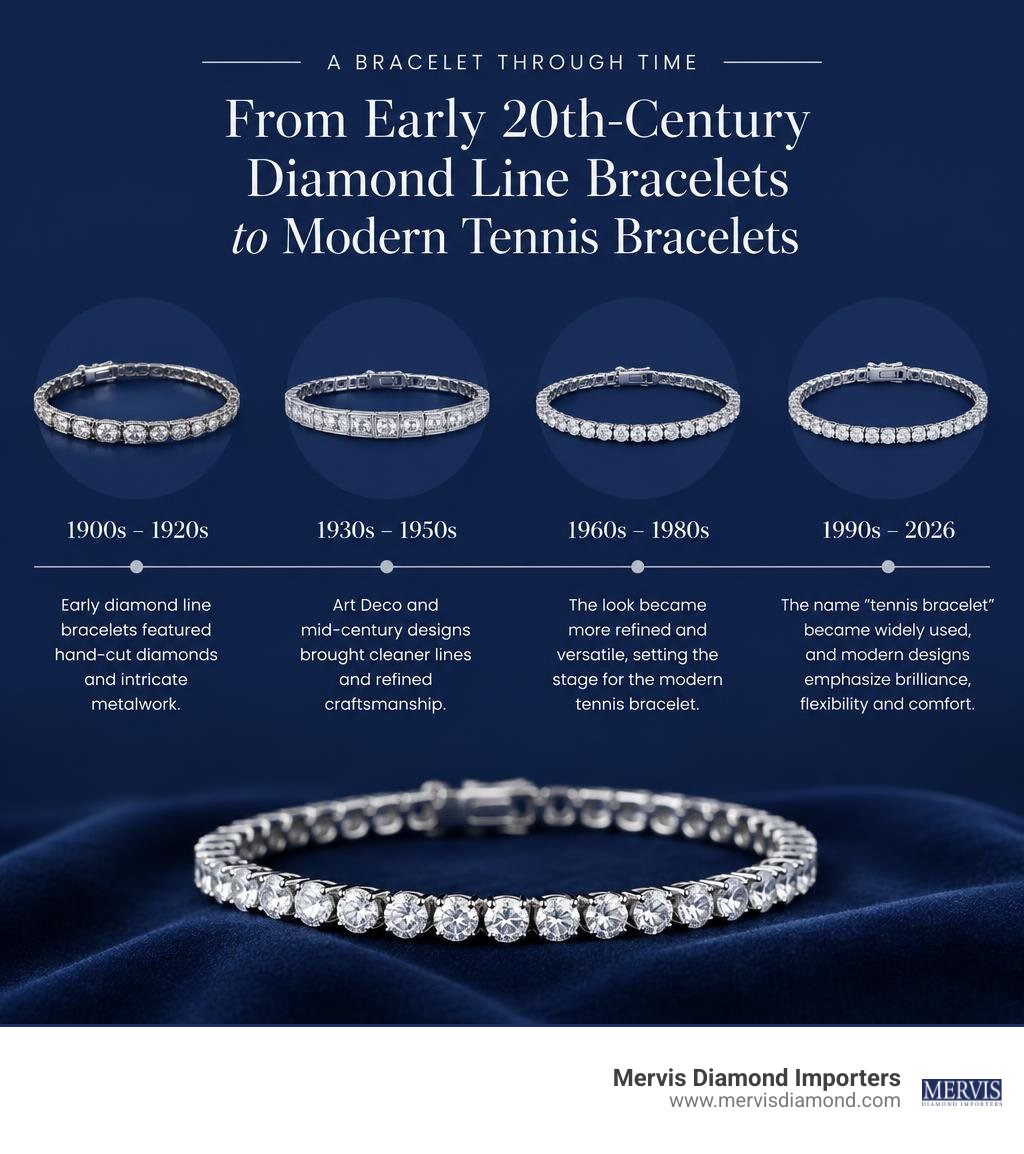
What Defines an Antique Diamond Tennis Bracelet?
To truly appreciate an antique bracelet, it helps to understand the terminology of the jewelry world. In fine jewelry, the word "antique" is not simply a synonym for "old-fashioned" or "retro." By industry and trade standards, an authentic antique must be at least 100 years old. As we look at these heirloom treasures in 2026, a genuine antique piece dates back to 1926 or earlier.
Long before the world began calling these sparkling rows "tennis bracelets," they were universally known as "eternity line bracelets" or simply "diamond line bracelets." These pieces represented the pinnacle of bench jeweler artistry: an unbroken, continuous ribbon of individually set diamonds that encircled the wrist with graceful, fluid articulation.
Unlike modern iterations manufactured with automated casting, computer-aided design (CAD), and machine assembly, every single link of an authentic antique line bracelet was hand-fabricated. Master craftsmen pierced individual metal galleries, filed hinges, and fashioned tiny connecting pins by hand to ensure the bracelet draped like fine silk. If you want to explore how the construction and styling have evolved over decades, our comprehensive diamond tennis bracelet guide breaks down the essential anatomy of these iconic designs.
| Feature | Antique Line Bracelet (Pre-1926) | Modern Tennis Bracelet |
|---|---|---|
| Craftsmanship | Hand-pierced, hand-assembled links with hand-drawn pins | Precision cast links, laser-welded joints, automated assembly |
| Diamond Cuts | Old Mine, Old European, Rose cuts, Transitional cuts | Modern Round Brilliant, Princess, Cushion cuts |
| Diamond Symmetry | Unique, organic faceting with high crowns and small tables | Highly standardized 57–58 facet symmetry designed for fire |
| Metal Settings | Platinum topped on gold, unplated platinum, milgrain bezels | 14k/18k white gold, modern platinum, 4-prong or modern bezel |
| Clasp Mechanism | Integrated tongue-and-box with handmade fold-over safety | Modern snap box with double figure-eight safety catches |
| Metal Finishing | Intricate hand milgrain, hand-engraved side gallery scrolls | Smooth, high-polish machine finish or crisp micro-pave |
Identifying True Antique Diamond Tennis Bracelet Eras
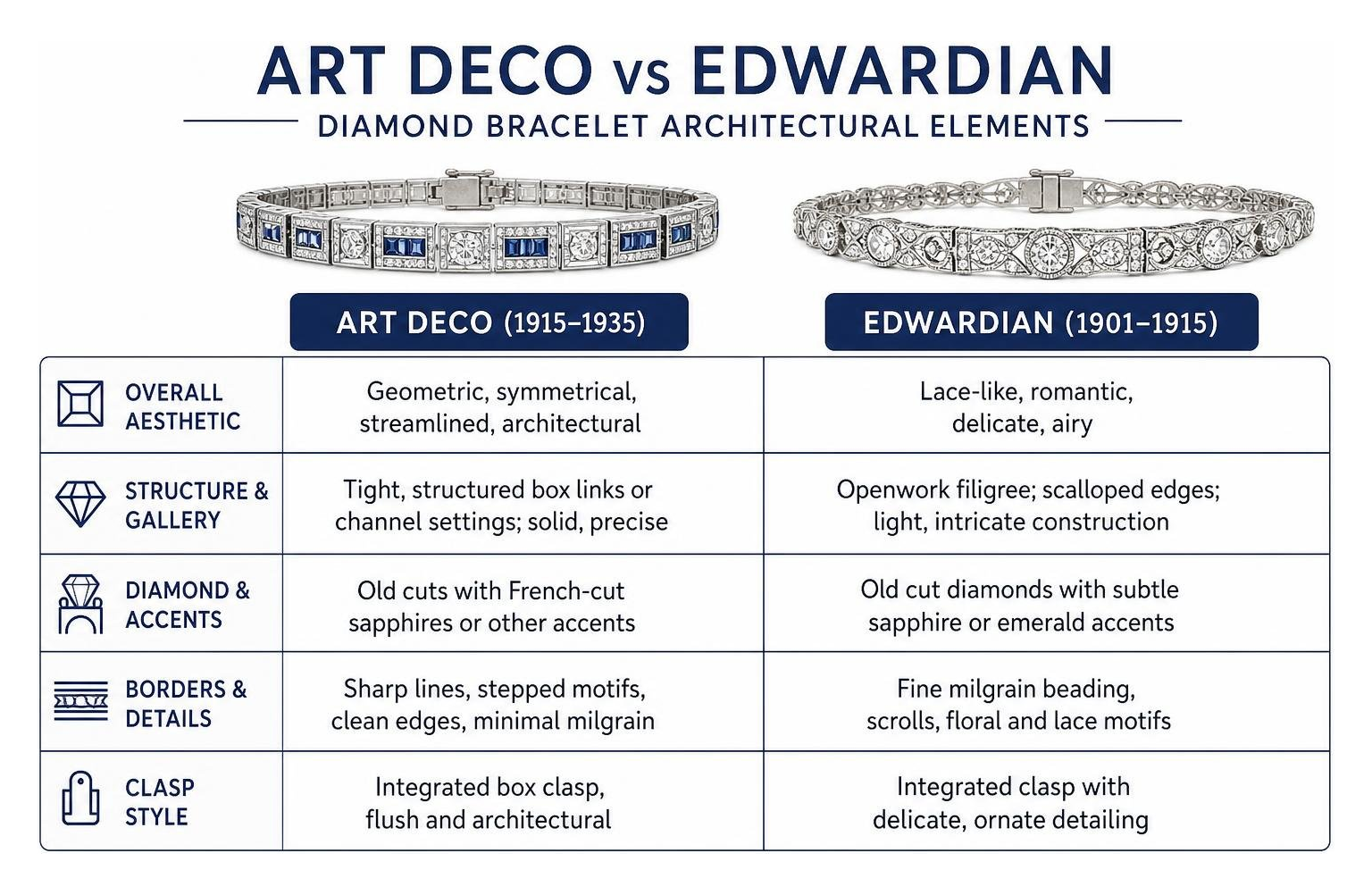
Line bracelets evolved through distinct artistic movements, each leaving a signature stamp on how metal was sculpted and gems were displayed.
- Victorian Era (Late 1800s to 1901): The earliest predecessors of the line bracelet often featured diamonds set in silver-topped yellow gold. Victorian jewelers used silver because they believed white metal enhanced the colorless beauty of diamonds, while yellow gold provided structural strength. These pieces often had slightly wider profiles, floral or celestial motifs, and closed or semi-closed back settings.
- Edwardian Era (1901–1915): The Edwardian period marked the rise of platinum in fine jewelry. With the invention of the oxyacetylene torch, jewelers could finally work with platinum's high melting point. They crafted impossibly delicate, lace-like mountings characterized by openwork filigree, scalloped edges, and whisper-thin milgrain beading. Edwardian line bracelets exude romance and lightness, often mixing old cut diamonds with subtle sapphire or emerald accents.
- Art Deco Era (1915–1935): Embracing industrial progress, architecture, and modernity, the Art Deco era transformed diamond line bracelets into streamlined, geometric marvels. Symmetrical box links, channel-set French-cut accent stones, and sharp, clean borders defined this period. The craftsmanship was so tight and precise that a Deco bracelet often looks like a solid track of pure light when laid flat on the wrist.
- Retro and Mid-Century (1935–1950s): While technically "vintage" rather than antique, pieces from this era transitioned toward bolder, architectural yellow and rose gold mountings, featuring larger transitional cuts and heavier metalwork as platinum was reserved for wartime production.
Distinctive Diamond Cuts and Precious Metals
When you examine an authentic antique bracelet, the diamonds do not look like the stones you see in modern jewelry showcases. Before computer-driven lasers and standardized proportion models existed, gem cutters cut diamonds entirely by hand and eye, maximizing brilliance under the soft glow of gas lamps and candlelight.
- Old Mine Cuts: Common in Victorian jewelry, these diamonds have a distinctive cushion-like or squarish outline, a high crown, a deep pavilion, and a visible open culet at the bottom.
- Old European Cuts: The beloved predecessor to the modern round brilliant, the Old European cut features a circular outline, 58 chunky facets, a small table facet, and a tall crown. They produce broad, colorful flashes of light (known as dispersion or "fire") rather than the rapid, splintered sparkle of modern stones.
- Rose Cuts and Transitional Cuts: Flat-bottomed rose cuts with domed, faceted tops provided a subtle shimmer in early pieces, while transitional cuts of the 1920s represented the evolution toward tighter symmetry.
The metals used are just as distinctive. You will often encounter solid hand-pulled platinum, which develops a soft, velvety patina over decades of wear. Early 20th-century white gold was naturally warm and left unplated, devoid of the bright rhodium coatings applied today. You will also see rich 18k yellow gold and two-tone combinations. Understanding how high-purity gold supports continuous diamond rows is helpful when evaluating settings, such as those discussed in our review of 18-carat tennis bracelet settings.
Authentication, Craftsmanship, and Valuation Factors

Because authentic antique jewelry commands a premium among collectors, knowing how to verify a piece is essential. At Mervis Diamond Importers, we often remind clients that true antiquity leaves identifiable footprints that modern machinery simply cannot replicate.
When appraising a potential antique, fine jewelry specialists look for hallmarks and assay stamps inside the clasp tongue or along the exterior side wall of the end links. French pieces, for instance, bear tiny dog's head or eagle's head stamps indicating platinum or 18k gold purity, while British pieces feature comprehensive date letters and city assay marks.
High-profile auction records reflect the exceptional value of authentic antique and vintage diamond bracelets. For instance, historical auction valuations for rare estate diamond bracelets demonstrate that documented provenance, exceptional diamond weight, and period-accurate platinum craftsmanship consistently achieve premium results in competitive sales.
How to Authenticate an Antique Diamond Tennis Bracelet
Authenticating an antique piece requires examining the metal, stones, and assembly methods under high magnification:
- Microscopic Tool Mark Analysis: Hand-engraved milgrain and hand-sawn pierced galleries show subtle, organic variations in depth and spacing. In contrast, modern cast reproductions often have rounded, blurry edges or tiny casting pores (bubbles) visible under 10x magnification.
- Hinge Construction and Screws: Early line bracelets utilized hand-turned hinge pins and hand-slotted rivets. If you look at the underside of the links, authentic antique construction shows clean mechanical assembly without modern laser welding pools.
- Clasp Mechanisms: Antique bracelets typically feature seamless integrated box clasps concealed inside an active diamond link, secured by an underlying tongue that snaps firmly into place, accompanied by a handmade fold-over or figure-eight safety wire.
- Solder Red Flags: Be wary of soft lead solder repairs. Antique platinum and gold should only ever be repaired with high-karat gold or platinum solder. Dark, grayish patches at link joints indicate crude repairs that can compromise structural integrity.
Evaluating Condition, Wear, and Market Value
An antique diamond bracelet's market value hinges on a delicate balance between historical rarity, diamond quality, and overall structural condition.
- Link Stretching and Hinge Wear: Over a century of movement, metal rubs against metal. Wear on the inner hinge pins causes the bracelet to "stretch," creating excess slack between links. Minor flexibility is normal, but excessive lateral bending means the hinge pins need professional rebuilding.
- Bezel and Prong Wall Thinning: Years of polishing or friction can wear down the metal holding the diamonds. Check whether the bezel walls or prong tips are paper-thin, which risks stone loss.
- Diamond Condition: Because antique diamonds were cut by hand, slight girdle irregularities are common. However, you should inspect for significant chips, bruised corners, or facet abrasions caused by diamonds knocking against each other over generations.
- Replacement Stones: It is very common for an antique bracelet to have had a lost diamond replaced over its lifetime. A key valuation factor is whether any replacement stones match the original cut. A modern round brilliant inserted into a row of Old European cuts disrupts the visual rhythm and reduces collector value.
Caring for and Preserving Antique Diamond Bracelets
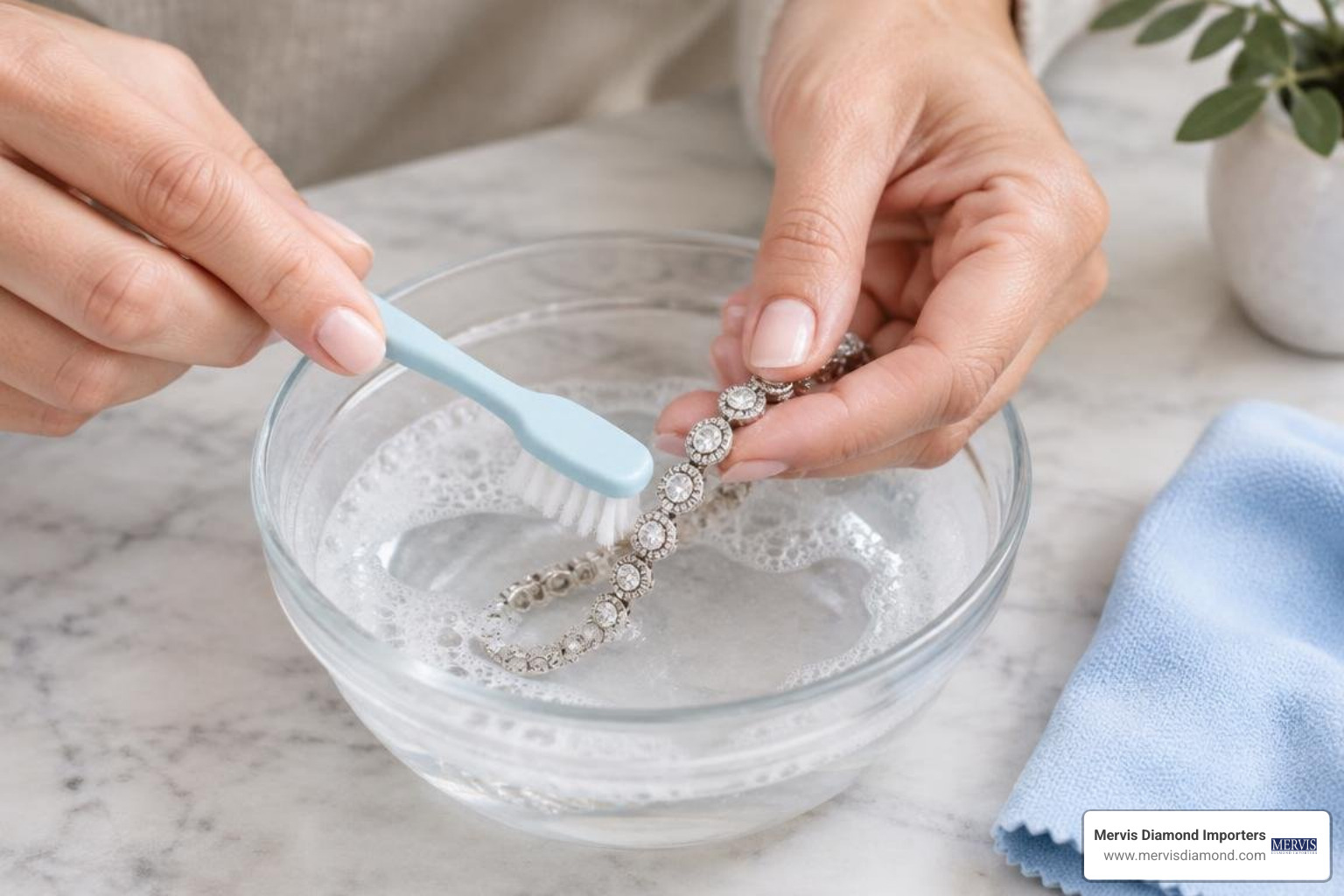
An antique diamond bracelet is a living piece of history, and preserving it requires a gentle, mindful touch. While diamonds are the hardest natural substance on earth, the delicate 100-year-old metalwork holding them requires specialized care.
- Avoid Ultrasonic and Steam Cleaners: Never place an antique diamond bracelet into an ultrasonic jewelry bath. The intense high-frequency vibrations can loosen aged prongs, shake delicate milgrain loose, or fracture diamonds with internal stress points or unnoticed girdle chips. Steam cleaners can also introduce thermal shock.
- The Safe Hand-Cleaning Method: Mix lukewarm water with a few drops of mild, phosphate-free dish soap. Soak the bracelet for 5 to 10 minutes to soften oils and dust. Gently brush around and behind each stone using an extra-soft baby toothbrush. Rinse thoroughly with clean, lukewarm water (remembering to close the sink drain first!), and pat dry with a lint-free microfiber cloth.
- Routine Professional Inspections: Visit an experienced jeweler annually to check prong security, hinge alignment, and clasp tension. Having prongs safely re-tipped before a diamond falls out saves time, money, and heartache.
- Proper Storage: Store your antique bracelet flat in a fabric-lined jewelry box or a soft velvet roll. Never toss it into a pouch where it can scratch other jewelry or bend its own articulated links.
- Independent Appraisals and Insurance: Always obtain an independent gemological appraisal that details the cut, color, clarity, metal composition, and era of your bracelet. Ensure your jewelry insurance policy covers estate and antique replacement value rather than standard modern reproduction costs.
Buying Considerations and Modern Vintage Alternatives
If you are searching for the timeless elegance of an antique diamond bracelet, you will generally weigh two paths: acquiring a genuine period antique or investing in a masterfully crafted modern line bracelet inspired by vintage aesthetics.
Authentic antiques offer unmatched historical provenance, unique hand-cut diamond character, and heirloom charm. However, they require careful vetting regarding durability, sizing limitations (shortening an antique line bracelet without disrupting its pattern can be challenging), and ongoing maintenance.
For those who love the classic aesthetic but desire everyday durability, modern fine jewelry bridges the gap beautifully. Modern pieces combine vintage proportions with contemporary structural integrity, secure clasps, and precision-matched diamonds.
For instance, those who love wide Art Deco cuff styles often gravitate toward multi-row diamond bracelet styles, which deliver dramatic wrist coverage. If your heart is set on the clean, continuous profile of a single strand, exploring classic diamond tennis bracelet designs or browsing a curated collection of diamond tennis bracelets allows you to select hand-matched natural or lab-grown stones built for modern life. A magnificent statement piece like this 6.28 ct natural diamond tennis bracelet offers the same breathtaking presence as grand estate jewelry, backed by contemporary craftsmanship and lasting strength.
Frequently Asked Questions About Antique Diamond Bracelets
Can you safely wear an antique diamond tennis bracelet every day?
While it is tempting to wear such a stunning piece constantly, daily wear requires caution. An antique bracelet is an intricate mechanical assembly of dozens of tiny, century-old hinges and hand-set prongs. We recommend reserving genuine antique bracelets for special occasions, dinners, and events. If you choose to wear one frequently, avoid wearing it during workouts, household chores, or sports, and ensure the clasp and safety catches snap firmly into place before leaving the house.
What is the difference between a vintage and an antique line bracelet?
The difference lies entirely in the calendar:
- Antique: Must be at least 100 years old (crafted in 1926 or earlier).
- Vintage: Generally defined as jewelry between 20 and 99 years old. A line bracelet from the 1950s Mid-Century era, 1970s disco era, or 1980s is considered vintage.
Stylistically, an antique piece will feature hand-cut diamonds (Old European or Old Mine cuts) and hand-fabricated platinum or gold mountings, whereas a vintage bracelet from the 1980s will feature modern round brilliant diamonds and cast prongs.
Why do antique cut diamonds look different from modern round brilliants?
Modern round brilliant diamonds are engineered with mathematical precision to maximize high-contrast brilliance and rapid scintillation under artificial lighting. Antique cuts, such as Old European and Old Mine cuts, were cut entirely by hand under candlelight. They feature smaller tables, taller crowns, larger culets, and wider facets. This gives them a softer, warmer, and more romantic glow, producing broad flashes of rainbow fire rather than modern pinpoint sparkle.
Conclusion
The enduring allure of an antique diamond line bracelet lies in its singular harmony of history, artistry, and romance. Each hand-carved link, delicate milgrain bead, and hand-cut diamond tells the story of an era when master jewelers poured days of dedicated benchwork into a single creation.
Whether you are seeking a genuine century-old heirloom or looking to select a modern classic that captures the same timeless sparkle, finding the right piece is an unforgettable journey. To learn more about how this enduring design evolved into one of the most celebrated accessories in jewelry history, discover the fascinating history and origin of the tennis bracelet.
At Mervis Diamond Importers, we take immense pride in helping you find jewelry that celebrates life's most cherished milestones. With our hand-selected diamonds and pressure-free guidance, our family welcomes you to visit us at our showrooms in Tysons, VA, Rockville, MD, and Washington, DC. Let us help you discover a diamond bracelet designed to shine brilliantly for generations to come.