

Don't Get Color Blinded when Choosing a 3 Carat Diamond
Why 3 Carat Diamond Color Can Make or Break Your Purchase
When it comes to 3 carat diamond color, the grade you choose has a bigger visual impact than most buyers expect — and a major effect on price.
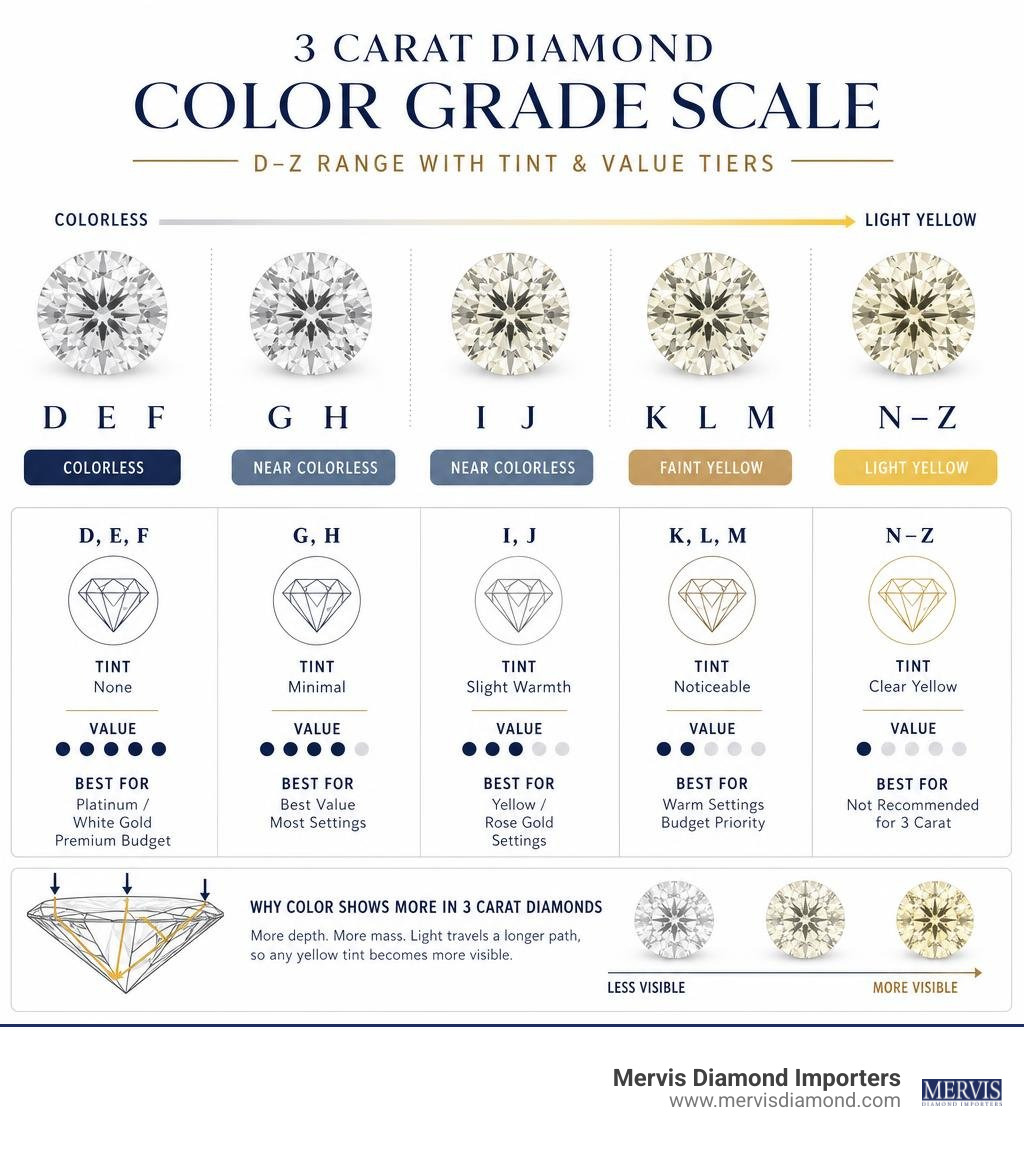
Here's a quick breakdown to help you evaluate color grades fast:
| Color Grade | Category | Visible Tint? | Best For |
|---|---|---|---|
| D, E, F | Colorless | None | Platinum/white gold, premium budget |
| G, H | Near Colorless | Minimal | Best value, most settings |
| I, J | Near Colorless | Slight warmth | Yellow/rose gold settings |
| K, L, M | Faint Yellow | Noticeable | Warm settings, budget priority |
| N–Z | Light Yellow | Clear yellow | Not recommended for 3 ct |
The short answer: For a 3 carat diamond, most buyers get the best balance of beauty and value at G or H color. At this size, color shows more than in smaller stones — so going too low on the scale is a visible trade-off.
Here's the thing most people don't realize: a 3 carat diamond has significantly more depth and mass than a 1 carat stone. Light travels a longer path through it. That means any yellow tint gets amplified compared to what you'd see in a smaller diamond of the same color grade.
That's why color decisions at the 3 carat level deserve more careful thought — not less.
I'm Morris Mervis, and after decades of helping clients find exceptional diamonds without overpaying, I want to walk you through everything you need to know to make a confident, clear-eyed choice.
Understanding 3 Carat Diamond Color: Scale, Visual Appearance, and Price Impact
When evaluating 3 carat diamond color, understanding the standard grading system established by the Gemological Institute of America (GIA) is your starting point. The GIA rates diamonds on an alphabetical scale ranging from D (completely colorless) down to Z (light yellow or brown). While a D color diamond represents the absolute pinnacle of rarity, it comes with a steep price tag.
As carat weight increases, price per carat climbs exponentially rather than linearly. Selecting a 3 carat stone means you are already operating in a rare tier of gem-quality diamonds. When browsing a 3 carat diamond assortment, you'll quickly discover that jumping from an H color to a D color can add tens of thousands of dollars to the total price tag without offering a dramatic visual difference to the naked eye.
If you are curious about what color diamond is the most expensive, natural D color diamonds command top dollar in the white diamond category, though rare vivid fancy colors like blue, pink, and red reach even higher auction records.
Below is a direct comparison showing how color grades, visual warmth, and relative pricing interact when evaluating a 3 carat stone:
| GIA Color Grade | Visual Tint (Face-Up) | Price Tier relative to D Color | Recommended Setting Metal |
|---|---|---|---|
| D | Completely icy white, zero tint | Premium (100% baseline) | Platinum, White Gold |
| E–F | Colorless to virtually all eyes | High (80%–92%) | Platinum, White Gold |
| G–H | Face-up white, faint trace from side | Optimal Value (60%–75%) | White Gold, Platinum, Yellow Gold |
| I–J | Slight face-up warmth in larger stones | Budget-Friendly (45%–55%) | Yellow Gold, Rose Gold |
| K–M | Warm yellow tint clearly visible | Value/Economy (30%–40%) | Yellow Gold, Vintage Settings |
Color Scale Breakdown for a 3 Carat Diamond Color Assessment
To make the right choice for your ring, it helps to understand how the GIA color categories actually perform in real life on a 3 carat gem:
- Colorless Range (D–F): These diamonds possess no trace of yellow or brown nitrogen tint. A 3 carat D, E, or F diamond appears stark, cool, and bright ice-white in any metal setting or light condition. They are rare, highly sought after, and carry a significant premium.
- Near-Colorless Range (G–J): This is where smart buyers find sweet-spot value. G and H color diamonds appear crisp and face-up colorless when mounted in an engagement ring, yet cost thousands less than D or E stones. However, as you move into I and J grades, larger diamonds start displaying faint warmth. Many clients ask us is i color diamond too yellow? On a 3 carat stone, an I color diamond may show subtle warmth around the edges, especially in step cuts or fancy shapes, though in a round brilliant set in yellow gold, it can look stunning.
- Faint Yellow Range (K–M): In a 3 carat diamond, K, L, and M grades show an unmistakable warm butter or light champagne tone. While some buyers prefer this antique, warm look for custom vintage rings, it will not give you a crisp, modern white appearance.
Why 3 Carat Diamond Color Shows More Tint Than Smaller Stones
A common misconception among first-time diamond buyers is that a G color grade looks identical regardless of the diamond's size. In reality, size alters color perception dramatically.
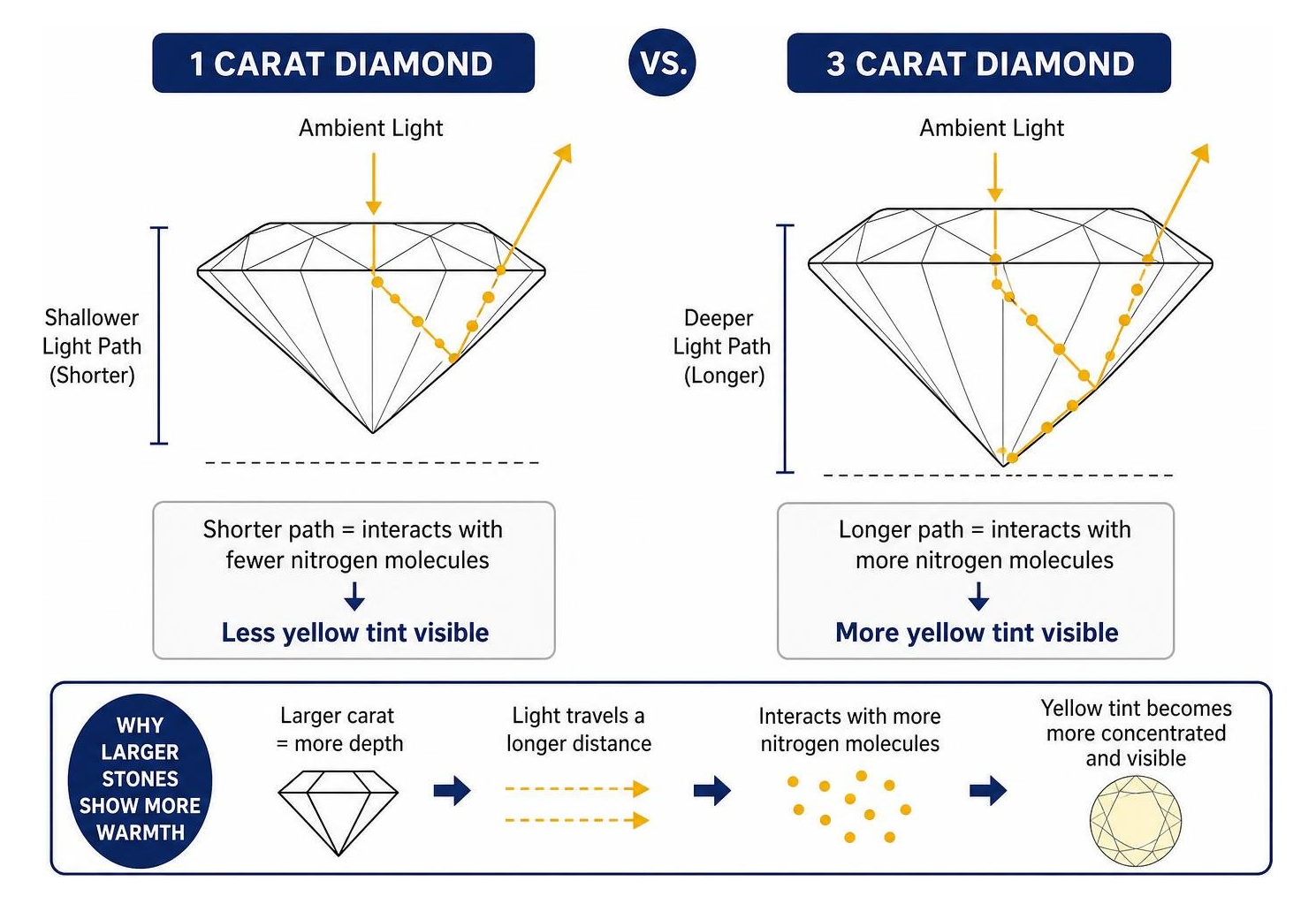
A 3 carat diamond is physically larger in every dimension — width, surface area, and depth. Because the stone is deeper, ambient light entering through the crown travels a longer physical path through the crystal structure before reflecting off the pavilion facets back to your eyes.
Because diamond color tint is caused by trace nitrogen molecules distributed throughout the carbon structure, a longer light path means light interacts with more nitrogen molecules. Consequently, color becomes concentrated. A faint trace of yellow that remains hidden in a 1 carat H-color diamond becomes noticeable in a 3 carat H-color or I-color diamond, particularly when viewed from the profile or side view.
How Setting Metals and Diamond Shape Influence Perceived Color
The ring setting you select acts as a visual backdrop for your diamond. The color of the precious metal holding your 3 carat diamond can either mask yellow body color or emphasize white brilliance.
If you choose a platinum or 18k white gold setting, the metal acts like a mirror, reflecting white light into the diamond. However, if your diamond has an I or J color grade, a white metal setting will create a sharp contrast that makes the subtle yellow hue more apparent. For platinum and white gold, we recommend sticking to D through H color grades.
Conversely, if you prefer warm 18k yellow gold or rose gold, the metal imparts a natural warm glow into the diamond stone anyway. Mounting a G, H, or even I color 3 carat diamond in yellow gold softens the contrast, making a slightly warm stone look noticeably whiter by comparison.
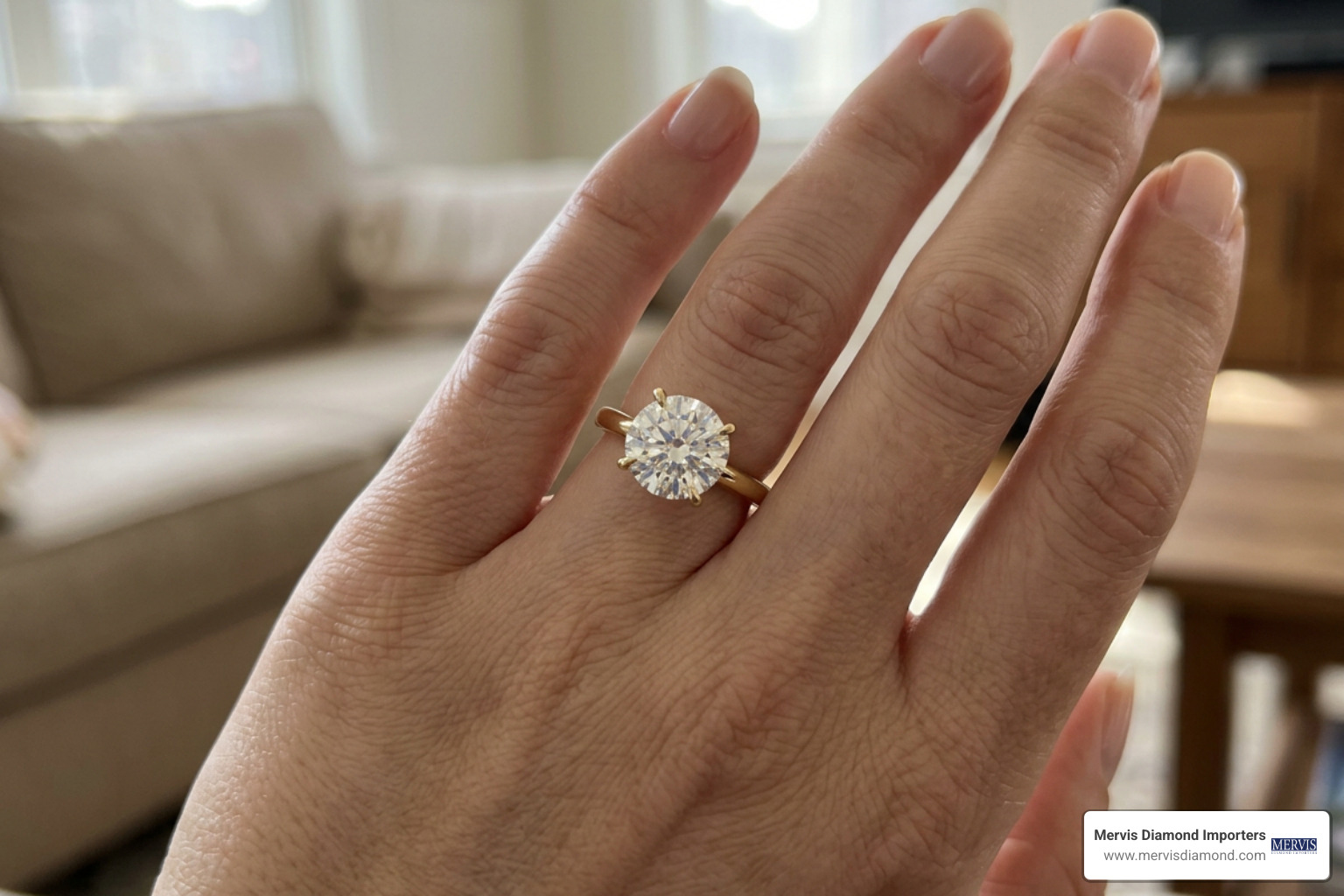
Diamond shape also plays a vital role in how 3 carat diamond color is perceived:
- Round Brilliant Cut: The complex, 57-facet pattern of a round brilliant reflects intense light and sparkle (scintillation). This intense light bounce effectively disguises faint yellow tones, making round diamonds the most forgiving shape for color.
- Fancy Cut Step Cuts (Emerald & Asscher): Step-cut diamonds feature broad, flat facets functioning like clear windows into the center of the stone. They do not have the facet reflection of a round diamond. Consequently, a 3 carat emerald cut shows color concentration very clearly. If you are shopping for this classic, elegant style, consult our 3 carat emerald cut diamond guide 2026 to see why we suggest sticking to H color or higher.
- Elongated Fancy Cuts (Cushion, Oval, Radiants, Pear, Marquise): Shapes with pointed tips or elongated bodies naturally trap color near their narrow ends. A 3 carat cushion cut or oval diamond will draw yellow tint into its corners or bow-tie region. Check our ultimate guide best color cushion diamond for specific grading advice tailored to crushed-ice and brilliant cushion patterns.
Balancing 3 Carat Diamond Color with Cut, Clarity, and Fluorescence
Selecting a diamond is always an exercise in balancing budget across the four fundamentals. When determining your personal diamond 4 Cs order of importance, Cut quality should always be your top priority, followed by Color, Clarity, and Carat weight.
An Ideal or Excellent cut diamond acts like a light reflector. When light bounces straight back out through the table, the intense visual sparkle overwhelms minor body tint, making an H or I color stone appear brighter and whiter than a poorly cut F color stone.
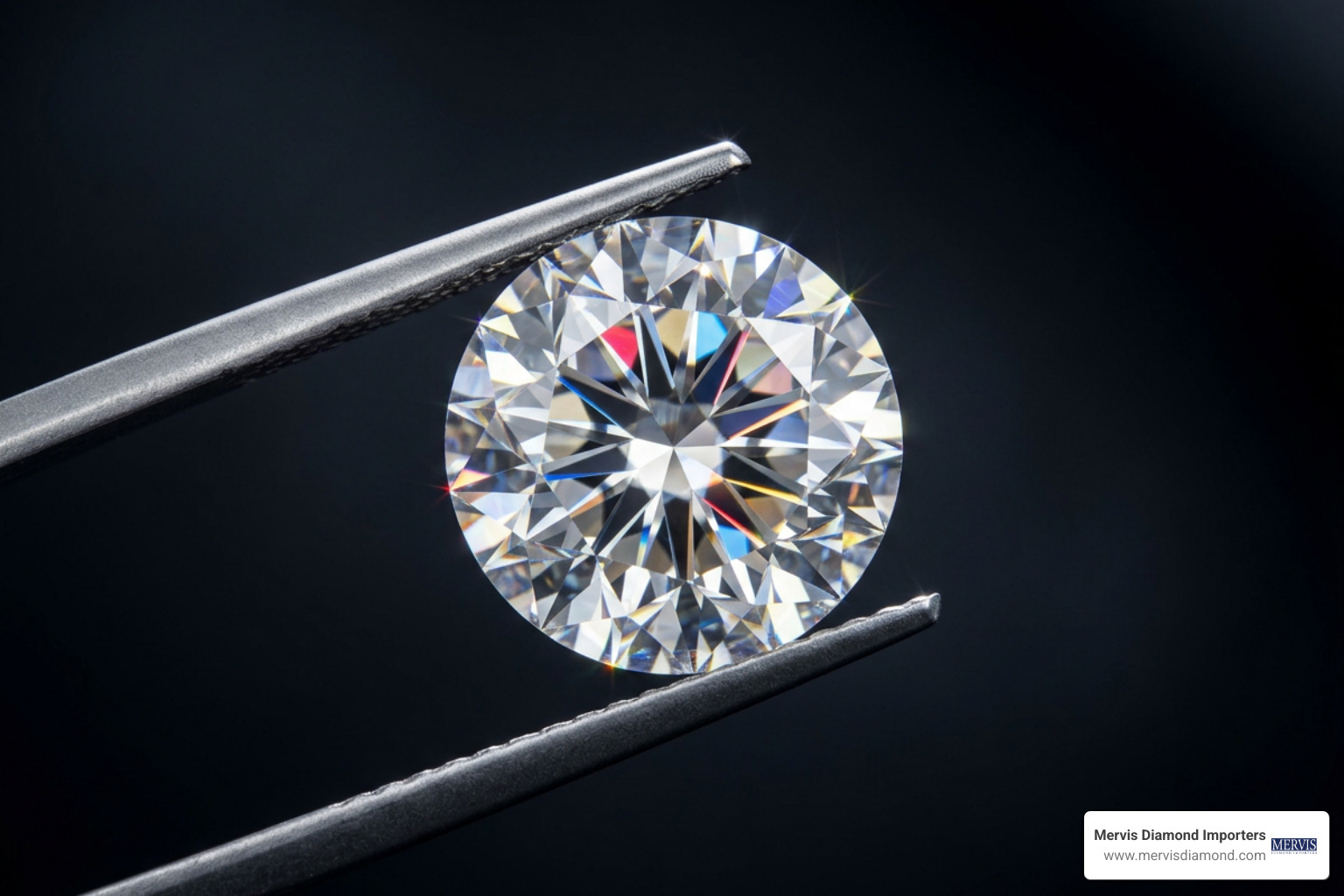
Fluorescence is another fascinating factor when evaluating 3 carat diamond color. About 25% to 30% of diamonds display fluorescence — a blue glow visible when exposed to long-wave ultraviolet (UV) light, like natural sunlight or blacklights.
- The Benefit: Blue and yellow are complementary colors on the chromatic scale. Therefore, medium to strong blue fluorescence in a warm diamond (like an I, J, or K color) can actually neutralize faint yellow tint, making the diamond look face-up whiter in daylight without paying extra for a higher color grade!
- The Risk: In higher color grades (D, E, F), strong fluorescence can occasionally make the stone look hazy, oily, or milky under sunlight. At our showrooms in Tysons, Rockville, and Washington DC, we inspect every fluorescing diamond in person to ensure its optical clarity remains crystal clear.
Finding the best value diamond means allocating your budget where your eyes actually benefit — prioritising an Excellent cut grade, securing eye-clean VS2 or SI1 clarity, and choosing a near-colorless G or H color.
Smart Buying Strategies: Lab-Grown vs. Natural 3 Carat Diamond Color
One of the biggest shifts in the modern diamond world is the choice between natural and lab-grown diamonds. Both are optically, physically, and chemically identical pure carbon crystals, but their origins and price structures differ significantly.
When comparing a natural 3 carat diamond to a lab-grown alternative, color pricing plays a major role in your purchasing strategy.
Because lab-grown diamonds are grown in high-tech laboratories utilizing Chemical Vapor Deposition (CVD) or High Pressure High Temperature (HPHT) processes, achieving high color purity is easier to control. As outlined in our detailed 3 carat lab grown diamond guide, lab-created stones allow buyers to easily secure a 3 carat D, E, or F color diamond at a fraction of the cost of a natural counterpart.
To compare investment dynamics, natural 3 carat diamonds are geological miracles formed over billions of years. Due to their extreme natural scarcity, the price difference between an H color and a D color natural diamond can exceed $20,000. You can review current market pricing across origins in our breakdown of three carat diamond cost.
Here is how buying strategies differ depending on origin:
- For Natural Diamonds: Prioritize near-colorless grades (G or H) set in an Excellent or Ideal cut. This gives you the magnificent presence of a natural 3 carat gem while saving tens of thousands of dollars compared to colorless D-F grades.
- For Lab-Grown Diamonds: Since the price premium across color tiers is modest in lab-created stones, you can comfortably choose a D, E, or F color grade without breaking the bank, guaranteeing absolute icy-white brilliance.
Frequently Asked Questions About 3 Carat Diamond Color
What is the best value color grade for a 3 carat round diamond?
The best value color grade for a 3 carat round brilliant diamond is G or H. Because round brilliant diamonds are exceptional at reflecting light and disguising body tint, a G or H color diamond will look completely white to the naked eye once set in a ring. Choosing G or H saves you 20% to 35% compared to D or E color diamonds while delivering virtually identical face-up visual beauty.
Can medium to strong fluorescence improve the color of a 3 carat J-color diamond?
Yes! Medium to strong blue fluorescence can make a slightly warm J-color diamond appear up to one full color grade whiter under natural sunlight. Because blue neutralizes yellow tones, fluorescent J-color diamonds offer fantastic budget value. However, you should always have an expert evaluate the stone to ensure the fluorescence does not create a hazy or milky appearance in direct sunlight.
Does a 3 carat lab-grown diamond show color differently than a natural diamond?
No, lab-grown diamonds exhibit color in the exact same way as natural diamonds because they share the identical carbon crystal structure. Both natural and lab-created diamonds are graded on the exact same GIA color scale from D to Z. However, low-quality CVD lab-grown diamonds can sometimes show a faint brownish or greyish undertone rather than a natural yellowish tint, which is why hand-selection by experienced gemologists remains essential.
Conclusion
Choosing the right 3 carat diamond color isn't about buying the most expensive letter on a lab certificate — it's about choosing the diamond that looks radiant, fiery, and crisp on your hand while fitting comfortably within your budget.
By understanding how light depth amplifies color in larger gems, selecting the right metal setting, and balancing cut quality against color grades, you can easily avoid paying a premium for invisible differences.
At Mervis Diamond Importers, we take pride in hand-selecting both natural and lab-grown diamonds for our clients across the Washington DC, Tysons, VA, and Rockville, MD areas. Whether you want an icy D-color gem or a smart, high-value H-color stone, our team provides pressure-free guidance to help you select a stone you'll adore for a lifetime.
To learn more about pricing, ring styles, and setting options, check out our complete guide on how much is a 3 carat diamond ring or visit one of our local showrooms to view 3 carat diamonds side-by-side in person today!