

Where to Find Stunning 3 Carat Diamond Clearance Rings
Where to Find 3 Carat Diamond Clearance Rings Worth Buying
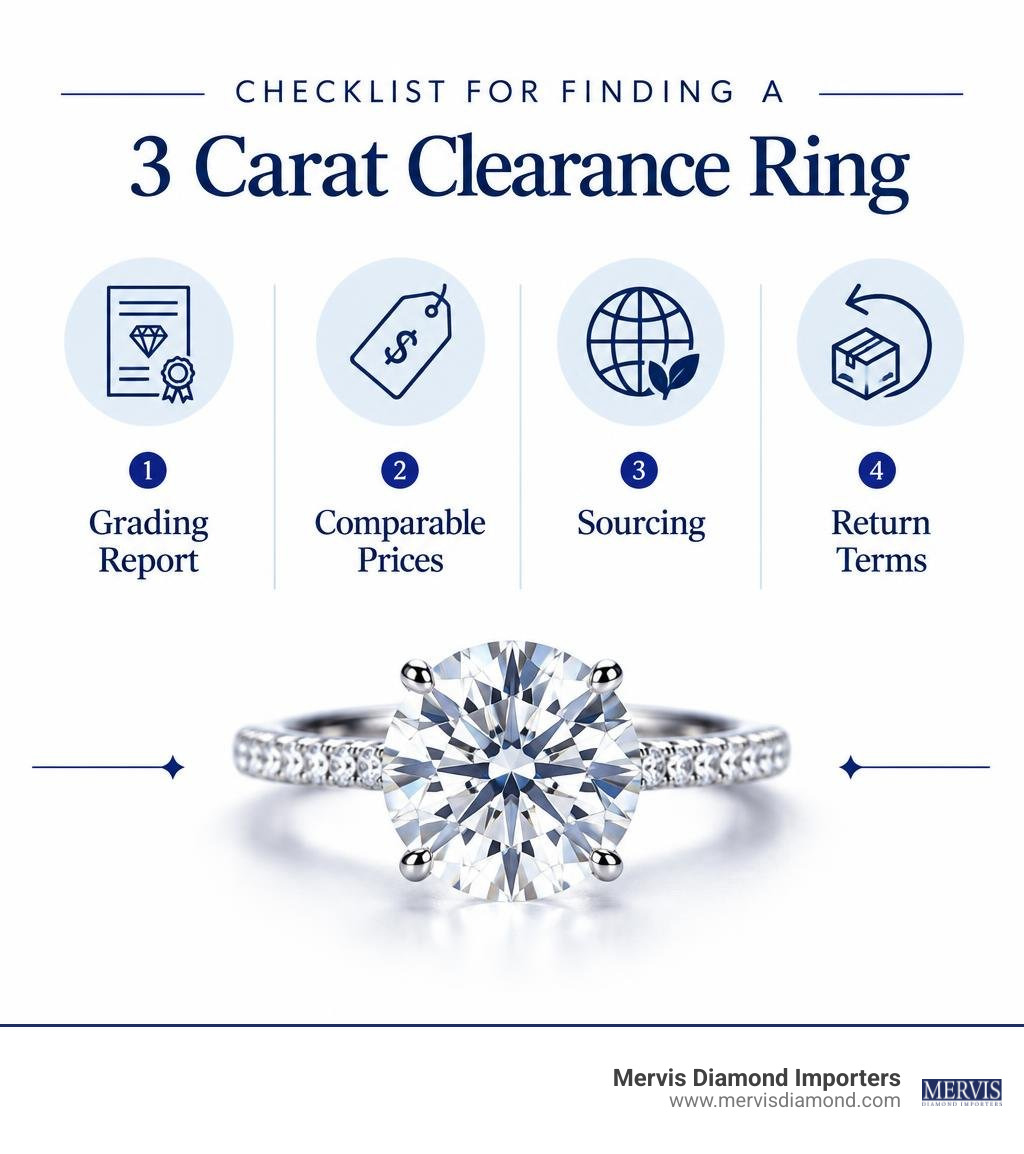
Start with established jewelers and diamond importers that show independent grading reports, clear prices, and return terms. A 3 carat diamond clearance ring can be a good deal when a seller is clearing older inventory or a discontinued setting. But a large markdown alone does not tell you whether the diamond is worth its price.
Compare the stone's cut, color, clarity, and origin with similar diamonds before you buy. Ask for its grading report, confirm whether it is natural or lab-grown, and request documentation for any claim about responsible sourcing. That way, you can look for savings without giving up the quality or peace of mind you want.
I'm Morris Mervis, and I'll walk you through what to look for as you compare clearance rings. For broader context on how diamonds are evaluated across the industry, the Gemological Institute of America explains the standards behind independent grading reports.
Understanding 3 Carat Diamond Clearance Pricing and Real Value
Finding a true bargain on a larger center stone requires understanding how pricing works across the diamond industry. In the luxury jewelry market of October 2026, natural diamonds of this scale remain exceptionally rare—fewer than 1% of all mined rough diamonds weigh over a single carat, and an even smaller fraction can yield a polished 3 carat gem. Because market demand for 3 carat stones has climbed by 20% over the last five years, high-end clearance events are more competitive than ever. Approximately 15% of fine diamond shoppers now secure their ring during a curated promotional or clearance event.
A standard retail natural 3 carat diamond generally ranges from $15,000 to over $50,000 depending on quality. Exceptional stones with an Excellent cut and VS1 clarity can easily command $60,000 at regular retail. However, during genuine inventory reduction events, prices can fall by 30% to 40%, dropping high-tier stones down to $40,000 or less, and allowing buyers to save anywhere from $5,000 to $15,000 per stone.
Understanding baseline three carat diamond cost factors helps you evaluate whether an advertised markdown reflects real savings or an inflated starting price. Our practical 3 carat diamond deal guide emphasizes looking closely at cut precision and certification rather than discount percentages alone.
| Diamond Shape & Origin | Average Retail Price Range | Typical Clearance Price Range | Average Expected Savings |
|---|---|---|---|
| Round Brilliant (Natural, G-H / VS2) | $45,000 – $58,000 | $32,000 – $40,000 | 28% – 32% |
| Oval Cut (Natural, H-I / SI1) | $28,000 – $38,000 | $19,500 – $26,500 | 30% – 35% |
| Emerald Cut (Natural, F-G / VS1) | $42,000 – $54,000 | $29,000 – $37,000 | 30% – 33% |
| Cushion Cut (Natural, I-J / VS2) | $22,000 – $30,000 | $15,000 – $21,000 | 30% – 35% |
| Round Brilliant (Lab-Grown, F-G / VS1) | $3,500 – $5,500 | $2,200 – $3,600 | 35% – 40% |
| Fancy Shapes (Lab-Grown, E-F / VVS2) | $3,200 – $5,000 | $1,900 – $3,200 | 35% – 40% |
Clearance pricing happens when fine jewelers rebalance capital, retire specific mounting collections, or cycle loose inventory. This creates an ideal opportunity for savvy buyers who know how to verify specifications.
Natural vs. Lab-Grown Diamonds in Clearance Sales
Both natural and lab-created gems appear in clearance selections, but they serve different budgets and buying goals:
- Natural Diamonds: Natural 3 carat stones carry intrinsic geological rarity. Markdowns on natural diamonds generally stem from slow-moving fancy shapes, slight tint (warm J–K colors), or older estate settings. A discounted natural diamond offers long-term heirloom value.
- Lab-Grown Diamonds: Created using advanced HPHT or CVD methods, lab diamonds share identical physical, chemical, and optical structures with earth-mined stones. If you are comparing lab grown diamond pricing, clearance sales offer significant value, allowing you to secure a flawless look for a fraction of the cost.
Many modern couples opt for man-made diamond rings to maximize finger coverage while keeping their budget under $4,000.
Key Factors Influencing Discount Margins
The discount margin on a clearance ring is driven by specific gemological factors:
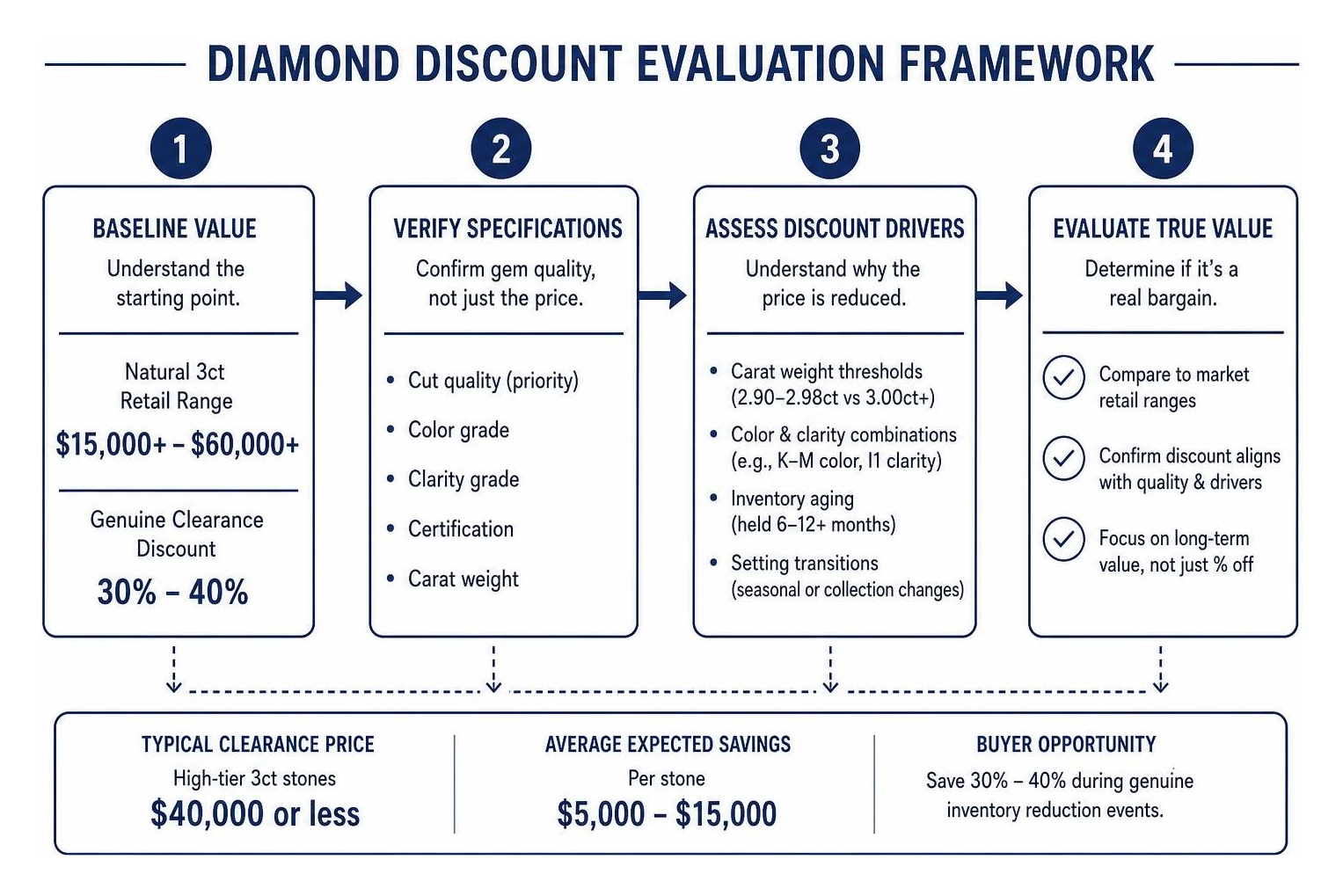
- Carat Weight Thresholds: Diamonds sitting right at major boundaries (like 3.00 to 3.05 carats) command a premium. Stones that weigh 2.90 to 2.98 carats often cost significantly less while offering an identical look. Review our 3 carat diamond size overview to compare millimeter spreads across weights.
- Color and Clarity Combinations: Stones with noticeable body color (K–M) or visible inclusions (I1) are discounted more steeply.
- Inventory Aging: Jewelers routinely reduce prices on stones held longer than six to twelve months to free up working capital.
- Setting Transitions: Mountings created for seasonal collections are often marked down as complete ready-to-wear rings.
Best Styles and Shapes Available on Clearance
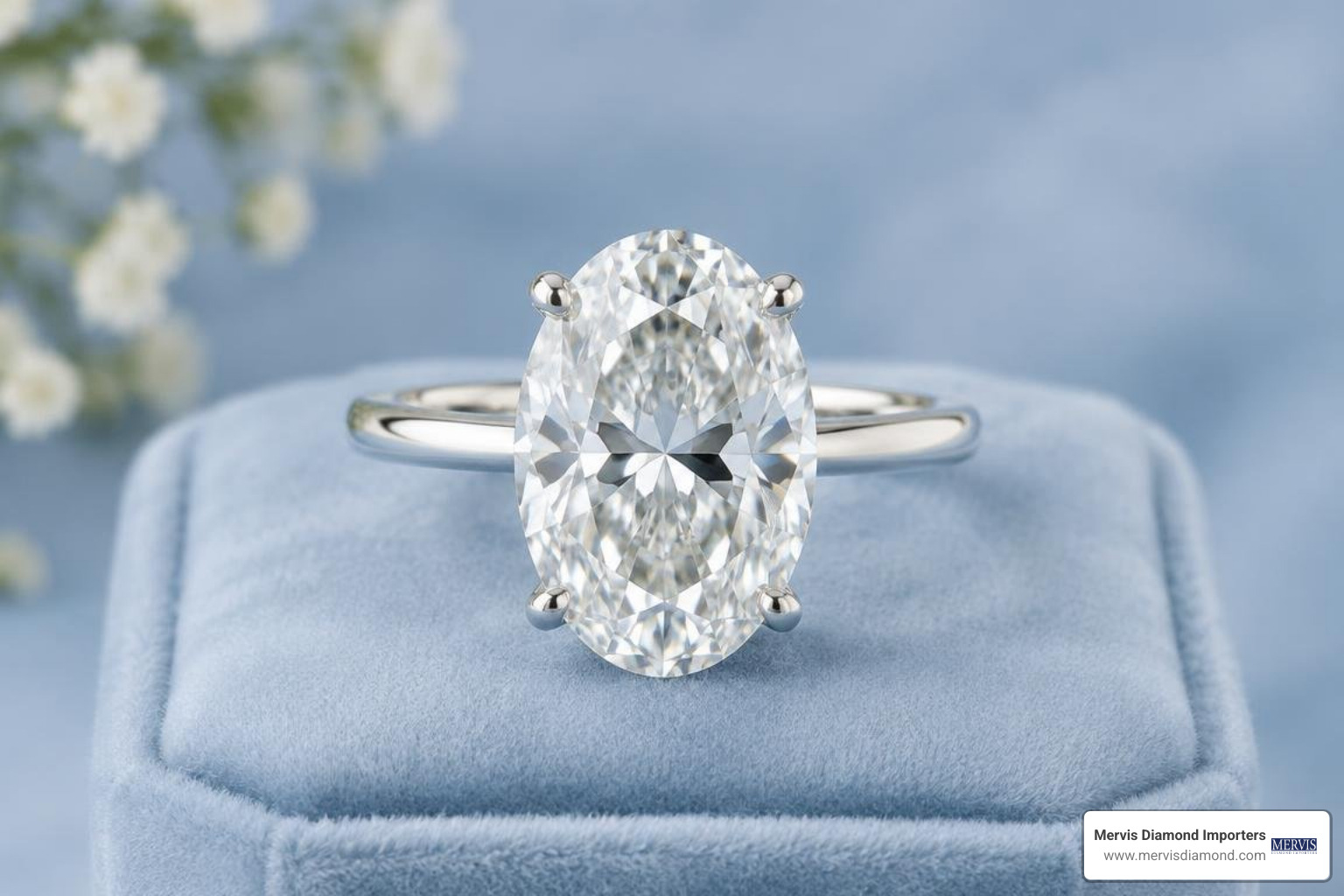
Certain cuts and mounting styles appear more frequently in clearance showcases. Knowing which shapes offer the best visual value helps you make an informed choice.
Fancy shapes—such as oval, pear, marquise, and emerald cuts—often feature larger surface areas than round stones of the same weight. Because round brilliant diamonds are the most heavily traded, jewelers often discount fancy shapes more aggressively.
- Oval Cuts: An elongated shape provides excellent finger coverage and conceals slight inclusions well. Explore our oval diamond pricing breakdown to evaluate clearance options against regular retail rates.
- Emerald Cuts: Step-cut diamonds feature sleek, open tables. While they require higher clarity grades, classic emerald shapes on clearance offer sophisticated, vintage-inspired elegance. Check our emerald cut diamond specifications for optimal table and depth ratios.
- Cushion and Radiant Cuts: These brilliant fancy cuts provide intense sparkle and can mask warm color tints, making them great choices in clearance inventories.
Top Settings for 3 Carat Diamond Clearance Rings
When shopping clearance events, you will find both loose diamonds and pre-set rings:
- Solitaire Mountings: Classic four-prong and six-prong platinum or 18k gold bands put all the focus on the 3 carat center stone.
- Halo and Hidden Halo Settings: A halo of pavé diamonds accentuates the center stone, adding extra visual presence.
- Vintage and Filigree Mountings: Estate-inspired settings with milgrain detailing often appear in clearance showcases at significant discounts. Learn more about historical cuts and settings in our guide to antique diamond rings.
Following structured steps for selecting a 3 carat stone ensures you evaluate both the setting integrity and the diamond's security before completing your purchase.
Balancing Cut, Color, and Clarity for Maximum Savings
To get the best value on clearance, balance the 4Cs strategically:
- Prioritize Cut First: Never compromise on cut quality. An Excellent or Ideal cut maximizes light return, making the stone look larger, brighter, and clearer.
- Select Near-Colorless Grades (G to I): These grades face up bright white in white gold or platinum while costing thousands less than D–F flawless colors. Warm J–K colors pair naturally with yellow or rose gold mountings. For guidance, see our breakdown on choosing diamond color.
- Find Eye-Clean SI1 or VS2 Clarity: In a 3 carat stone, avoid heavy center inclusions. A well-placed SI1 inclusion will save you substantial money while remaining completely invisible to the naked eye. Review our affordable diamond buying strategies to learn how to spot clean intermediate clarity grades.
Where and How to Shop for Clearance Diamonds Safely
Finding a genuine deal on a 3 carat center stone requires careful vetting. We recommend working directly with experienced diamond importers who maintain deep, hand-selected inventories and operate transparent local showrooms.
Working directly with master importers cuts out middleman markups, giving you access to institutional pricing and clear provenance. Our background in direct diamond manufacturing allows us to hand-select stones for our curated diamond assortment selection across our Washington DC, Tysons VA, and Rockville MD showrooms.
How to Spot Genuine 3 Carat Diamond Clearance Deals Online
When shopping online or in-store, look for these verification standards:
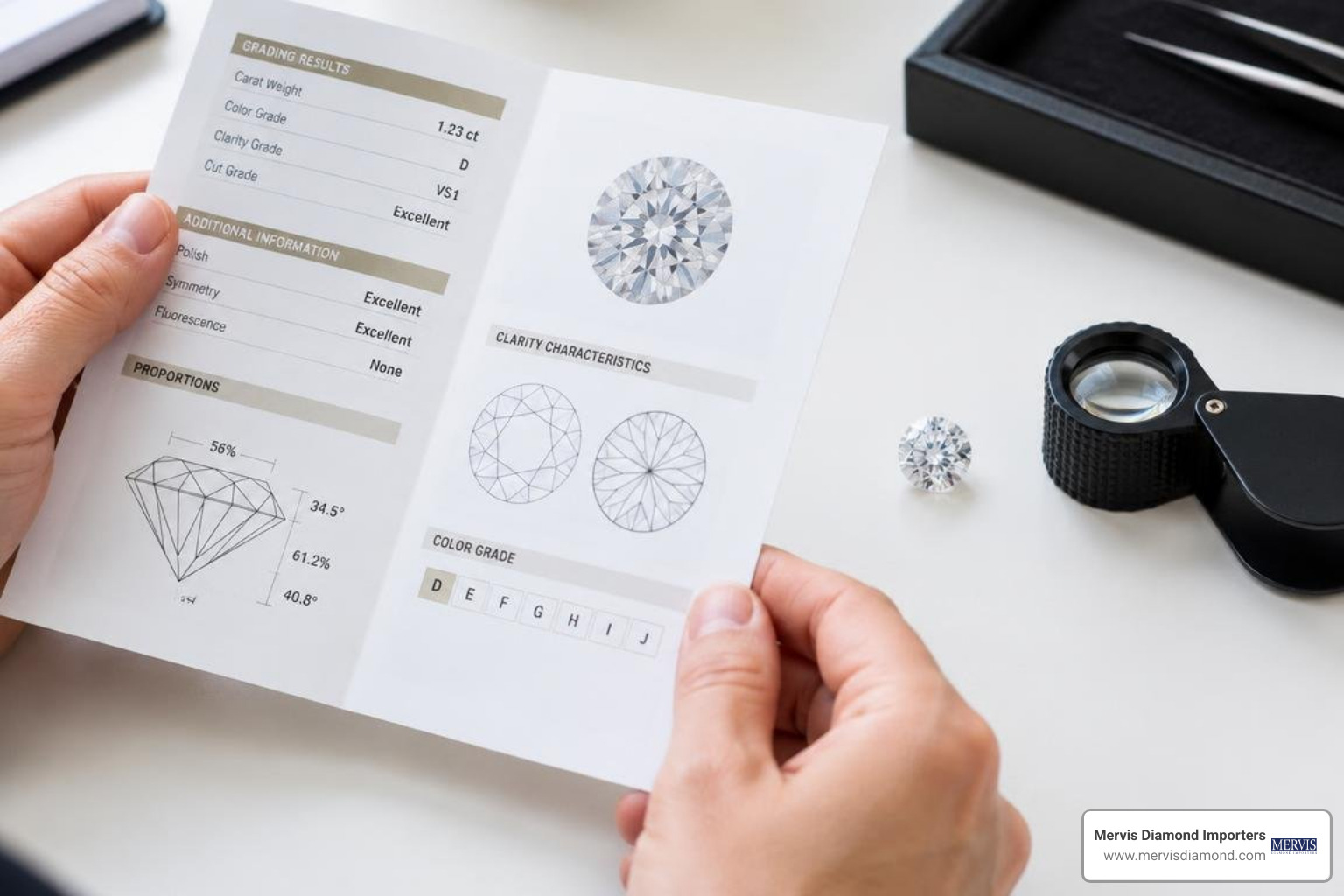
- Independent Certification: The diamond must come with an unbiased certificate from an internationally recognized lab, such as the Gemological Institute of America (GIA) or the International Gemological Institute (IGI). The Gemological Institute of America is widely regarded as the benchmark for diamond grading standards.
- Laser Inscription Registry: Verify that the unique report number etched onto the diamond's girdle matches the paper grading report.
- Comprehensive Return Policy: A legitimate clearance deal should always include a clear inspection window (typically 30 days) and a straightforward return policy.
- High-Resolution Imaging: Reliable sellers provide 360-degree, high-definition videos showing loose stones under 20x or 40x magnification.
For a full breakdown of grading criteria, consult our essential 3 carat diamond buying guide.
Red Flags and Hidden Traps to Avoid
Watch out for these warning signs when evaluating clearance inventory:
- "Final Sale — No Returns" on Certified Center Stones: Reputable fine jewelers stand behind their diamonds, even during clearance events.
- In-House or Unrecognized Grading Reports: Avoid self-graded certificates that artificially inflate color or clarity ratings by two to three grades.
- Poor Symmetry and Deep Cuts: Stones cut overly deep carry dead weight in the pavilion, making a 3 carat diamond look closer to a 2.5 carat stone on the hand.
- Milky or Hazy Luster: Strongly fluorescent stones or diamonds with heavy internal clouds can appear dull in natural sunlight.
- Undeclared Treatments: Ensure the stone is not fracture-filled, laser-drilled, or clarity-enhanced. Refer to our lab-grown diamond verification guide for details on identifying treated materials.
Frequently Asked Questions About 3 Carat Clearance Diamonds
Why do jewelers discount 3 carat diamonds?
Jewelers discount high-carat diamonds primarily to manage cash flow and update their display showcases. Carrying loose 3 carat diamonds ties up substantial capital. When wholesalers transition seasonal design collections, retire specific setting styles, or acquire fresh estate parcels, they offer discounts to liquidate existing inventory quickly.
How much can you save on a 3 carat diamond clearance ring?
Discounts typically range between 20% and 40% off standard retail prices. For natural diamonds, this translates to savings of $5,000 to over $15,000 depending on color, clarity, and carat weight. For lab-grown 3 carat diamonds, clearance events can save you $1,000 to $2,000 off standard retail prices.
Do clearance diamonds still include independent grading reports?
Yes. Any authentic natural or lab-grown 3 carat diamond should come with an independent grading report from an accredited gemological laboratory like the GIA or IGI. Never buy an uncertified 3 carat diamond, regardless of the advertised discount.
Conclusion
Securing a genuine deal on a luxury engagement ring comes down to verifying quality, checking certifications, and working with an established jeweler. By understanding the 4Cs and prioritizing an Ideal cut with eye-clean clarity, you can find an exceptional 3 carat stone at an accessible price.
At Mervis Diamond Importers, we take pride in offering hand-selected natural and lab-grown diamonds backed by third-party certification and our pressure-free approach. Whether you visit us in Tysons VA, Rockville MD, or Washington DC, our master diamond consultants will help you find the perfect ring.
Ready to begin? Start by exploring how much a 3 carat diamond ring costs across different settings, cuts, and styles today.