

Why an Antique 3 Carat Diamond Outshines Any Modern Solitaire
Why Choose a 3 Carat Diamond Antique for an Heirloom Ring?
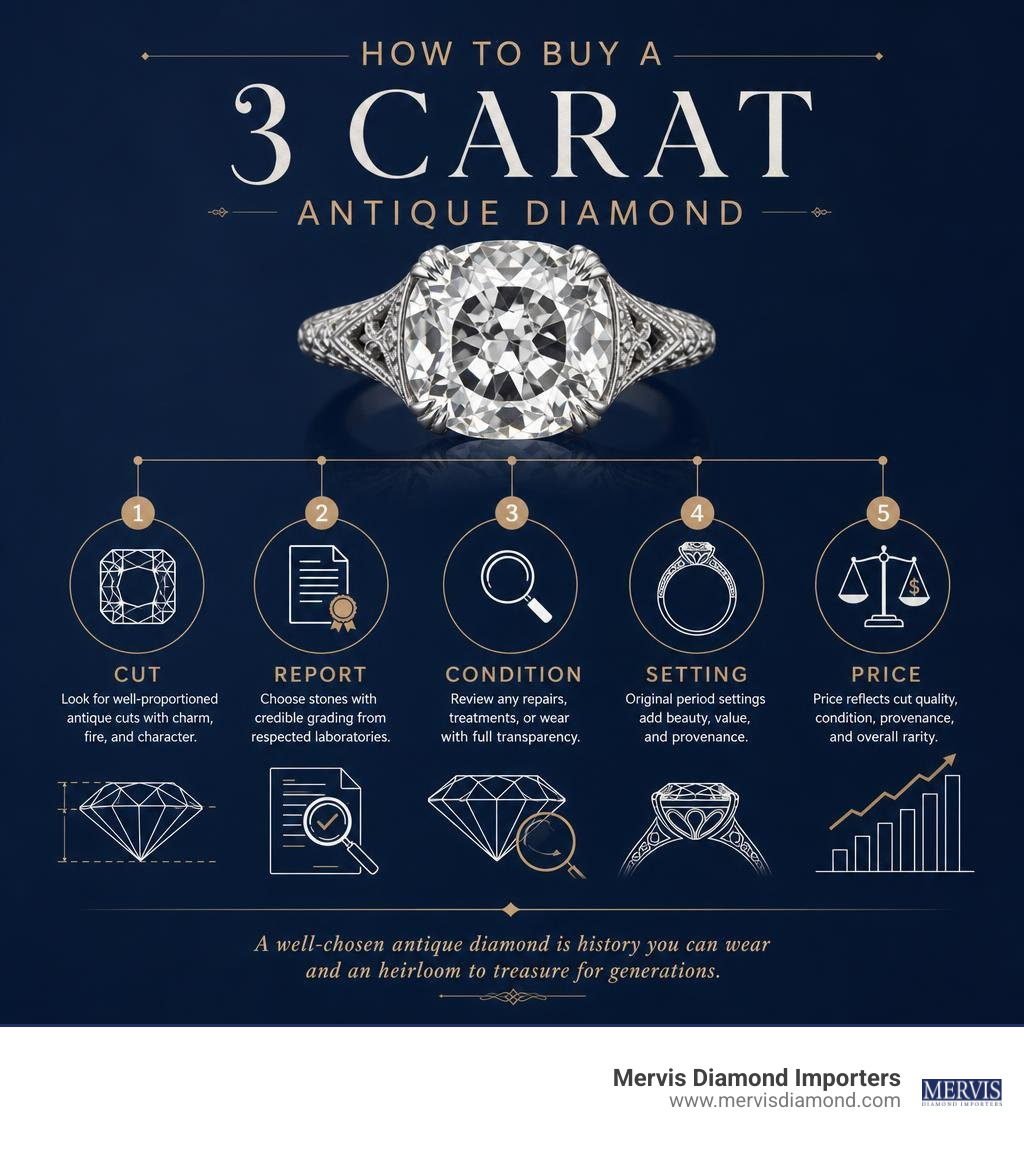
A 3 carat diamond antique is an exceptional choice for buyers who want real history, bold finger coverage, and a sparkle that does not look like every modern solitaire. Look for an old mine cut, old European cut, antique cushion, or rose cut with a credible grading report, clear disclosure of any repairs or treatments, and an experienced jeweler who can verify the stone and setting.
These hand-cut diamonds were shaped before modern precision cutting became standard. Their high crowns, smaller tables, and often open culets create broad flashes of fire in warm light rather than the sharp, uniform glitter of a modern round brilliant. At three carats, that character is impossible to miss.
Because diamonds of this size are rare and surviving antique examples are finite, price depends heavily on cut quality, color, clarity, condition, provenance, and whether the original period mounting remains intact. A well-chosen stone can be both a meaningful engagement ring and a lasting family heirloom.
I'm Morris Mervis, and I will help you understand what makes an antique diamond worth choosing before you buy.
The Allure and Anatomy of a 3 Carat Diamond Antique
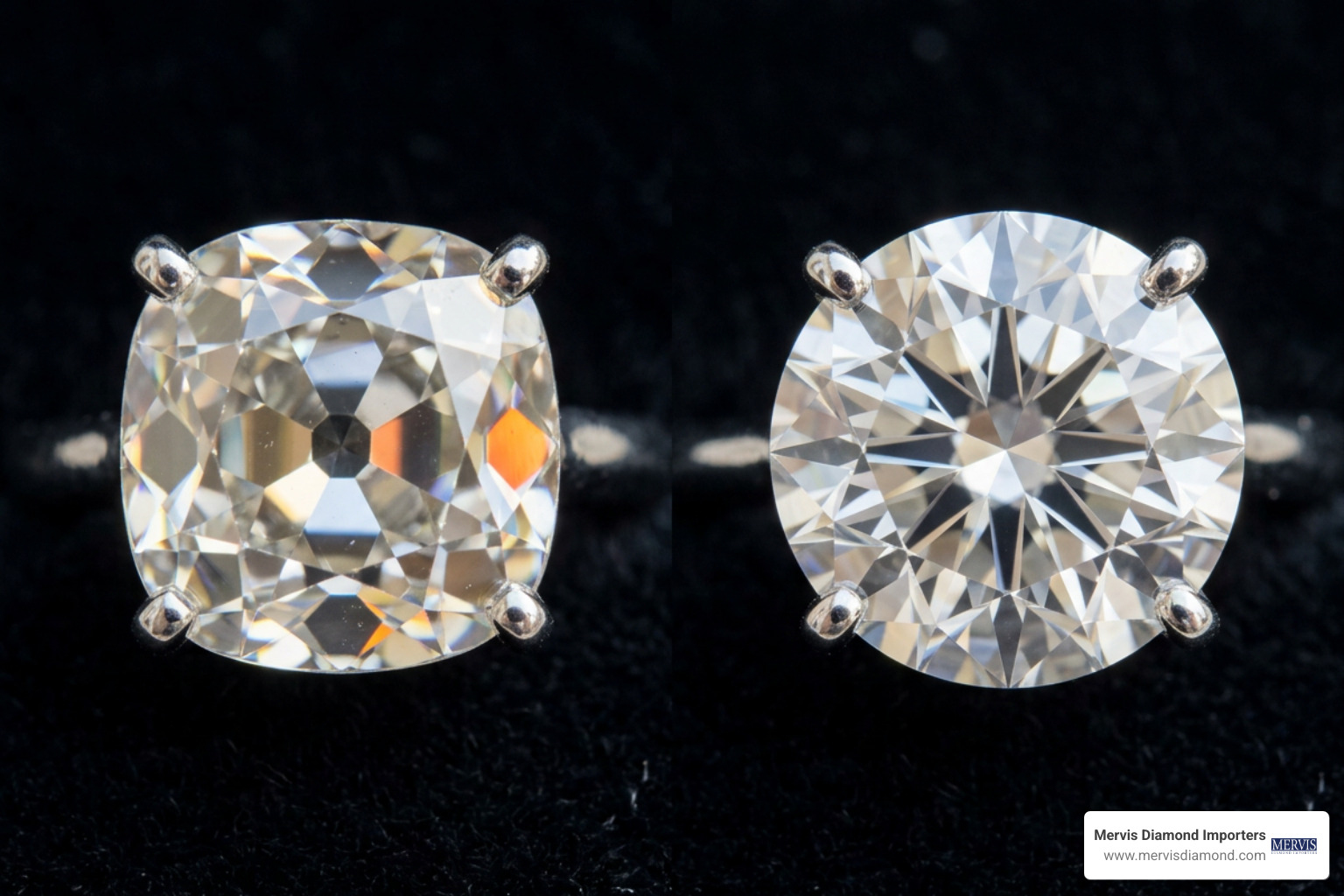
When you look at a modern diamond, you see laser-guided precision designed to maximize light return under fluorescent store lighting. When you hold an antique diamond, you are looking at the artistic vision of an artisan working by hand, shaping rough crystal to dance in flickering candlelight.
The anatomy of an antique diamond differs drastically from today's round brilliants:
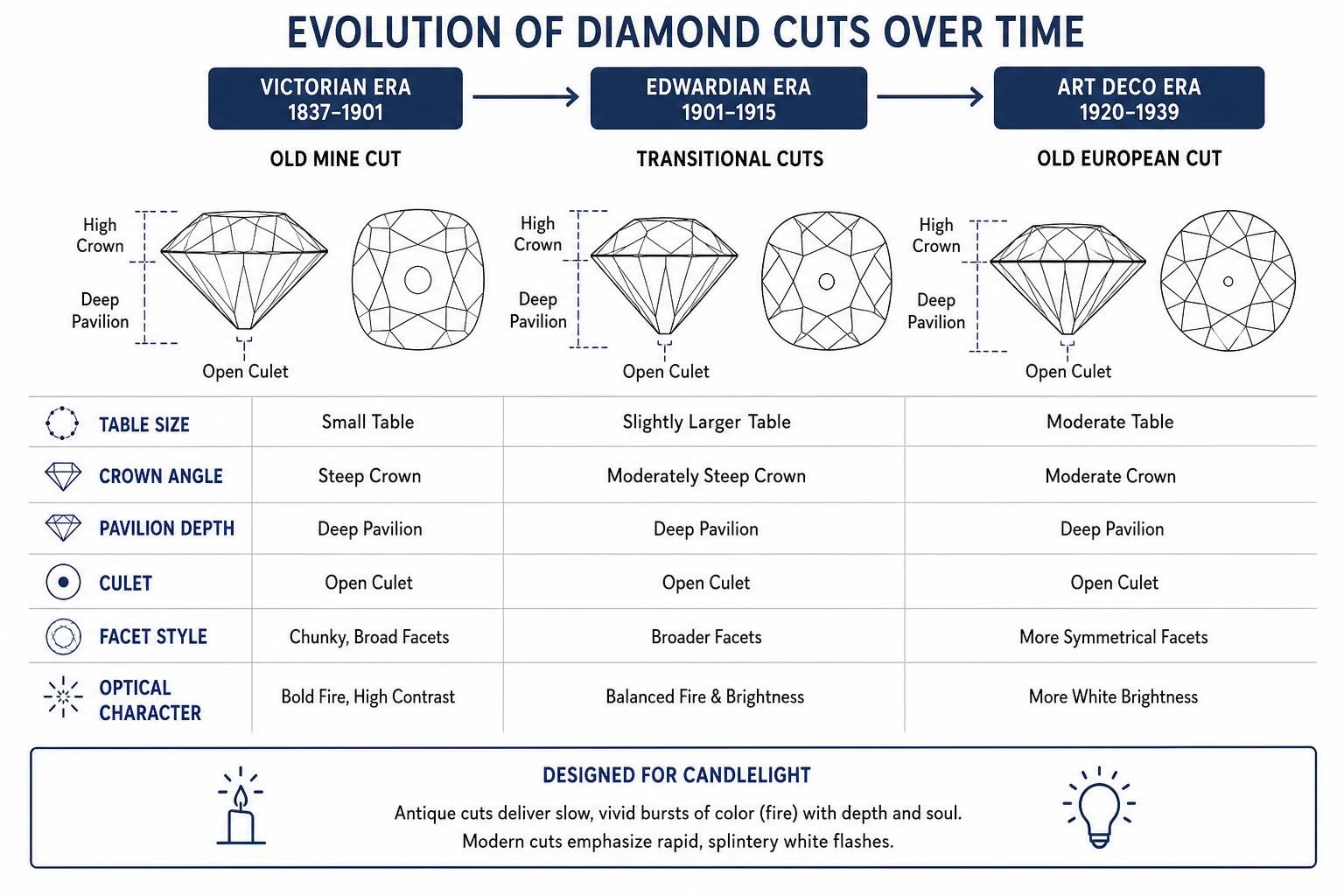
- Small Table: The top flat facet (the table) is noticeably smaller, allowing the upper crown facets to showcase intense dispersion.
- Steep Crown Angles: High crowns lift the stone, creating a sculptural, domed profile on the finger.
- Deep Pavilions: The bottom half of the diamond is deep, concentrating the body of the gem.
- Open Culet: Instead of coming to a sharp, needle-like point at the bottom, old-world diamond cutters polished a flat facet at the base (the culet), which appears as a charming inner circle or "window" when viewed from above.
- Chunky Facets: Larger, broader facet arrangements create wide, dramatic flashes of rainbow light (fire) rather than modern pinfire glitter.
Many clients come into our showrooms asking which diamond cut sparkles the most, and they are often surprised by the answer. While modern cuts produce maximum white brightness (brilliance), antique cuts excel in dispersion and contrast—producing bold, colorful flashes that give the gem a warm, living personality.
Historical Eras: Victorian, Edwardian, and Art Deco
A 3 carat antique diamond carries the unmistakable spirit of the era in which it was shaped:
- Victorian Era (1837–1901): Romantic, sentimental, and deeply personal. Diamonds from this period are predominantly Old Mine cuts set in warm yellow gold or silver-topped gold, often featuring motifs like serpents, floral clusters, and intricate engravings.
- Edwardian Era (1901–1915): Known for sheer elegance, lace-like filigree, and exquisite milgrain detailing. This era celebrated the mastery of platinum work, allowing delicate, airy mountings that made substantial 3 carat stones appear to float weightlessly.
- Art Deco Era (1920–1939): Bold, architectural, and geometric. Art Deco jewelry embraced clean lines, stepped shoulders, caliber-cut accent gems (like sapphires and emeralds), and the transition toward the symmetrical Old European cut.
Optical Character and Candlelight Dispersion
Before electric bulbs illuminated living rooms, diamonds were designed to perform under gas lamps and candlelight. Modern cuts emphasize rapid, splintery white flashes. In contrast, an antique diamond delivers slow, hypnotic bursts of vivid color. The chunky facet pattern creates distinct contrast zones, giving the stone depth and soul that modern machinery simply cannot replicate.
Popular Vintage Cuts for an Heirloom Center Stone
Approximately 70% of antique diamonds over 2 carats fall into two categories: the Old Mine cut and the Old European cut. Because modern commercial cutting prioritizes yield and standardized brilliance, these historic cuts are no longer commonly produced, making genuine antique cuts exceptionally rare.
Old Mine Cut: The 3 Carat Diamond Antique Favorite
The Old Mine cut is the quintessential early diamond shape. Dating back to the 18th and 19th centuries, it features a distinctive squarish or cushion-shaped outline with soft, rounded corners.
When you explore what is the most expensive diamond cut in the vintage realm, pristine 3 carat Old Mine cuts with high clarity and symmetry consistently command top premiums. They feature a high crown, deep pavilion, small table, and a prominent open culet. Each Old Mine cut has an individual personality—no two stones share the exact same facet map.
Old European Cut: Symmetry and Brilliance
As lapidary technology advanced in the late 19th century, cutters developed the Old European cut. This cut is the direct circular ancestor to the modern round brilliant.
An Old European cut possesses 58 facets arranged in a round perimeter, but maintains the high crown, small table, and open culet of earlier eras. Looking into an Old European cut feels like gazing into a floral kaleidoscope, characterized by a distinct pinwheel facet pattern in the center.
Antique Cushion and Rose Cuts
- Antique Cushion Cuts: Featuring pillow-like contours, these gems combine the elongated elegance of a rectangular cushion with the romantic, chunky faceting of early cuts.
- Rose Cuts: Originating in the 1500s, rose cuts feature a flat base and a domed top covered in triangular facets (resembling an opening rosebud). While they lack a pavilion and do not produce deep refractive sparkle, a 3 carat rose cut offers enormous surface area, giving you the visual spread of a 5 carat stone with a subtle, watery glow.
Evaluating Quality, Color, and Authenticity
Evaluating an antique diamond requires a different eye than evaluating a modern certified diamond. Applying rigid modern standards to an 1890s hand-cut gem misses the entire point of vintage artistry.

Understanding 3 carat diamond color is especially crucial with antique stones. Many historical diamonds originated from Old Golconda mines in India or early South African deposits, often showing gentle warm body tones (ranging from J to N on the modern grading scale). Rather than diminishing the stone, this warm candle-glow hue complements antique yellow gold and platinum mountings beautifully.
When reviewing the essential steps to buying a 3 carat diamond, cut grade on an antique report will describe historical authenticity and light balance rather than standard computer-modeled symmetry.
How to Authenticate a Genuine 3 Carat Diamond Antique
To ensure your diamond is truly a vintage treasure and not a modern stone cut in a vintage style, look for these markers:
- Natural Perimeter Wear: Authentic antique diamonds often exhibit minor natural abrasions along the girdle or facet junctions, consistent with decades of gentle wear.
- Unstandardized Girdles: True period gems feature faceted, polished, or bruted girdles with slight thickness variations, rather than the perfectly laser-faceted edges of today.
- Period Inclusions and Facet Symmetry: Hand-cut facets will show slight organic variances in angle and size when viewed under 10x magnification.
- Independent Laboratory Reports: Always insist on a grading certificate from the Gemological Institute of America (GIA) or European Gemological Laboratory (EGL USA) confirming the stone as an authentic Old Mine or Old European cut.
Balancing Historic Charm vs. Modern Alternatives
While some buyers gravitate toward contemporary options or review a guide to 3 carat man made diamond rings for modern lab-grown options, an authentic antique diamond offers something technology cannot synthesize: irreplaceable provenance and finite historical rarity. Only about 1 in 1 million mined natural diamonds weighs over 1 carat, making an original, hand-cut 3 carat antique diamond an ultra-rare survivor of jewelry history.
Setting Styles and Maintenance for Antique Solitaires
A magnificent 3 carat antique diamond deserves a setting that protects its high crown while celebrating its historical character.
Here are the most iconic mountings:
- Hand-Carved Platinum Filigree: Delicate openwork lace that frames the diamond without overpowering it.
- Milgrain Bezel Mountings: A fine beaded metal rim that wraps around the girdle, offering superior protection for daily wear.
- Victorian "Buttercup" Collets: Scalloped gold prongs that cup the stone, creating a floral halo effect.
- Art Deco Stepped Solitaires: Platinum prongs flanked by tapered baguette or French-cut side diamonds.
When deciding how to choose your diamond ring setting, consider your lifestyle. Because antique diamonds have slightly higher crown profiles, bezel or low-set multi-prong mountings offer ideal everyday protection.
Best Care Practices for Antique Rings
- Avoid Harsh Ultrasonic Cleaners for Fragile Settings: If your ring features delicate Edwardian filigree or antique accent stones, clean it using warm water, mild dish soap, and an extra-soft toothbrush.
- Annual Prong Inspections: Have an experienced jeweler inspect the prongs and bezel every 6 to 12 months for wear or loosening.
- Safe Storage: Store your antique ring separately in a fabric-lined box so harder modern jewelry cannot scratch the mounting or diamond facet edges.
Value, Pricing, and Investment Potential
Because natural rough crystals over 3 carats are geological marvels, antique cuts command a dedicated following among collectors and connoisseurs. Pre-1920s diamonds frequently command a 20% to 50% price-per-carat premium over equivalent modern round brilliants due to their scarcity and historical provenance.
Over the past decade, fine 3 carat antique diamonds have demonstrated strong value retention, appreciating at an average of 3% to 5% annually. If you are exploring investing in diamonds, a rare antique diamond with verified provenance and exceptional cut proportions represents one of the most stable segments in the fine jewelry world.
| Antique Cut Type | Era / Style | Typical Clarity & Color Range | Estimated Price Range (3 Carat) |
|---|---|---|---|
| Old Mine Cut | Victorian / Georgian (1800s–1900s) | I–M / VS2–SI2 | $30,000 – $95,000 |
| Old European Cut | Late Victorian / Edwardian / Deco | G–K / VVS2–SI1 | $38,000 – $120,000 |
| Antique Cushion | 19th Century Hand-Cut | H–L / VS1–SI2 | $34,000 – $105,000 |
| Rose Cut | Early Antique / Georgian | H–M / VS2–I1 | $24,000 – $65,000 |
Note: Pricing reflects market valuations. Values vary based on individual stone transparency, provenance, certifier, and mounting integrity. For shoppers working within specific budgets, our guide to affordable 3 carat diamonds offers practical tips for balancing the 4Cs.
Frequently Asked Questions about Antique 3 Carat Diamonds
Are antique 3 carat diamonds more valuable than modern cuts?
Yes, in many cases. While modern diamonds are cut to maximize yield using automated software, authentic antique diamonds come from a strictly finite supply. You cannot mine more historical diamonds. Collectors regularly pay a 20% to 50% premium for exceptional Old European and Old Mine cuts with verifiable provenance and strong optical performance.
How do I verify that an antique diamond is authentic?
A reputable jeweler will provide a recognized laboratory certificate (such as GIA) verifying the cut as a genuine Old European, Old Mine, or vintage cut. Additionally, an experienced gemologist can verify authentic facet asymmetry, open culets, and period-accurate mounting wear under high magnification.
Do antique 3 carat diamonds face up smaller than modern stones?
Because antique diamonds feature steeper crowns and deeper pavilions, they concentrate more carat weight into their depth rather than their surface spread. However, their tall crown facets and broad dispersion create an unmistakable visual presence that feels substantial and bold on the finger.
Conclusion
A 3 carat antique diamond is not just a piece of jewelry—it is a wearable work of art that has traveled through generations. Its warm personality, hand-cut facets, and romantic candlelight glow offer an enduring distinction that mass-manufactured modern rings simply cannot duplicate.
At Mervis Diamond Importers, we take immense pride in helping our clients discover extraordinary center stones. Whether you visit our showrooms in Tysons, VA, Rockville, MD, or Washington, DC, our expert team is ready to guide you through a pressure-free, bespoke experience.
Ready to explore your options? Learn how much a 3 carat diamond ring costs and let us help you find the heirloom of your dreams.