

The Smart Buyer Guide to 2 Carat Synthetic Diamond Rings
Is a 2 Carat Synthetic Diamond Ring a Smart Buy?
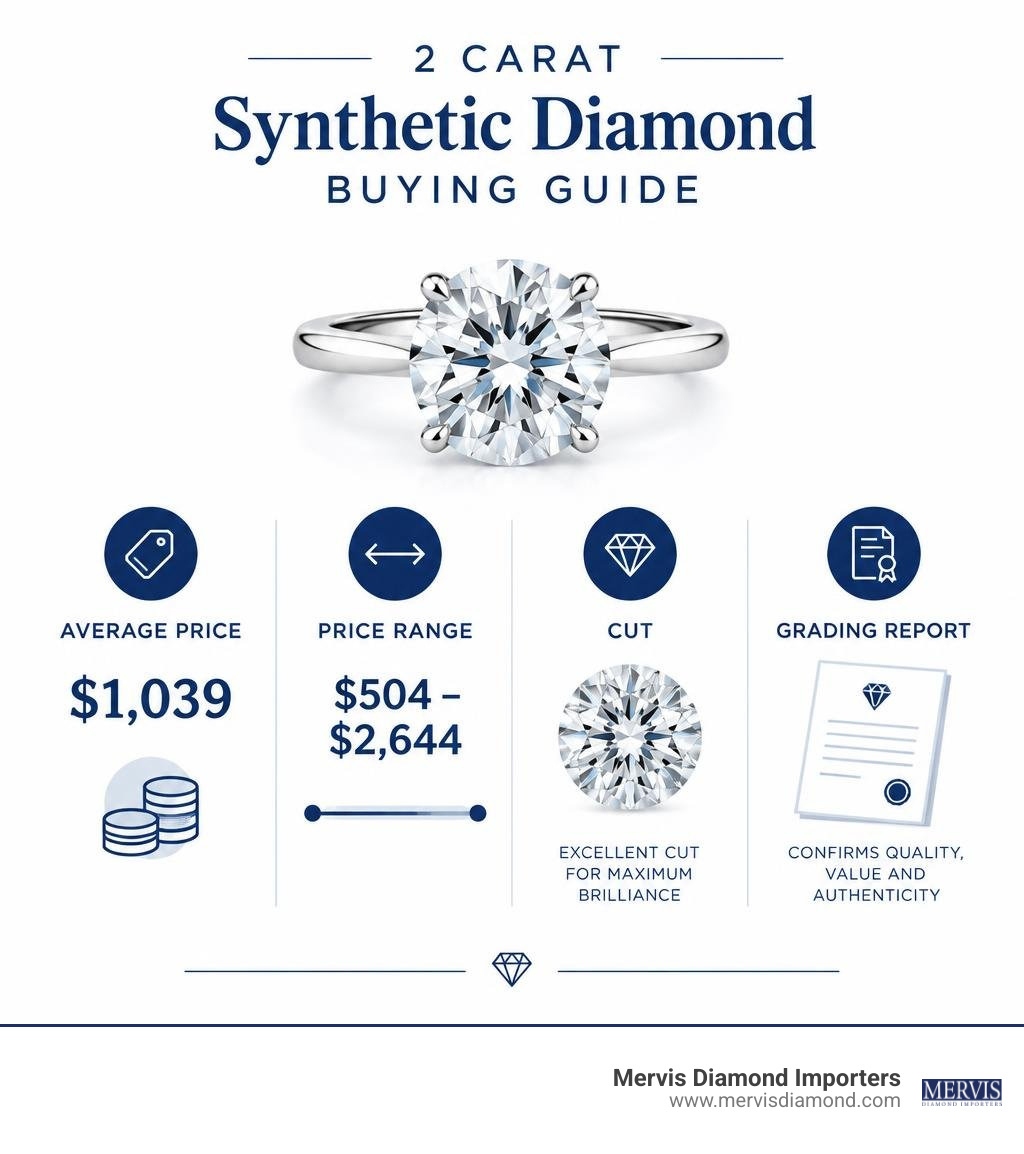
A 2 carat synthetic diamond is a real diamond grown in a lab. For a ring, start with cut quality and a grading report, then compare color, clarity, and shape. The current average price for a loose 2-carat lab-grown diamond is $1,039, though prices range from $504 to $2,644. The ring setting costs extra.
That range gives you room to choose what matters most to you, whether it's a bright round stone or a lower-priced shape. It also makes side-by-side comparison worth the effort: a higher price does not always mean a better-looking diamond.
I'm Morris Mervis, and I'll walk you through how to judge quality and value without feeling rushed.
Current Pricing and Market Trends for a 2 Carat Synthetic Diamond
As of October 2026, the lab-created diamond market continues to offer unprecedented value. Today, the nationwide average price for a 2 carat synthetic diamond sits at $1,039. Over the past month alone, live market indices tracking over 370,000 stones show prices fluctuating between $1,010 and $1,117, while individual diamonds can range anywhere from $504 for value-oriented specs up to $2,644 for collector-grade, flawless stones.
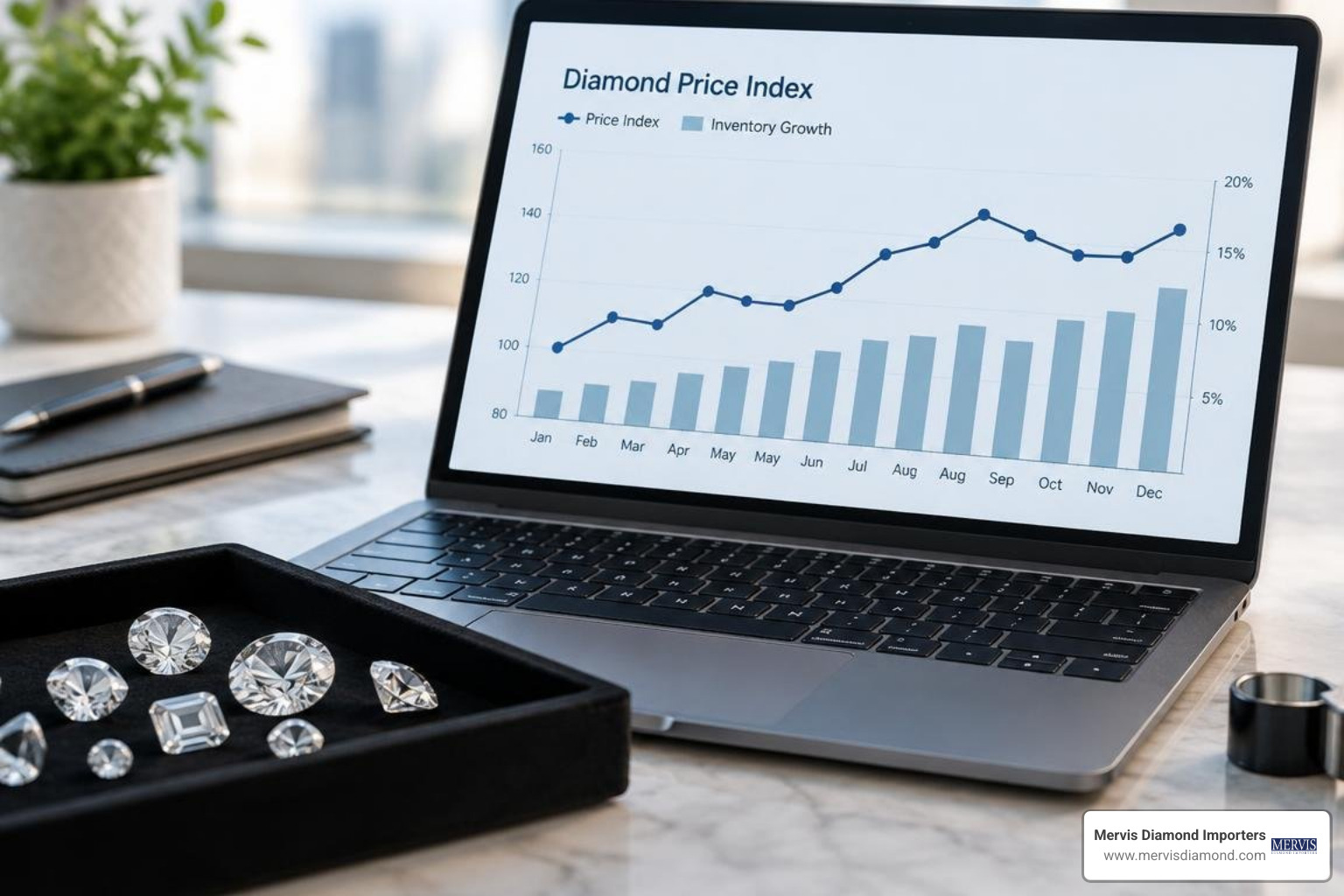
Market dynamics have shifted dramatically over the past two quarters. Retail prices for 2-carat stones have fallen by 14.49% over the past 3 months and 16.48% over the past 6 months. This steady price correction is primarily fueled by a massive influx of production capacity; available inventory of 2-carat synthetic diamonds surged by 13.07% (an addition of over 43,200 stones) in just the last month.
To better understand historical pricing context and what goes into finished jewelry pricing, you can review our cost of man-made diamonds guide 2026. As supply expands, smart buyers are getting significantly more visual presence for their investment.
Evaluating 2 Carat Synthetic Diamond Prices by Shape
Diamond geometry plays an enormous role in pricing. Because certain shapes require more rough diamond material to cut or experience surges in social media popularity, prices vary significantly across different silhouettes.
| Diamond Shape | Current Average Price (2 Carat) | 1-Month Price Change |
|---|---|---|
| Oval | $1,258 | +8.58% |
| Pear | $1,102 | +2.70% |
| Round Brilliant | $1,052 | +0.19% |
| Radiant | $1,047 | +9.51% |
| Cushion | $1,015 | +1.84% |
| Princess | $1,000 | +4.21% |
| Marquise | $990 | +29.74% |
| Emerald | $985 | +8.96% |
| Asscher | $978 | +0.41% |
| Heart | $896 | +11.72% |
Oval cuts command the highest premium at $1,258 due to massive ongoing demand for elongated silhouettes that flatter the finger. Conversely, geometric step-cuts like emerald ($985) and asscher ($978) offer incredible value per carat, while romantic heart shapes represent the entry-level price point at $896.
Wholesale CVD Rough Diamond Costs vs. Retail Polished Value
To understand why retail prices sit where they do, it helps to examine wholesale manufacturing. Commercial benchmarks for Chemical Vapor Deposition (CVD) rough diamonds typically range from $50 to $65 per carat for standard bulk material. However, top-grade uncut stones—such as a 2-carat radiant rough with D color and VVS2 clarity—can command up to $300 per carat, with broader large-stone uncut ranges running between $90 and $472.
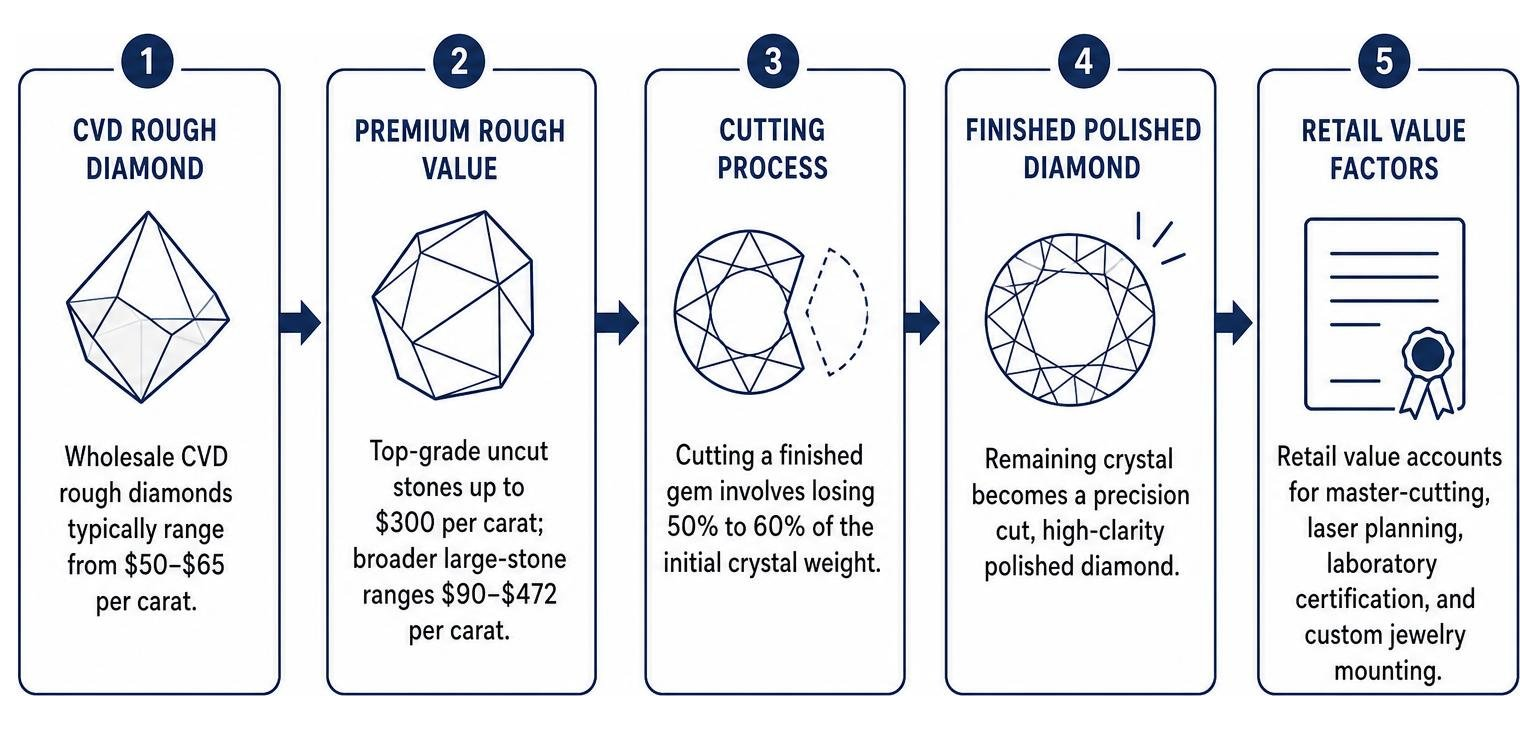
When reviewing a CVD rough diamond sourcing guide for B2B buyers, you quickly discover that cutting a finished gem involves losing 50% to 60% of the initial crystal weight. The remaining retail value accounts for precision master-cutting, state-of-the-art laser planning, high-tier laboratory certification, and custom jewelry mounting.
How the 4Cs and Growth Methods Affect Quality and Cost
Just like earth-mined gems, synthetic diamonds are evaluated by the 4Cs: Cut, Color, Clarity, and Carat weight. Understanding how these factors balance against your budget ensures you never overpay for invisible technicalities. For an in-depth breakdown across all carat weights, explore our guide on the average cost of lab grown diamonds.
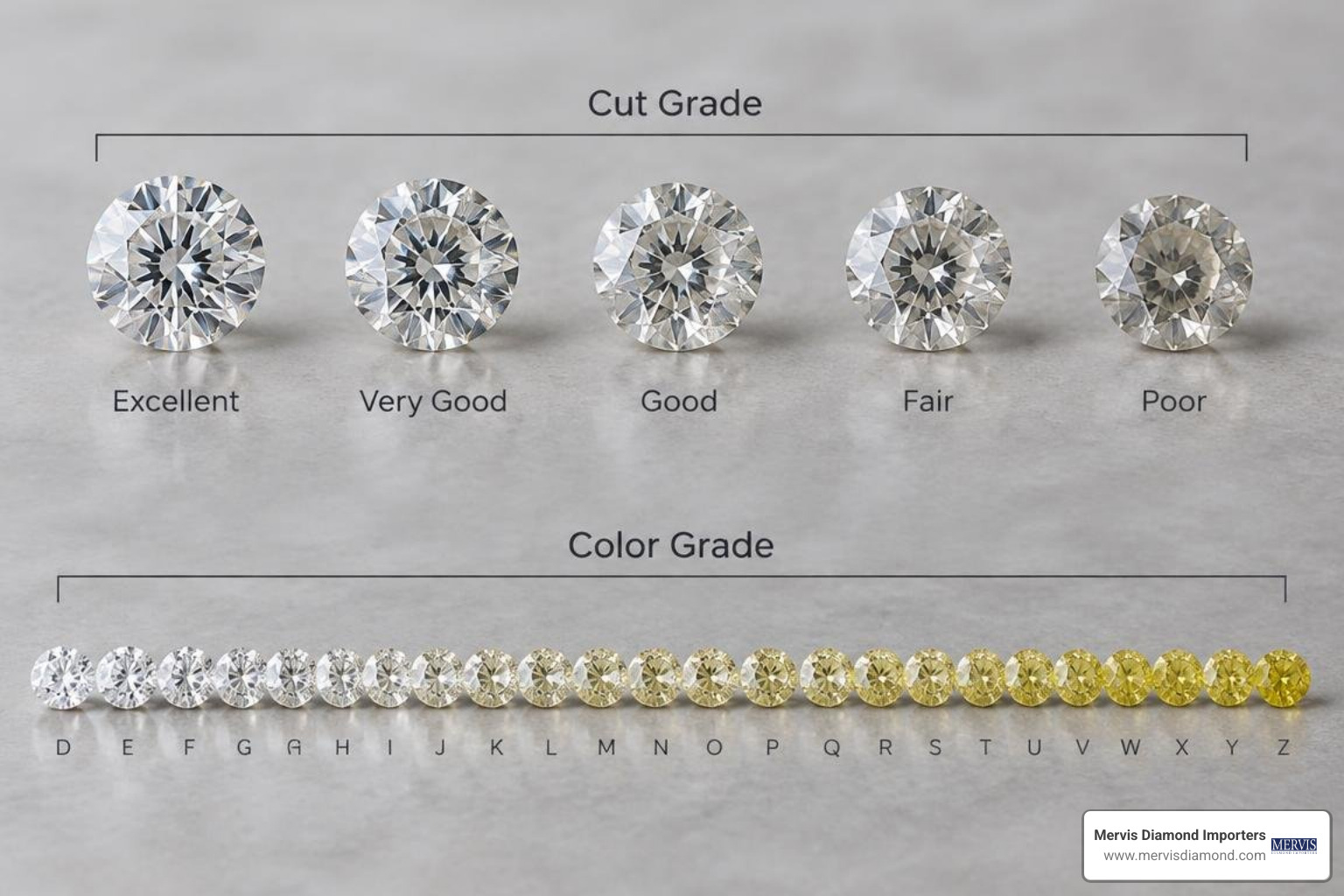
- Cut: The most critical 'C'. An ideal cut maximizes light return, masking subtle color tints and minor inclusions.
- Carat: Carat measures weight, not physical size. A 2.00ct stone offers substantial finger coverage without looking overwhelming.
- Color: Graded from D (colorless) to Z (light tint).
- Clarity: Graded from Flawless down to Included (I1-I3).
Selecting Color and Clarity for a 2 Carat Synthetic Diamond
In the current market, the sweet spot for consumer value is an F color paired with VS1 clarity.
Because synthetic diamonds are grown in tightly controlled laboratory environments, achieving high color and clarity is far more consistent than in nature. An F color grade presents as completely icy-white in any metal setting, while a VS1 clarity grade guarantees the diamond is completely "eye-clean"—meaning no inclusions are visible to the naked eye. Selecting grades above VVS2 or D color often increases the price without offering a noticeable visual improvement in everyday lighting.
When shopping, always ensure your stone comes with a trusted certificate verifying lab grown diamond authenticity.
CVD vs. HPHT Production Processes
Lab-created diamonds are produced using one of two advanced scientific methods:
- Chemical Vapor Deposition (CVD): A microscopic diamond seed is placed inside a vacuum chamber filled with carbon-rich gases (such as methane). Microwave energy ionizes the gas into plasma, causing pure carbon atoms to rain down and crystallize layer by layer onto the seed.
- High-Pressure High-Temperature (HPHT): This technique mimics the mantle of the earth by subjecting carbon to pressures exceeding 1.5 million pounds per square inch and temperatures above 2,700°F.
Both methods yield authentic, optically identical diamond crystals. HPHT is often favored for producing naturally high color grades without secondary treatments, while CVD allows for exceptional crystal purity. Leading manufacturers and international jewelry houses utilize these methods to create exquisite pieces meeting strict certified lab grown diamond jewelry standards.
Synthetic Diamonds vs. Natural Diamonds: Value and Long-Term Outlook
The primary appeal of choosing a lab-grown gemstone is the dramatic cost efficiency. A natural 2-carat diamond of excellent cut, F color, and VS1 clarity easily costs between $18,000 and $25,000. In contrast, an identical synthetic counterpart costs around $1,039—delivering an immediate 85% to 95% cost savings.
The broader diamond industry is reflecting this preference. The global diamond market is projected to expand from $44.1 billion in 2026 to $53.2 billion by 2033. Concurrently, the global CVD diamond sector is on track to grow from $583.11 million in 2026 to over $1.22 billion by 2035 at a compound annual growth rate (CAGR) of 7.7%.
If you want to dive deeper into the physical and market comparisons, check out our 2 carat man-made diamond complete guide. That lab-created stones should be purchased for their personal beauty, ethical appeal, and instant savings, rather than as financial investment vehicles, as retail prices will likely continue to stabilize as technology matures.
Essential Buying Tips for Setting Your 2 Carat Ring
When building your dream ring, consider these practical tips:
- Match Your Metal Wisely: Platinum and 14k/18k white gold accentuate the crisp, cool sparkle of colorless (D-F) diamonds. If you prefer the warmth of yellow or rose gold, you can safely drop to a G or H color stone and save money without noticing any yellow tint.
- Prioritize Cut Above All Else: Never sacrifice cut grade for higher clarity. An Ideal or Excellent cut ensures brilliant sparkle and masks internal characteristics.
- Choose Secure Prongs: A 2-carat stone has significant presence; opt for a sturdy four-prong or six-prong platinum head to keep the gem secure.
- Work With Custom Artisans: Exploring custom lab grown engagement rings allows you to tailor every gallery detail, halo, and band thickness to perfectly balance your stone's dimensions.
For a full step-by-step walkthrough on ring design, read our comprehensive lab grown diamond ring guide 2026.
Frequently Asked Questions About 2 Carat Synthetic Diamonds
What is the current average cost of a 2 carat lab grown diamond?
The current market average for a loose 2-carat synthetic diamond is $1,039. Depending on the cut, color, clarity, and specific shape chosen, prices generally span from $504 on the budget-friendly end to $2,644 for premium collector grades.
Can a jeweler tell if a 2 carat diamond is synthetic?
A jeweler cannot distinguish a synthetic diamond from a natural diamond using a standard microscope or handheld thermal diamond tester because their chemical, physical, and optical properties are 100% identical. Gemologists use specialized laboratory spectroscopic instruments to detect subtle growth patterns and read the laser-inscribed certification number on the diamond's girdle.
Which shape offers the best value for a 2 carat synthetic stone?
Currently, heart shapes ($896), asscher cuts ($978), and emerald cuts ($985) offer the most affordable entry points. If you want the look of a larger diamond without paying a high premium, elongated emerald and marquise shapes provide expansive surface area per carat compared to deeper-cut round stones.
Conclusion
A 2-carat synthetic diamond ring delivers breathtaking fire, exceptional scale, and luxury aesthetics at a fraction of traditional diamond costs. By focusing on cut quality, targeting the F-VS1 sweet spot, and pairing your gem with a durable custom setting, you ensure a lifetime of brilliant wear.
At Mervis Diamond Importers, we take pride in hand-selecting premium lab-grown diamonds to ensure every stone meets the highest standards of fire and scintillation. We invite you to visit our private showrooms in Tysons, VA, Rockville, MD, and Washington, DC, for an expert, pressure-free consultation, or explore trending lab grown diamonds online today.