

The Modern Buyer's Handbook to 18k Rose Gold Tennis Bracelets
How to Choose an 18K Rose Gold Tennis Bracelet
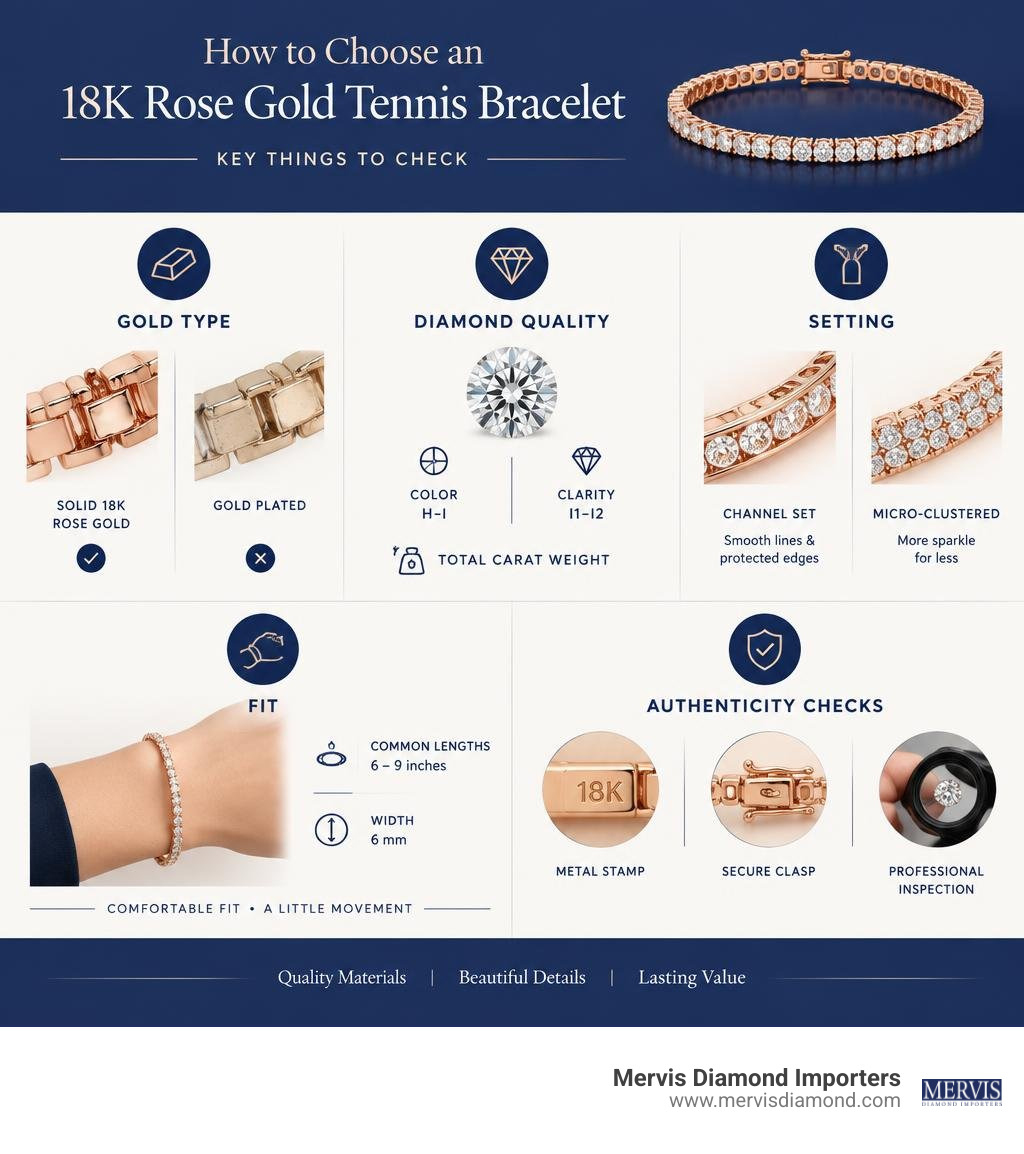
Choose an 18K rose gold tennis bracelet by checking four things first: whether the gold is solid or plated, the diamonds' total carat weight and quality, the setting's security, and the fit on your wrist. Solid 18K rose gold costs more than plated jewelry, but it offers greater long-term value and can be worn for years without the surface layer wearing away.
For a classic fine-jewelry look, a channel-set bracelet offers smooth lines and protects diamond edges. A micro-clustered design can create more sparkle for less, but often uses diamond alternatives or smaller grouped stones. If you are comparing diamond quality, H-I color and I1-I2 clarity can be a practical value range in a rose gold setting, where the warm metal tone can make slight color less noticeable.
A bracelet should sit comfortably with a little movement, not cling tightly or slide over your hand. Common lengths range from 6 to 9 inches, while a 6 mm width creates a bold, everyday statement. For a broader overview of how rose gold compares with other precious metals, the colored gold entry explains the alloying process behind its blush tone.
I am Morris Mervis, and this guide will help you compare materials, diamond quality, settings, sizing, and protections before you buy.
Solid 18K Rose Gold vs. Gold Plated: Quality, Cost, and Longevity
When selecting a fine wrist piece, understanding the composition of your metal determines how well the jewelry holds up over decades. Rose gold gets its signature blush hue from an intentional blend of pure yellow gold, copper, and silver. In an 18K alloy, exactly 75% of the piece is pure gold, while the remaining 25% consists of copper and silver alloys that grant the metal its warm tone and structural rigidity.
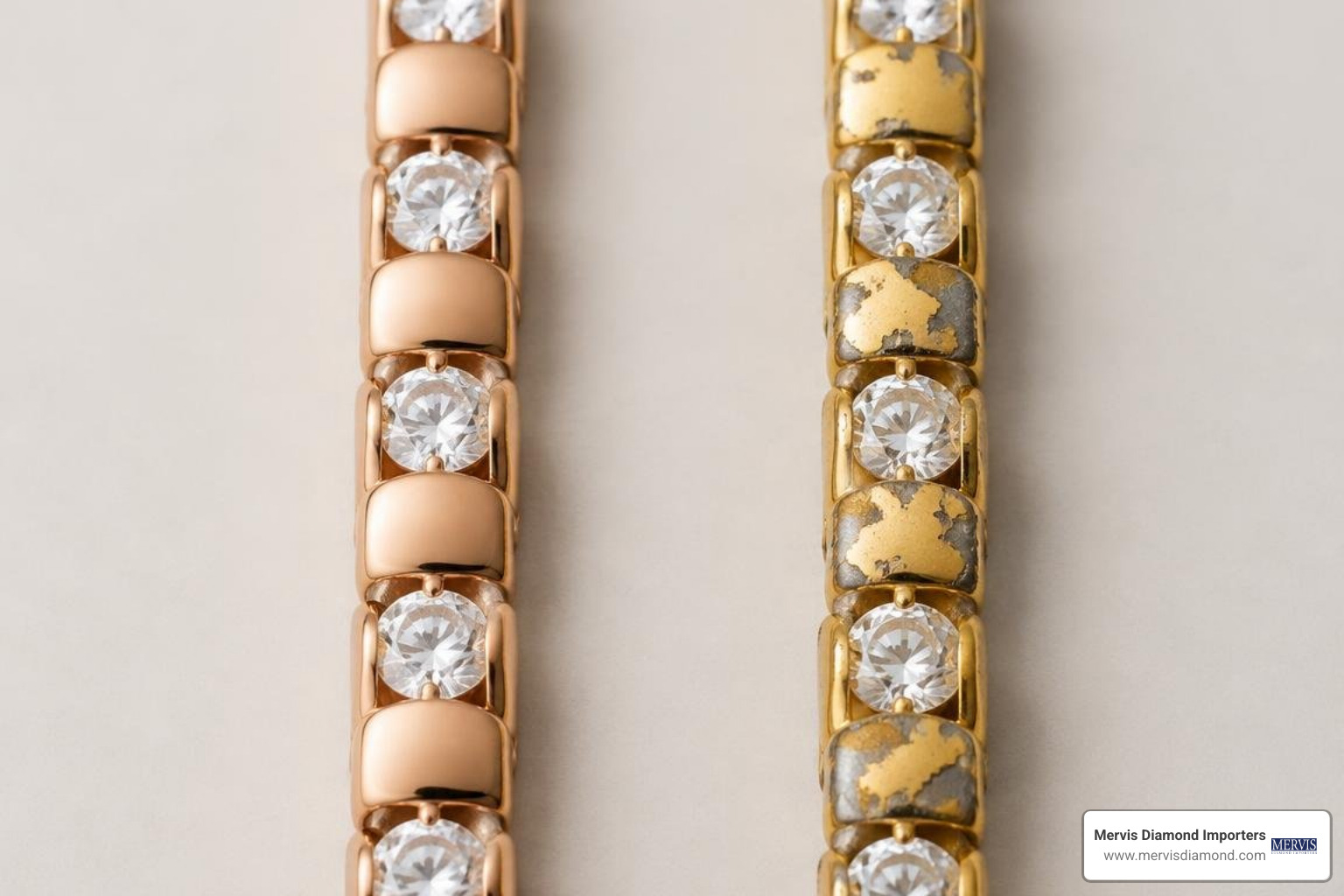
Plated fashion jewelry, by contrast, relies on a thin surface layer of gold electroplated over non-precious base metals such as brass, bronze, or stainless steel. While proprietary plating formulas can look lustrous out of the box, friction against skin, fabrics, and hard surfaces gradually strips this layer away.
Solid Gold vs. Plated: Investing in an 18k Rose Gold Tennis Bracelet
The practical differences between solid gold and plated alternatives dictate maintenance costs and wearable longevity over time. Plated pieces often require re-dipping within months of regular wear, and exposed base metals can trigger skin sensitivities or tarnish into dull green and dark grey shades. Solid 18K gold remains rust-proof, tarnish-resistant, and completely hypoallergenic throughout its life.
| Feature | Solid 18K Rose Gold | Rose Gold Plated (Base Metal) |
|---|---|---|
| Gold Purity | 75% Pure Gold (Hallmarked 750 / 18K) | Flash / micron layer over base metal |
| Average Retail Cost | $4,000 – $6,000+ (Fine Jewelry) | $150 – $300 (Fashion Jewelry) |
| Durability & Wear | Decades of daily wear; heirloom quality | 6 to 24 months before plating rubs off |
| Hypoallergenic Properties | High; gentle on sensitive skin | Low; base metals can cause irritation |
| Maintenance Required | Periodic cleaning and clasp checks | Routine re-plating or total replacement |
| Resale / Intrinsic Value | Retains high intrinsic precious metal value | Negligible intrinsic metal value |
For an in-depth breakdown of precious metals and diamond specifications, explore our diamond bracelet buying guide 2026.
Price Spectrum and Metal Weight Influences
The cost of fine jewelry reflects its raw material weight and gem quality. A fashion-tier plated bracelet typically retails for around $180, featuring cubic zirconia or lab-created simulated stones set into light alloys. In contrast, an authentic 18K solid rose gold diamond bracelet typically retails around $4,550 or higher depending on diamond market pricing and gold market fluctuations.
Precious metal weight is often measured in pennyweights (DWT) or grams. A solid 18K rose gold channel-set tennis bracelet with 2.5 carats of natural diamonds frequently carries a substantial metal weight of approximately 11.58 DWT (roughly 18 grams). Larger, chunkier link designs or wider profiles can weigh between 26 and 37 grams depending on total length (from 6 to 9 inches). This density provides the tactile, balanced drape across the wrist found in curated diamond bracelets and bangles.
Setting Architecture: Channel Set vs. Micro-Clustered Styles
The setting technique safeguards the stones and defines how light enters each facet. Two popular architectural settings in modern bracelets are channel settings and micro-clustered settings.
Channel Setting: Snag-Free Durability and Modern Lines
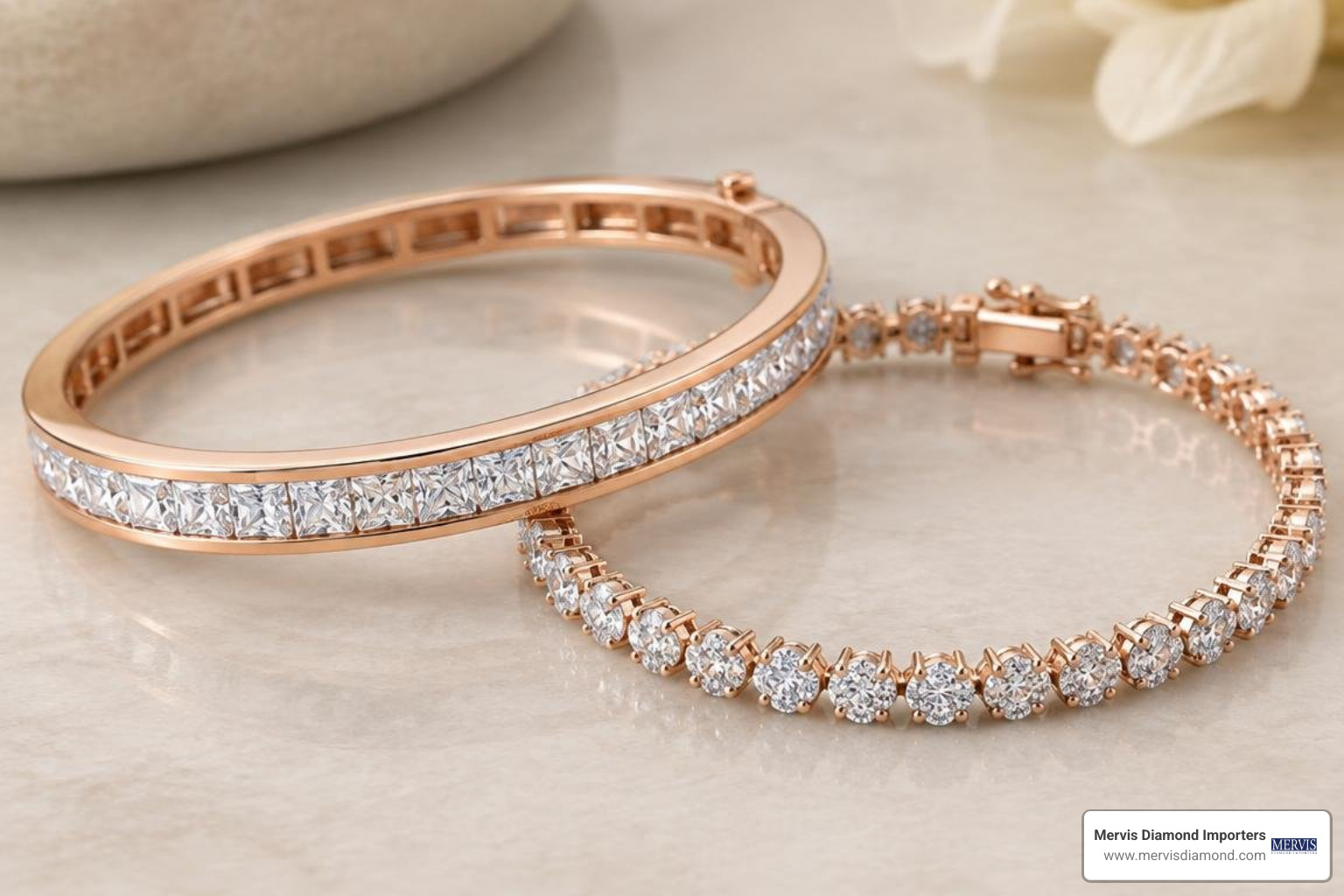
A channel setting secures diamonds between two continuous parallel walls of 18K rose gold. Instead of individual prongs grasping each stone, the gems sit nestled edge-to-edge inside a smooth metal track.
- Protective Metal Rails: The gold borders completely shield the outer girdles of the diamonds from accidental side impacts and chipping.
- Snag-Free Performance: Because there are no raised prongs, channel-set bracelets do not catch on knitwear, silk blouses, or athletic wear.
- Uniform Diamond Layout: A classic 2.5-carat channel bracelet incorporates approximately 74 round stones (around 0.033 carats each), producing a sleek, uninterrupted band of sparkle.
Think of a channel setting like a precision train track for diamonds—it keeps every stone locked in an elegant, streamlined alignment.
Micro-Clustered Setting: Multi-Stone Brilliance and Texture
Micro-clustered designs gather clusters of smaller stones into individual geometric heads along the bracelet.
- Dimensional Sparkle: Grouping smaller round diamonds closely together under shared micro-prongs creates the visual footprint of a much larger single diamond.
- Textured Light Return: The multi-angle orientation of grouped stones bounces light in several directions simultaneously.
- Style Considerations: While micro-clusters maximize surface area sparkle, the delicate exposed prongs require regular checks to prevent loose stones.
To evaluate more link styles, check out our complete diamond tennis bracelet style guide.
Diamond Quality, Color Harmony, and Authenticity Verification
The warm pink tones of an 18K rose gold setting create unique opportunities when evaluating diamond color and clarity across our handcrafted diamond jewelry collections.
Balancing Diamond Color and Clarity in Rose Gold
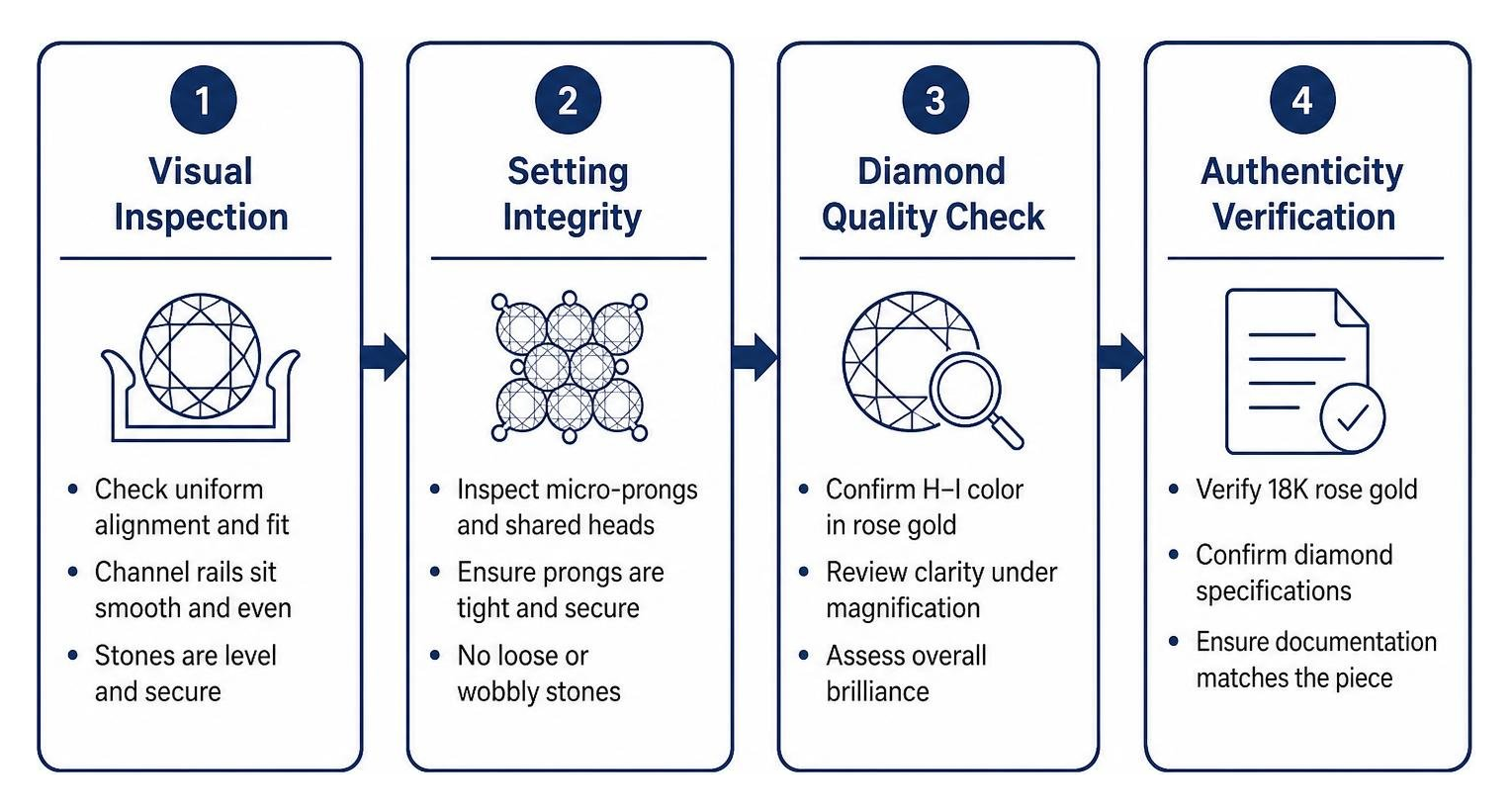
In white gold or platinum, stones with faint yellow or warm body color (such as J, K, or L color grades) stand out against the icy metal. Rose gold works differently. The blush undertone of the copper alloy naturally reflects through the diamonds, making near-colorless diamonds in the H-I color range appear crisp and bright.
When 74 individual round stones make up a 2.5-carat bracelet, each diamond weighs only about 0.033 carats. At this petite scale, natural inclusions in the I1 to I2 clarity range are virtually invisible to the naked eye, allowing you to maximize diamond size and brilliance within your budget.
Verifying Gold Purity and Gemstone Authenticity
Legitimate fine jewelry is hallmarked by law and verified with professional gemological equipment. To protect your investment:
- Inspect Metal Stamps: Look near the clasp for the standard "750" (indicating 75% gold purity) or "18K" engraving.
- Thermal & Electrical Testing: Professional gemologists use thermal conductivity probes to immediately distinguish genuine natural or lab diamonds from CZ or moissanite.
- Microscopic Examination: Under 10x magnification, authentic diamonds exhibit crisp facet junctions and unique natural growth characteristics.
If you are evaluating an inherited piece or seeking official documentation, utilize our professional jewelry appraisal services in Washington DC.
Sizing, Styling, and Caring for an 18k Rose Gold Tennis Bracelet
A fine diamond bracelet should feel natural on your wrist throughout the day. Sizing, clasp mechanics, and regular maintenance keep the piece secure.
Sizing and Proportions for Everyday Comfort
Standard tennis bracelets range from 6 to 9 inches in length. To find your ideal fit:
- The One-Finger Rule: Measure your wrist snugly with a flexible tape, then add 1/2 inch to 3/4 inch to the total measurement. You should comfortably slide one index finger between your wrist and the locked bracelet.
- Width Profiles: A classic channel or prong bracelet often measures between 2.5mm and 4mm, while statement cluster pieces can reach 6mm in width.
- Safety Clasps: Fine bracelets feature an integrated tongue-in-groove box clasp backed by one or two figure-eight safety latches to prevent accidental opening.
How to Properly Care for Your 18k Rose Gold Tennis Bracelet
Rose gold does not require rhodium plating like white gold, but sweat, body oils, and lotions can coat diamond facets and reduce their brilliance.
- Routine Cleaning: Soak the bracelet in warm water mixed with a few drops of mild dish soap for 10 to 15 minutes.
- Soft Brushing: Gently clean behind the settings using an extra-soft baby toothbrush to remove trapped debris.
- Rinsing & Drying: Rinse thoroughly with clean warm water (remember to plug the sink drain first!) and pat dry with a lint-free microfiber cloth.
- Professional Inspections: Bring your bracelet in annually for prong tightening and clasp adjustments through our expert jewelry repair and maintenance center.
Frequently Asked Questions About Rose Gold Tennis Bracelets
What diamond color grade looks best in an 18k rose gold setting?
Near-colorless diamonds in the G to I range offer the best visual value. Because 18K rose gold casts a gentle blush glow into the stones, paying a premium for D-F colorless diamonds is generally unnecessary—the stones will look equally bright and face-up white in this setting.
What should buyers look for in tennis bracelet warranties and return policies?
Always confirm that your jeweler provides a comprehensive lifetime warranty covering manufacturing defects, secure clasp repair, and stone tightening. Ensure the purchase includes an initial inspection and return window (typically 14 to 30 days) to evaluate the wrist fit and diamond quality in person.
Can an 18k rose gold tennis bracelet be worn every day?
Yes. The copper content in 18K rose gold makes it structurally durable and resilient against bending. While safe for daily office wear and evening events, remove your bracelet before swimming in chlorinated pools, weightlifting at the gym, or applying heavy cosmetic lotions.
Conclusion
An 18K rose gold tennis bracelet brings together enduring precious metal value, warm blush tones, and classic diamond sparkle. Whether you prefer the sleek protection of a channel setting or the multi-stone shine of a clustered design, choosing solid 18K gold ensures your bracelet remains an heirloom piece for generations.
To learn more about how this iconic design became a jewelry staple, explore the history and origin of the classic tennis bracelet. If you are ready to find your custom fit, schedule a private consultation with our diamond experts in Tysons, VA, Rockville, MD, or Washington, DC.